The technique of faux-bambou — the simulation of bamboo’s characteristic node-and-internode structure in a more available material — has a long history in French decorative arts. From the carved wood bamboo-leg tables of the Louis XVI period to the painted cast-iron bamboo of the Second Empire, the imitation of bamboo’s distinctive rhythm was a recurring challenge to French craft ingenuity. In the post-war period, rattan emerged as the most persuasive medium for this simulation. Heated to the right temperature and shaped around a form, rattan can be worked into the bulging nodes and tapering internodes of genuine bamboo with remarkable fidelity, creating a material that carries all of bamboo’s visual associations — lightness, growth, the exotic — without requiring the plant itself.
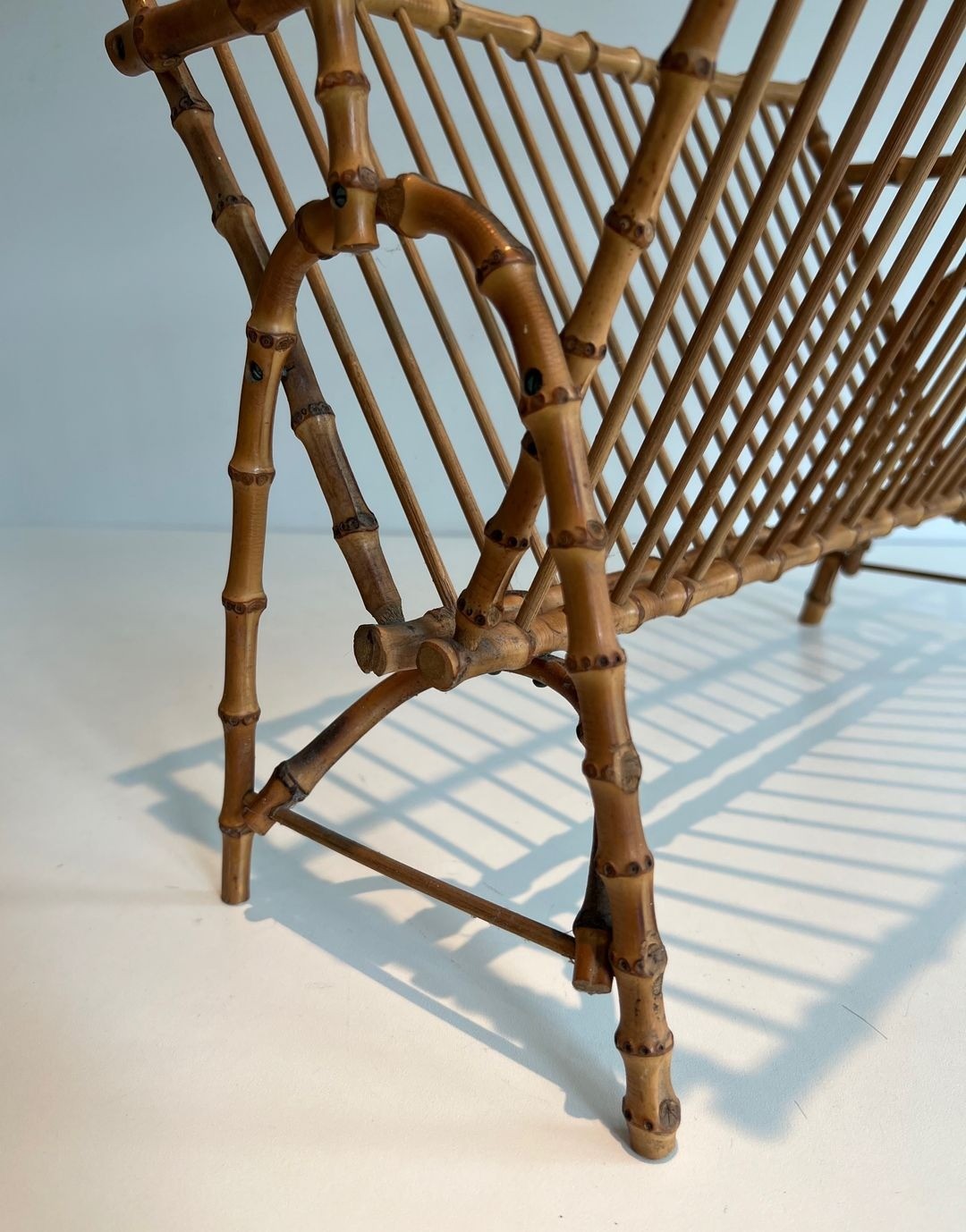
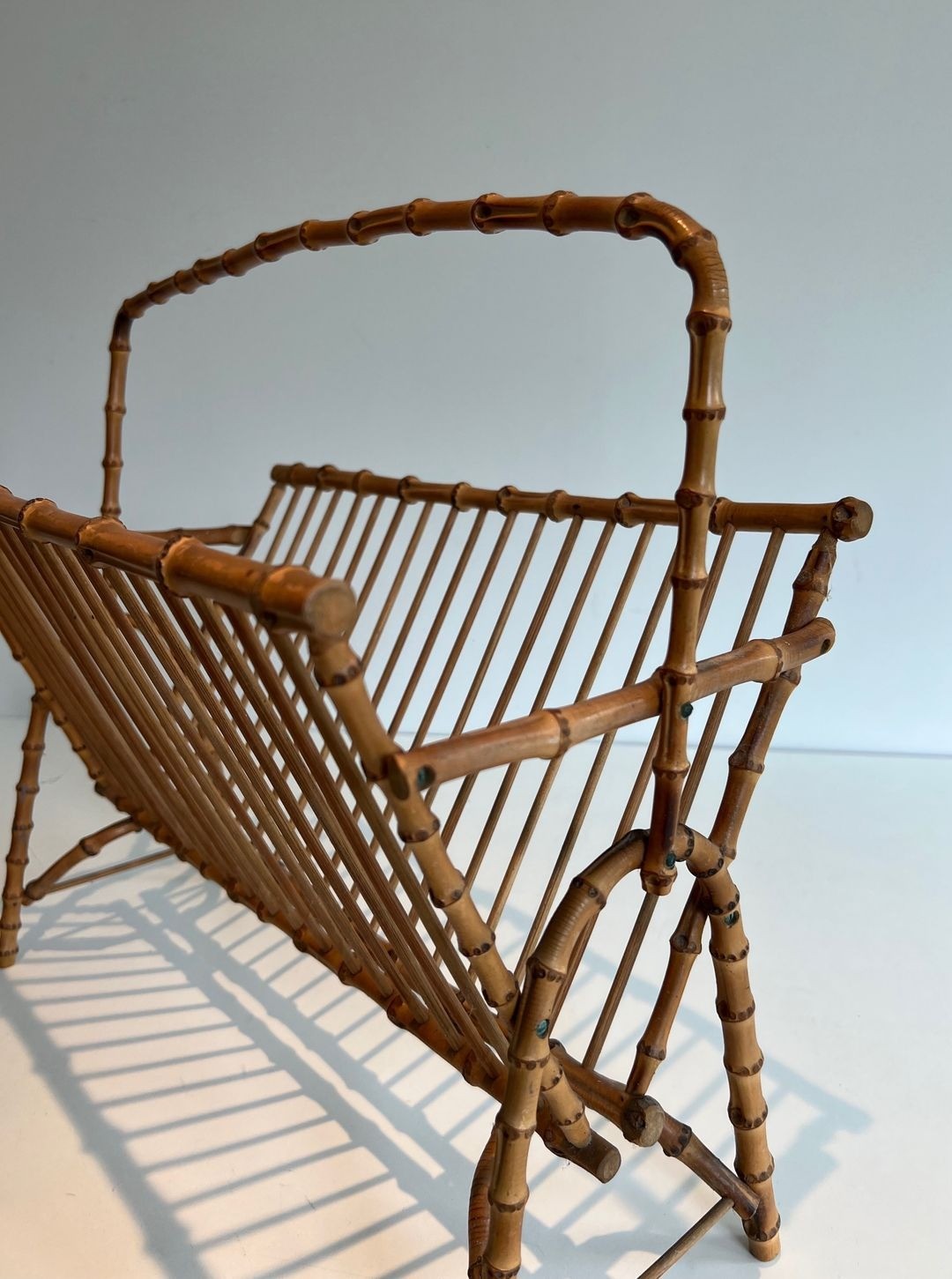
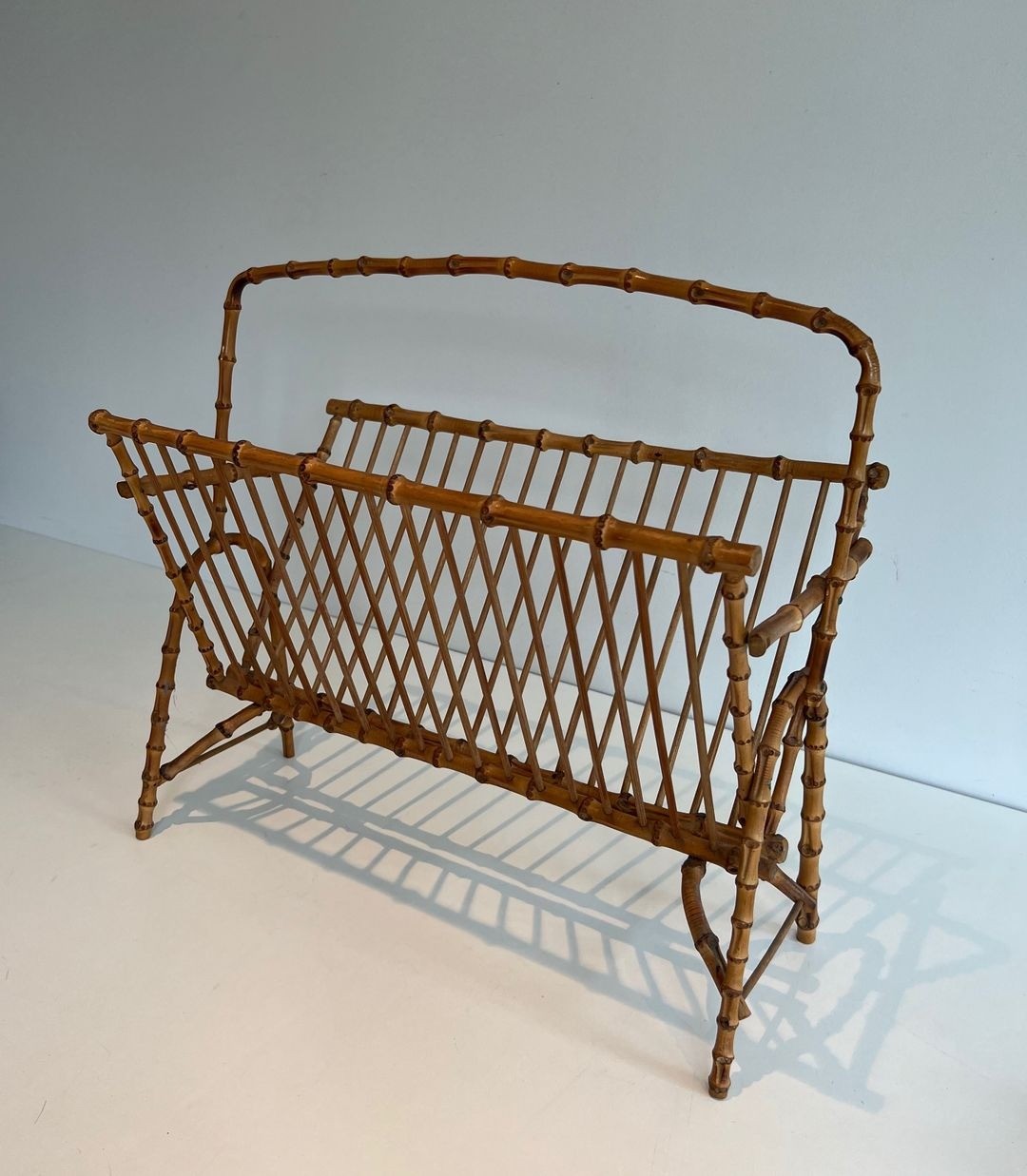
This magazine rack is an accomplished example of the faux-bambou rattan technique. The structural members, worked into convincing bamboo-like nodes at regular intervals, create a visual rhythm that animates the entire piece and lends it a vitality that plain rattan would not achieve. The warm natural colour of the rattan — deepened slightly with age — and the precision of the formed nodes speak to a vannier working at the height of his craft. The result is an object simultaneously humble and technically sophisticated: a rack that could take its place in a serious decorative interior without awkwardness.
At 49 centimetres wide and 44 centimetres tall, the proportions are comfortable — generous enough for a proper selection of periodicals, compact enough for a side table, console, or study corner. Its period, the late 1940s, places it at the beginning of what would become a sustained French enthusiasm for rattan and natural materials in the domestic interior, a tendency that Perriand, Paulin, and others would later develop into a full aesthetic programme. This piece is an early and characteristic instance of that sensibility in its most direct form.