The paradox of faux-bamboo in brass lies in the object’s relationship to time. Real bamboo is among the most temporary of natural materials: it grows with extraordinary speed, dries and bleaches under the sun, cracks in frost, and returns to the earth within decades. It belongs entirely to the organic world of growth and decay, the seasonal and the impermanent. Brass is its opposite: dense, inert, resistant to the passage of centuries. When Western decorators in the eighteenth century first began casting brass to simulate bamboo—to reproduce its characteristic nodes, its gently tapering cylinders, its warm golden surface—they were performing a metallic immortalisation of the ephemeral: an act of conquest over organic temporality by the permanence of the foundry.
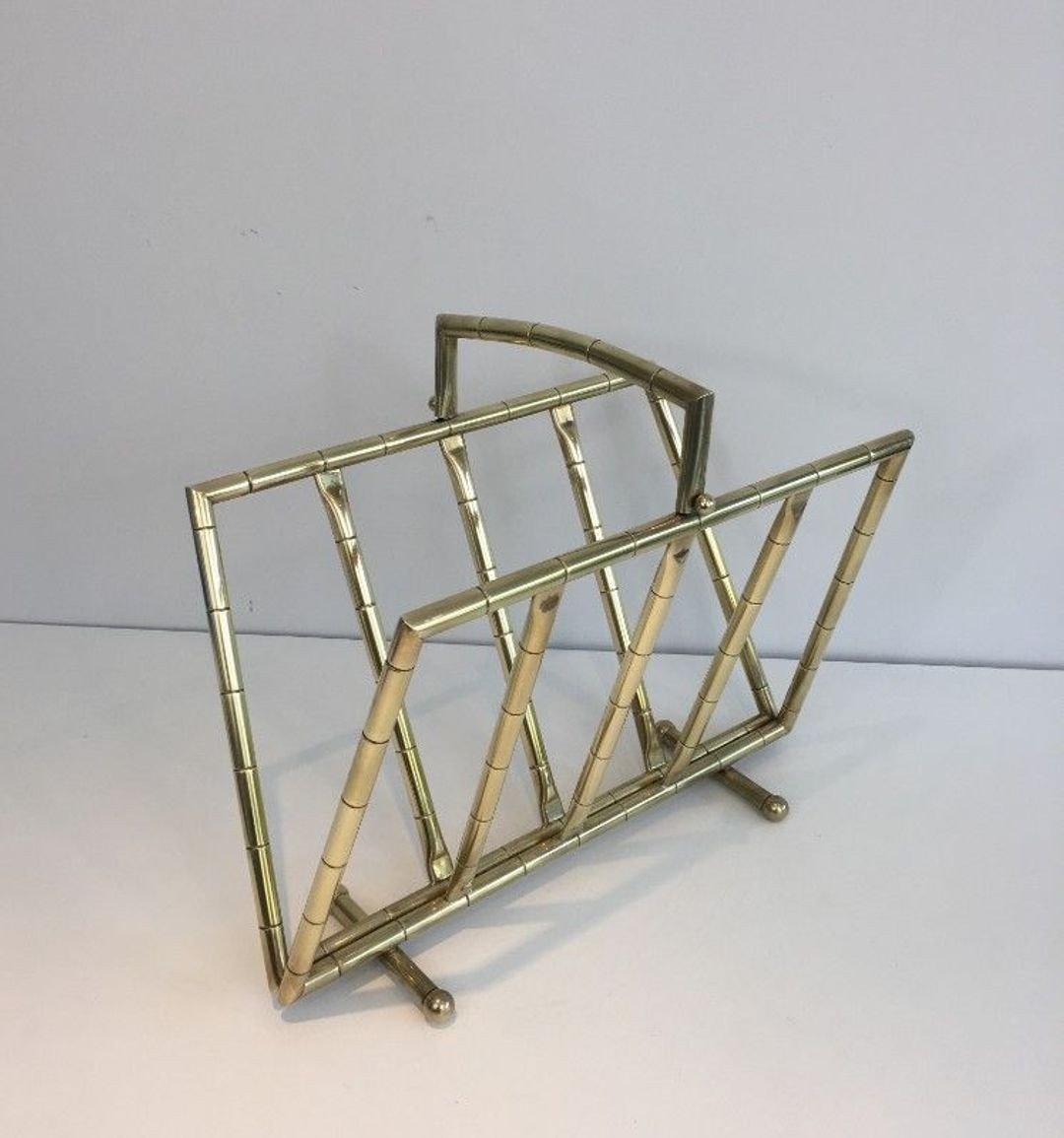
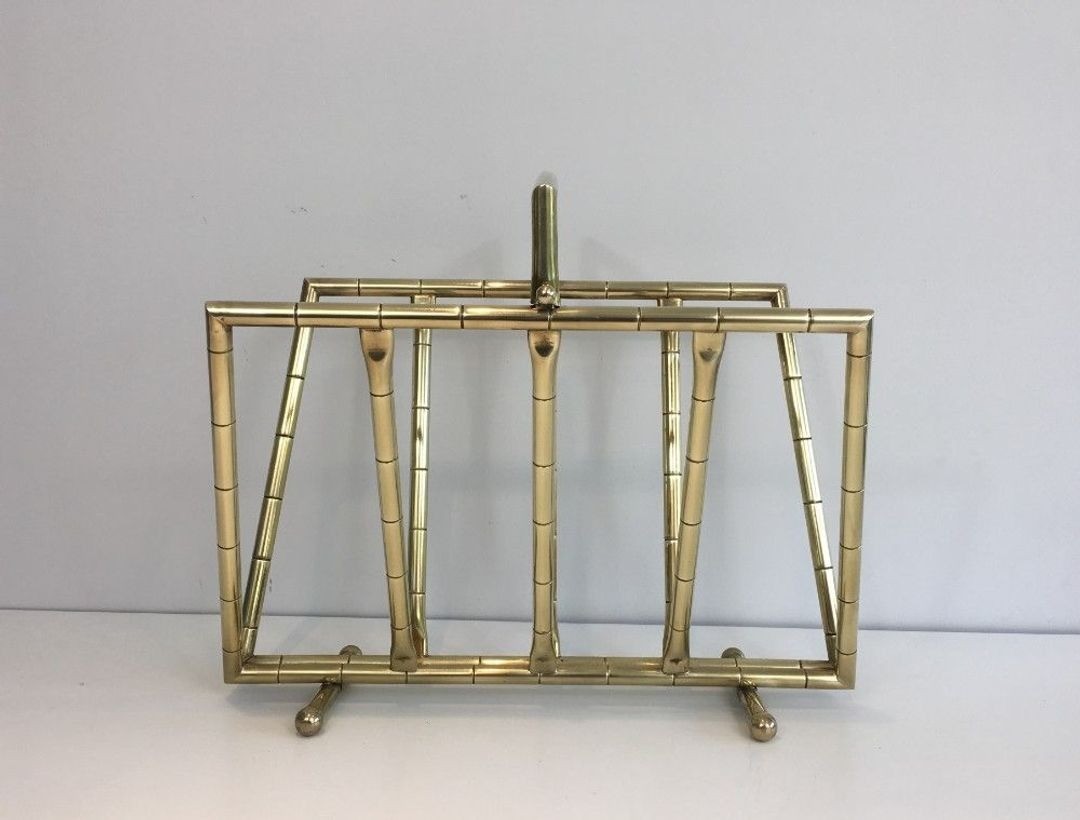
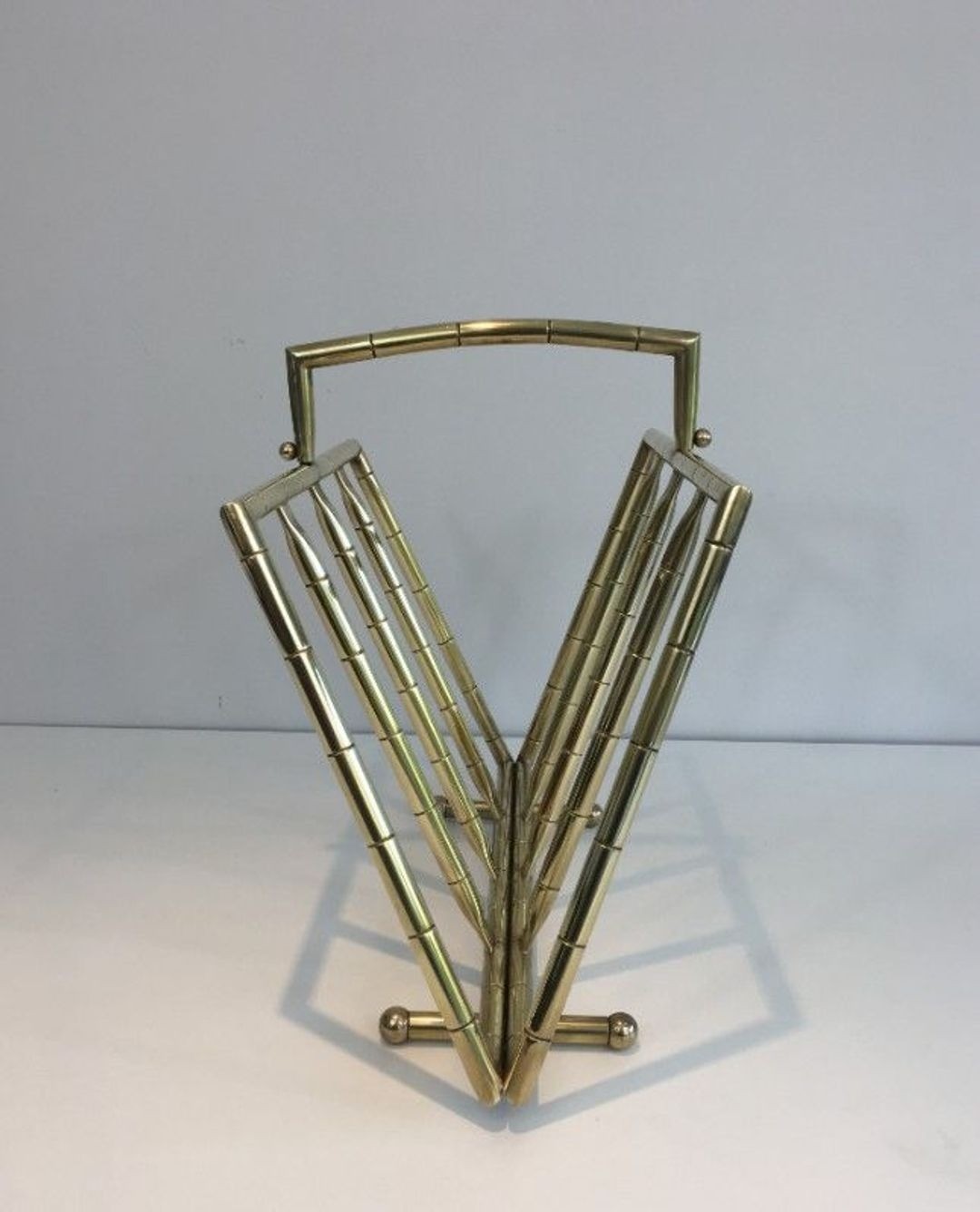
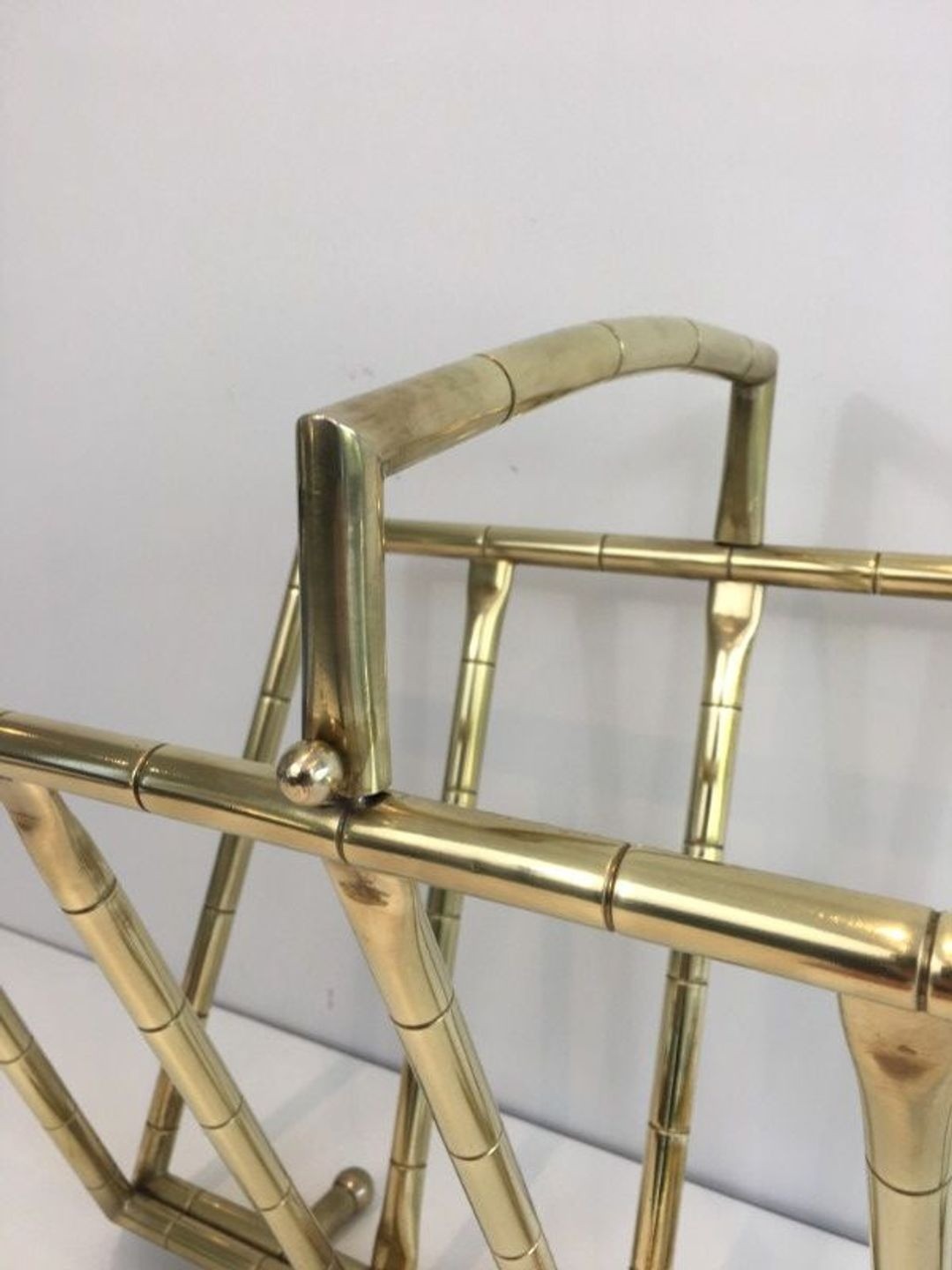
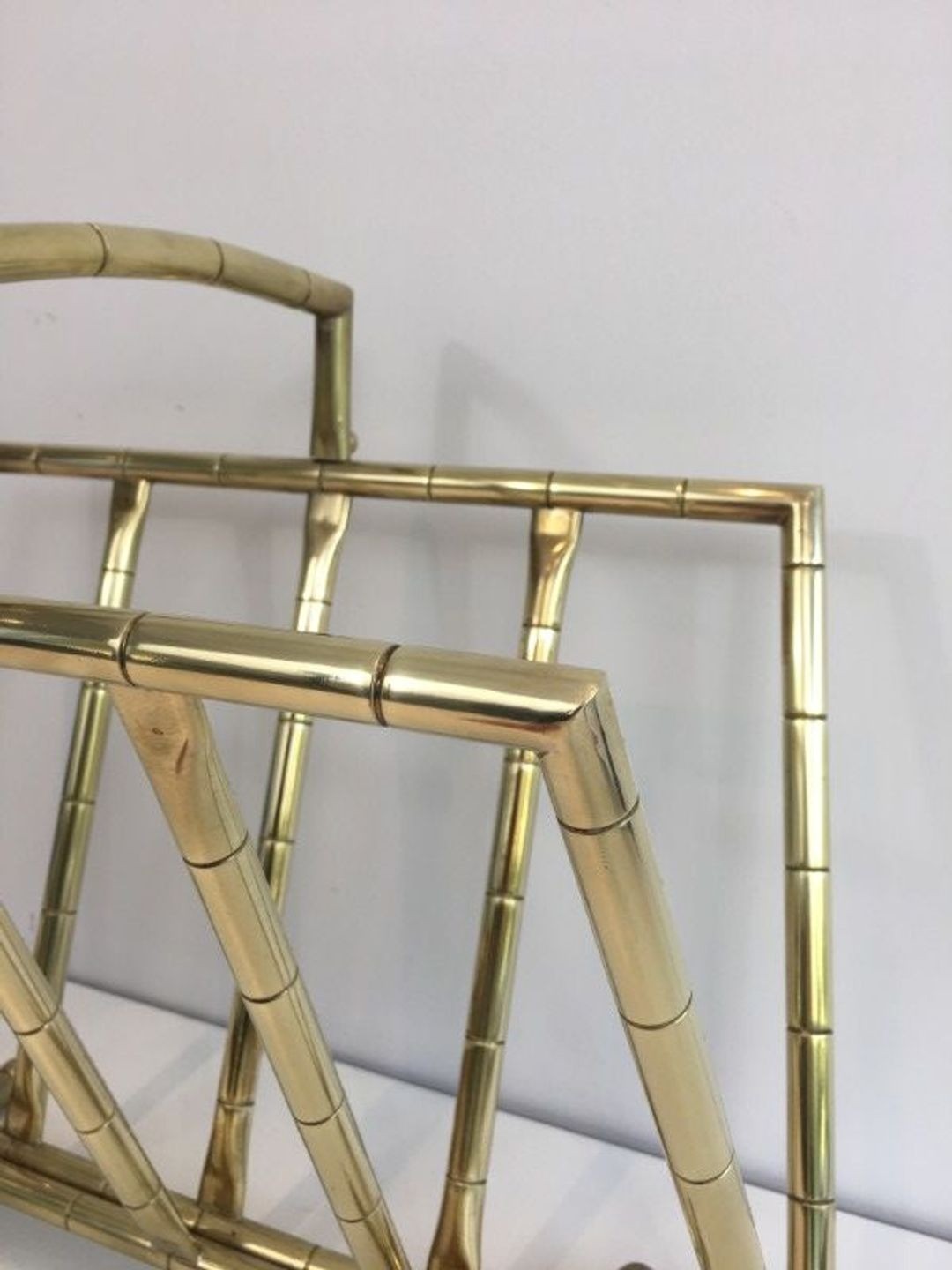
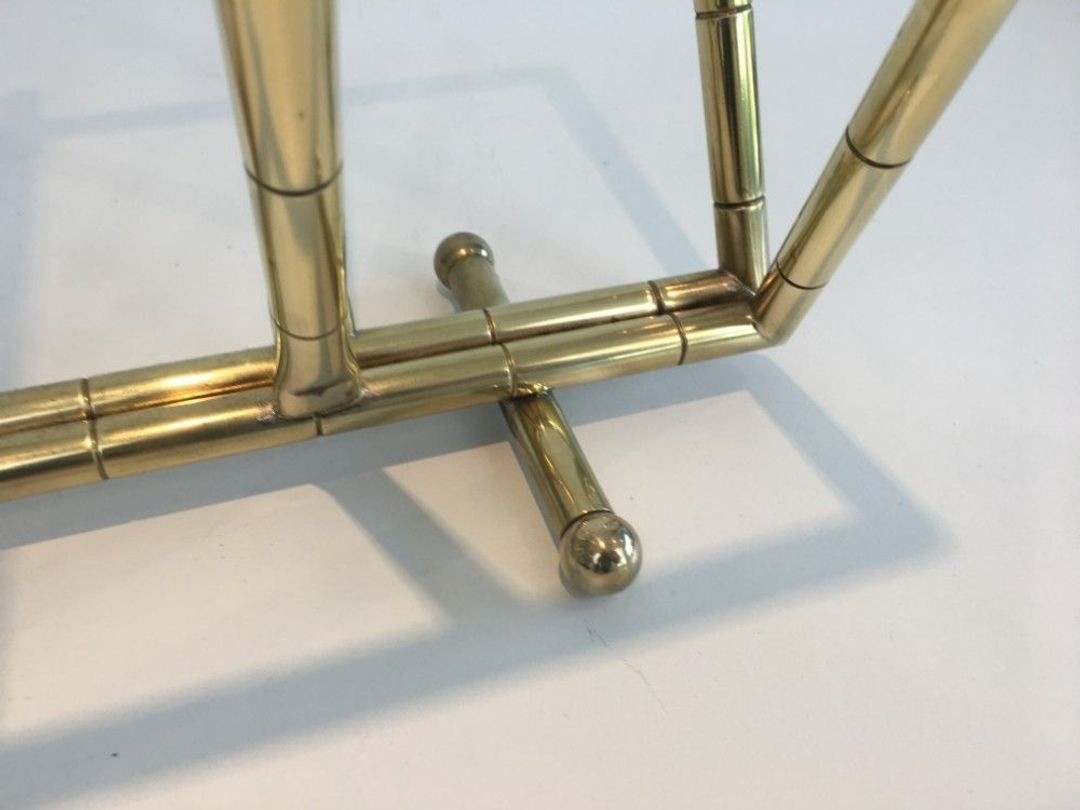
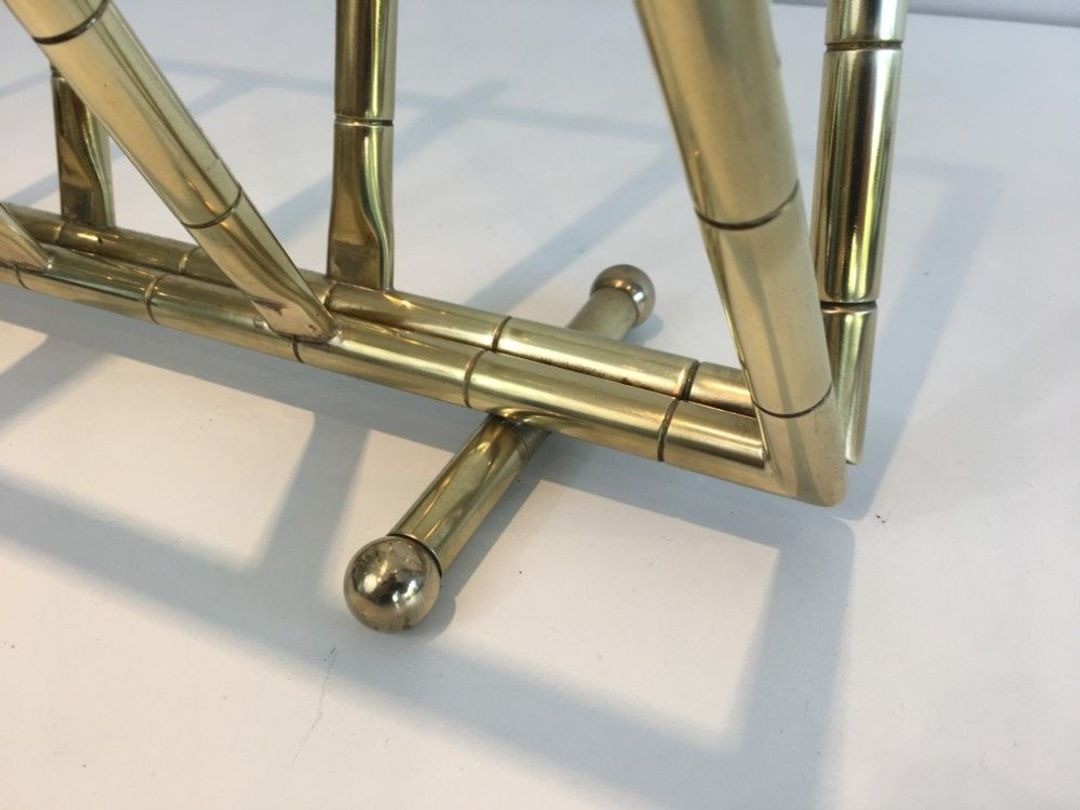
This tradition, born of the chinoiserie craze of the Ancien Régime, revived in the Napoleon III period, and experiencing a third flowering in the French interior of the 1960s and 1970s, is fully present in this magazine rack. Maisons like Baquès and Jansen reintroduced the faux-bambou motif as part of a broader Orientalist nostalgia: brass components with carefully articulated nodes were assembled into furniture that combined Eastern visual vocabulary with Western domestic function. The warm patinated brass of this piece encodes the lightness and organic rhythm of bamboo in a material that will outlast everything organic around it—the ultimate act of preservation.
French work, circa 1970, in fine condition commensurate with its age. Dimensions: W. 47.5 cm × D. 27 cm × H. 39 cm.