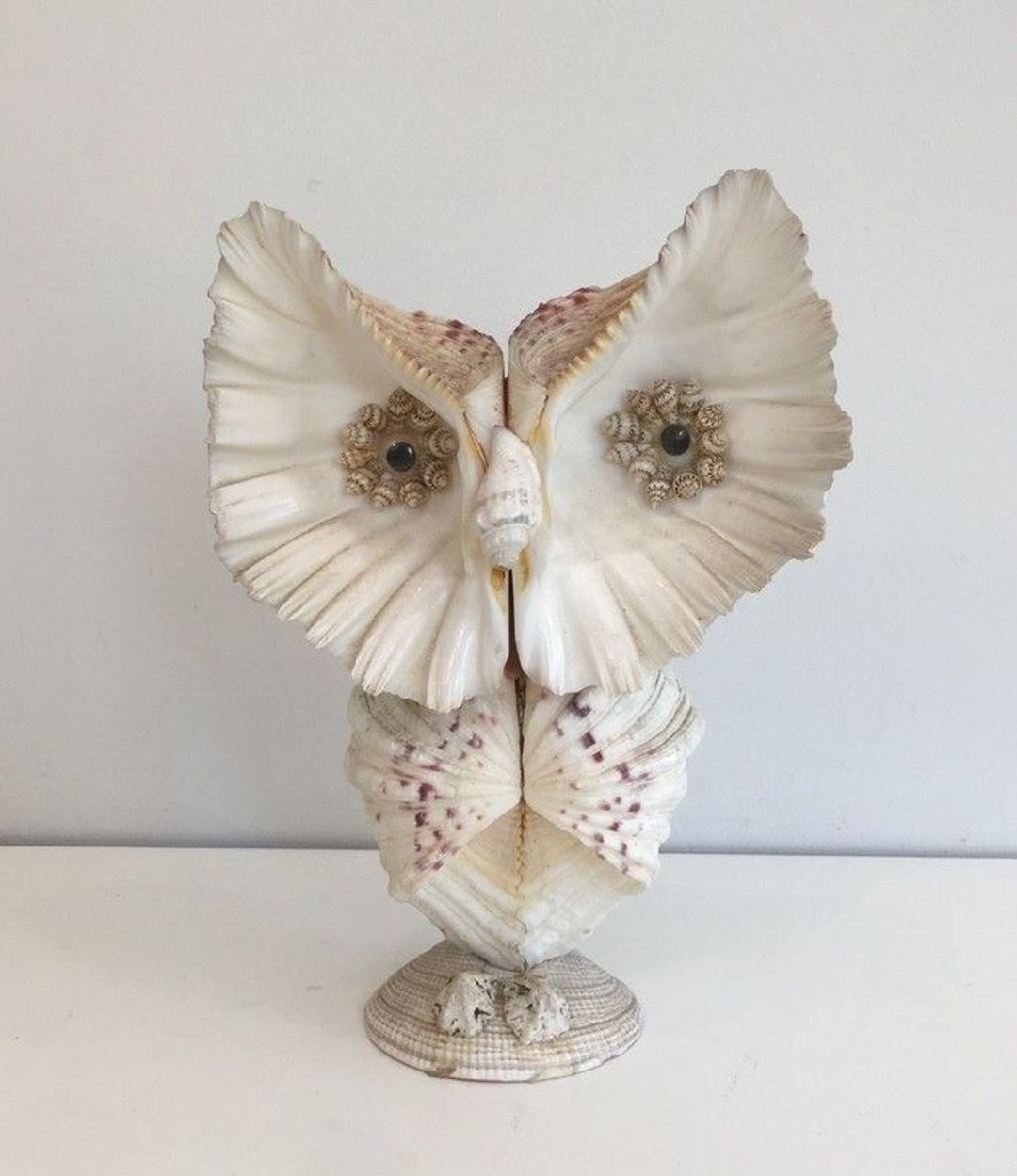
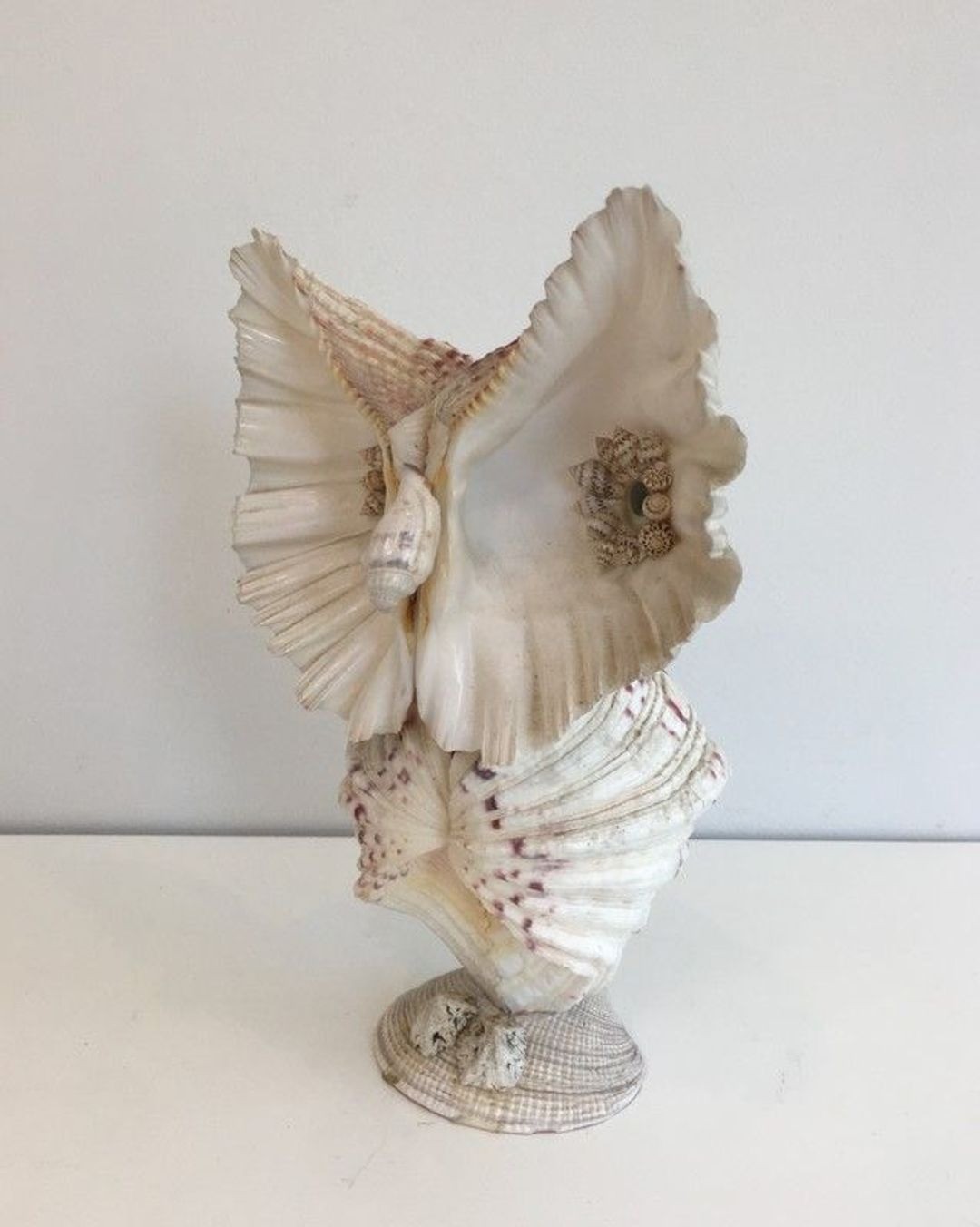
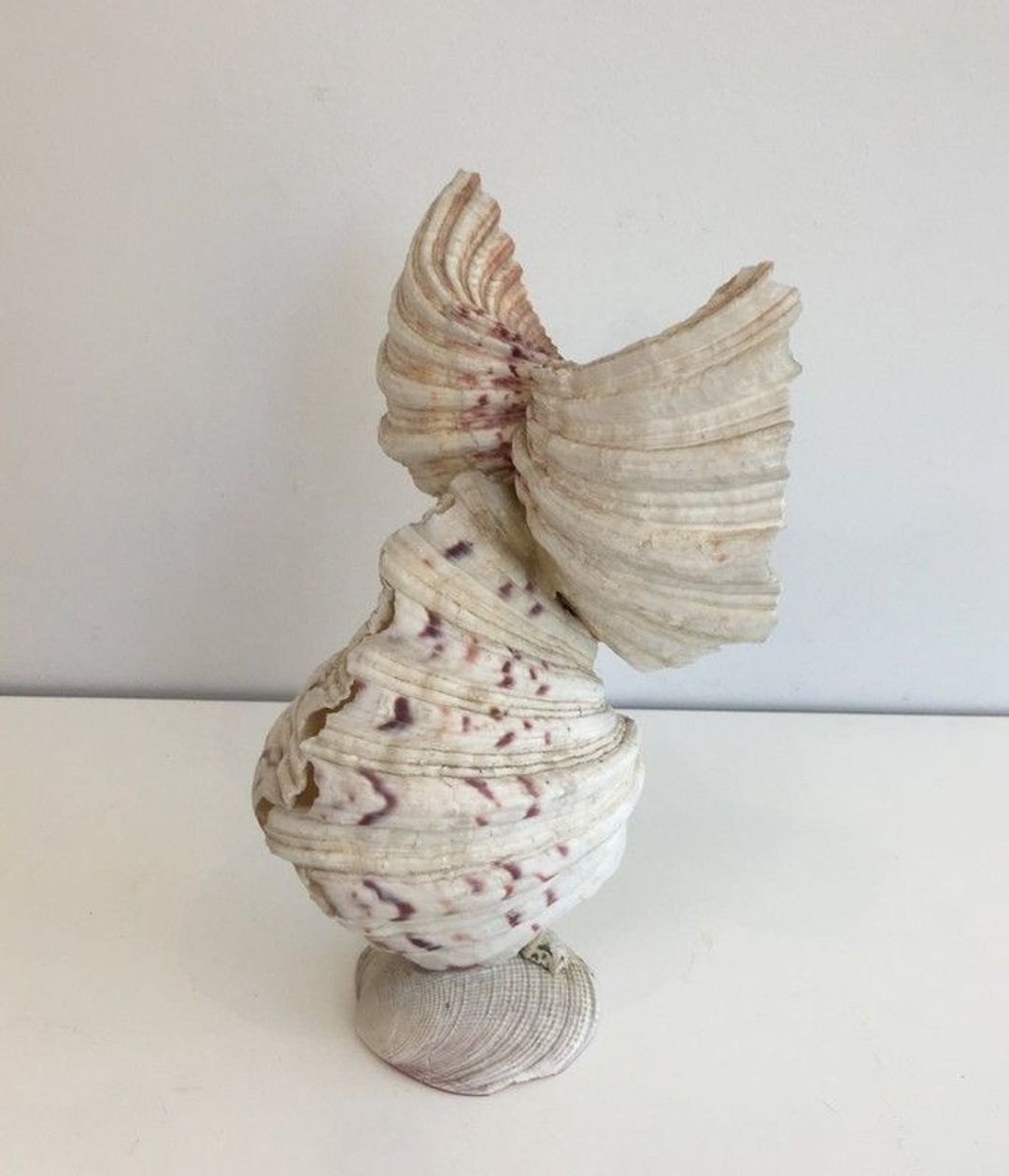
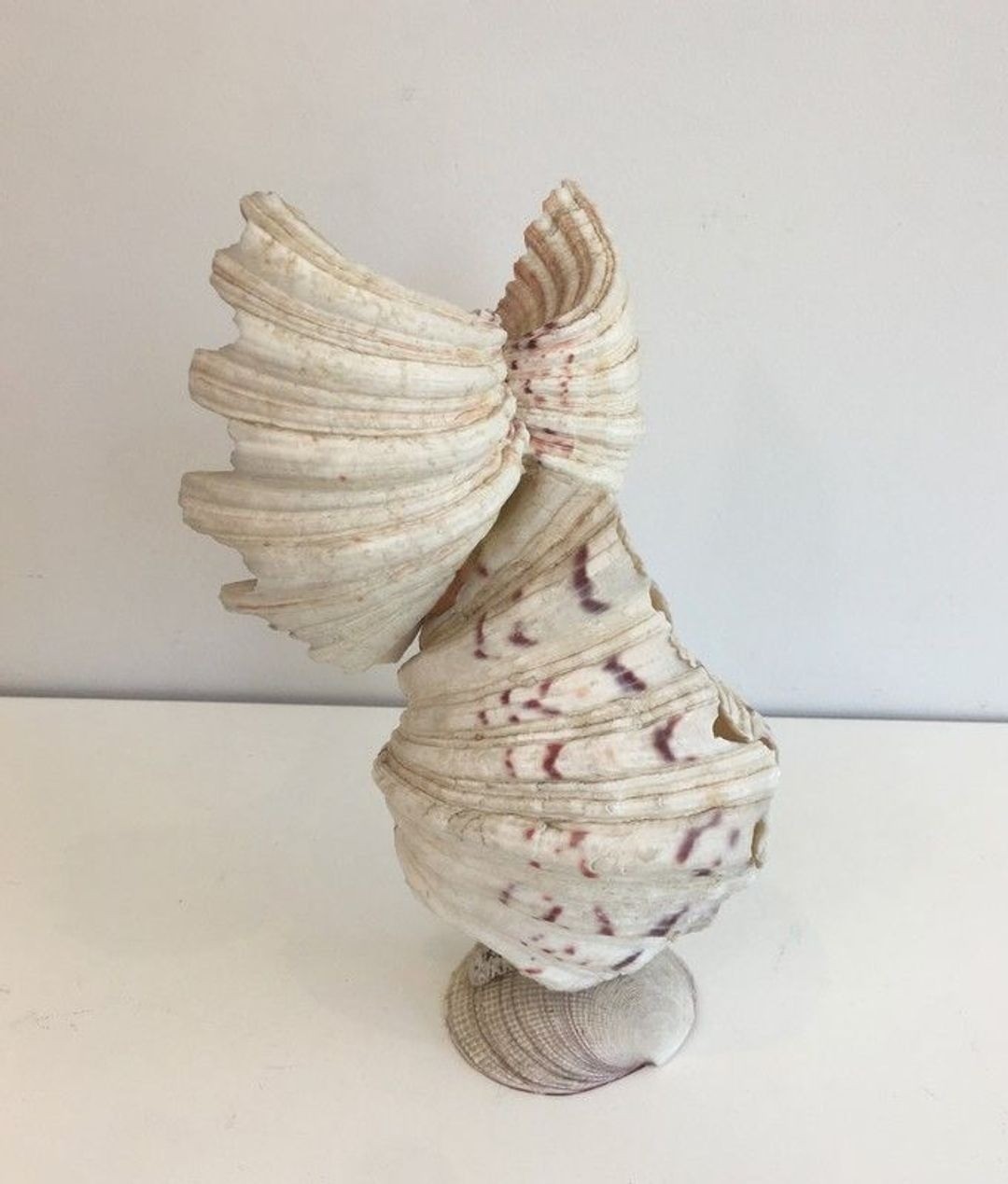
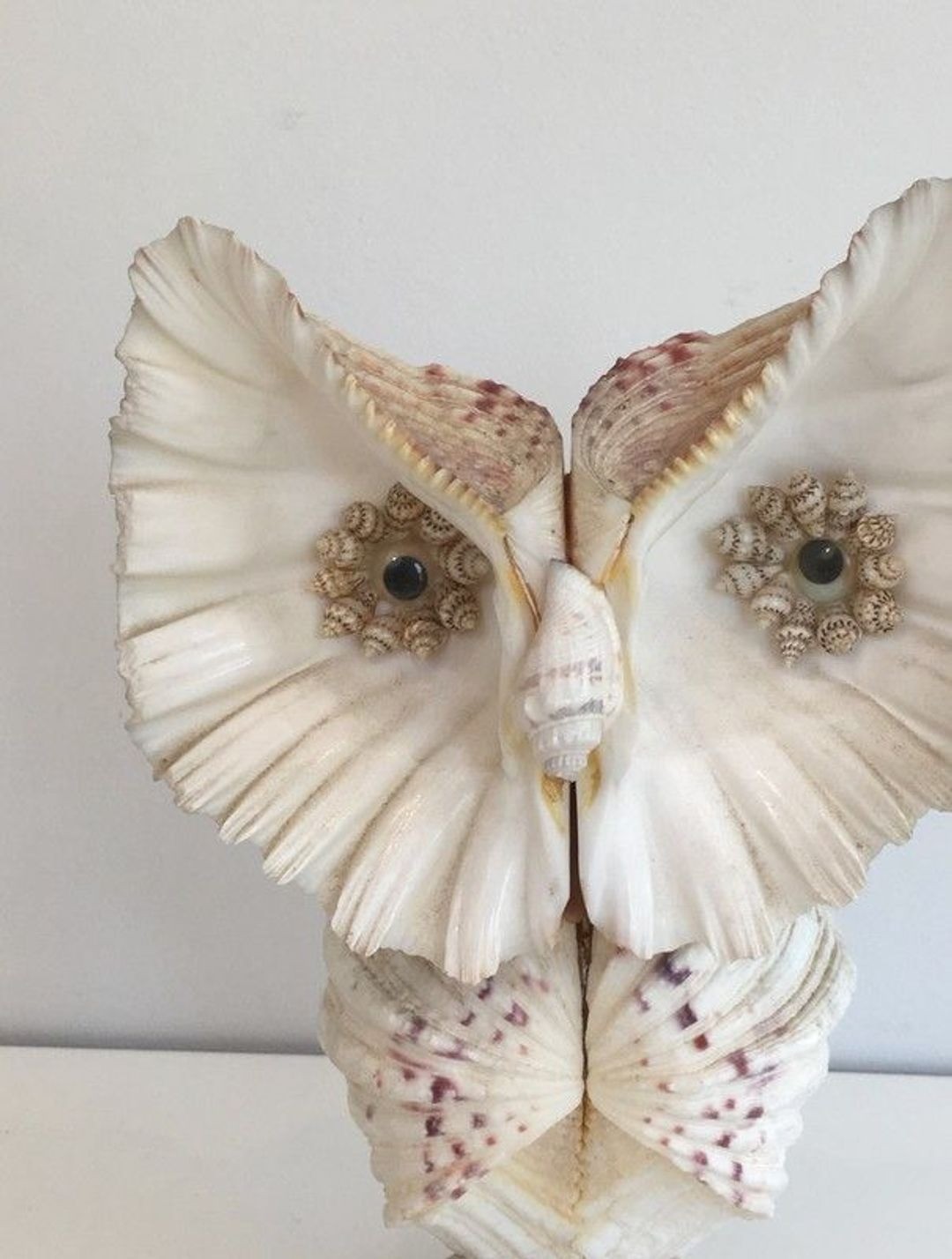
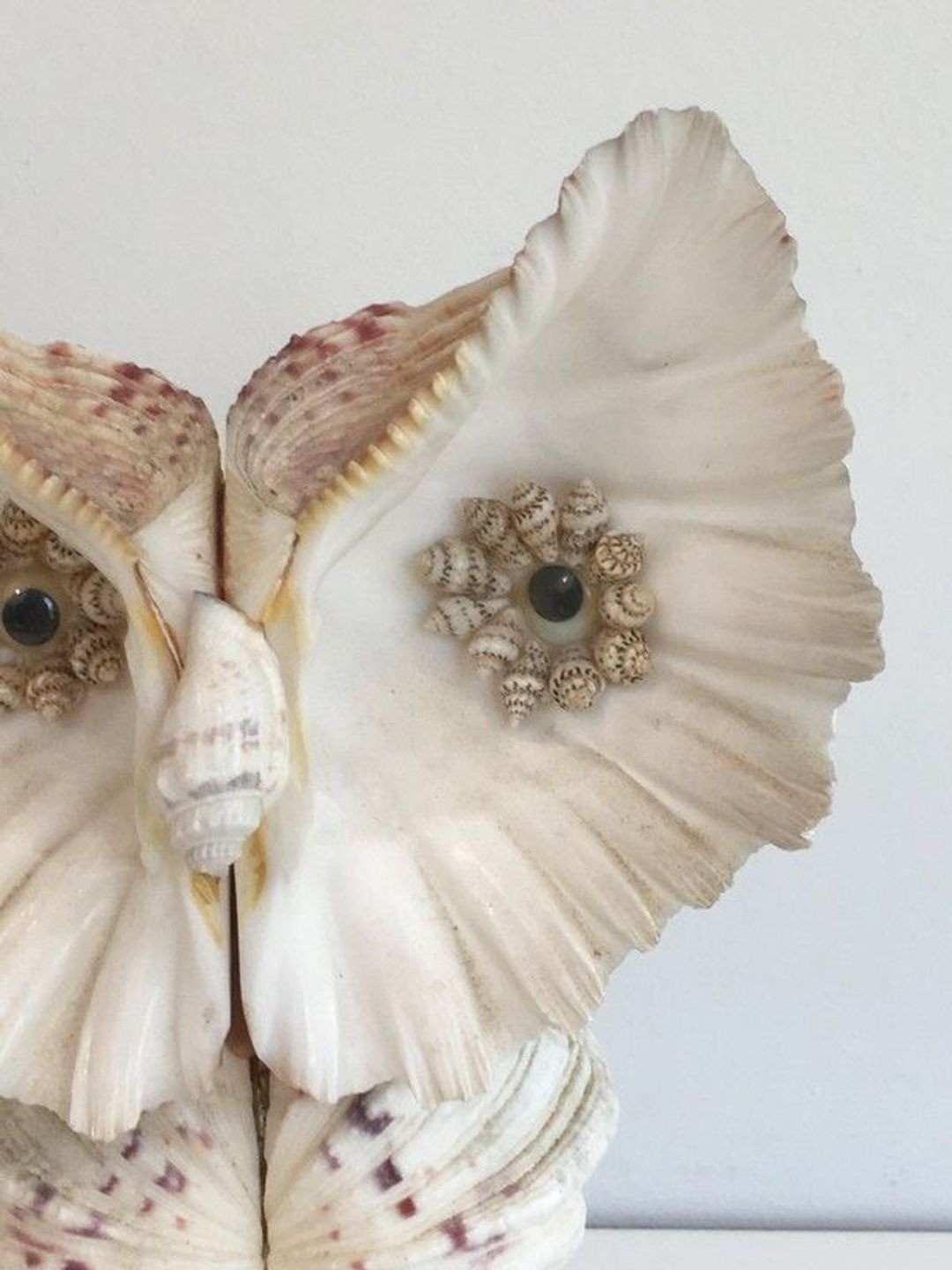
A decorative owl sculpture assembled from a variety of natural shells, the maker having exercised considerable ingenuity and patience in selecting and combining shells of different sizes, textures, and profiles to produce a convincingly owlish result. The wings are the most immediately striking element: formed from large ribbed scallop shells—their radiating flutes providing the suggestion of primary feathers—they are spread wide at either side of the body in the characteristic display posture of an alert owl. The body itself is built up from smaller shells arranged in overlapping rows, the variation in size and texture creating a convincing impression of layered plumage. The face, with its round forward-facing eyes and hooked bill, is resolved with particular expressiveness, the circular orbital shells giving the bird its characteristic watchful intensity.
The art of shell-work, or coquillage, has a long and distinguished history in the decorative arts. Shell grottos were a feature of French and English garden architecture from the seventeenth century onwards, and shell-decorated furniture, mirrors, and decorative objects were produced throughout the eighteenth and nineteenth centuries as prestigious curiosities for the cabinets of natural history collectors and aristocratic patrons. By the late nineteenth century, shell-work had migrated from the grand grotto to the domestic mantelpiece, where small shell sculptures, boxes, and ornaments became popular expressions of a craft tradition that valued the natural world’s own ornamental ingenuity. The 1970s saw a revival of interest in folk and craft traditions, including coquillage, and French craftsmen and craftswomen produced shell sculptures of considerable ambition during this period.
The owl was one of the most fashionable motifs in European and American decorative arts from the 1960s through the 1970s, appearing across a remarkable range of media from glazed ceramic to wicker, macramé to carved wood. Its associations with wisdom, learning, and nocturnal mystery made it an enduring symbol in the context of the study or library, and its graphic simplicity—round eyes, triangular beak, symmetrical wings—made it ideal for the kind of folk-craft assembly seen here. This shell owl combines those associations with the natural history tradition of the curiosity cabinet, making it a doubly layered cultural object.
In good condition, the shells retaining their natural colouring and the construction its structural integrity. A charming and singular decorative object, suitable as a conversation piece on a desk, bookshelf, or mantelpiece.