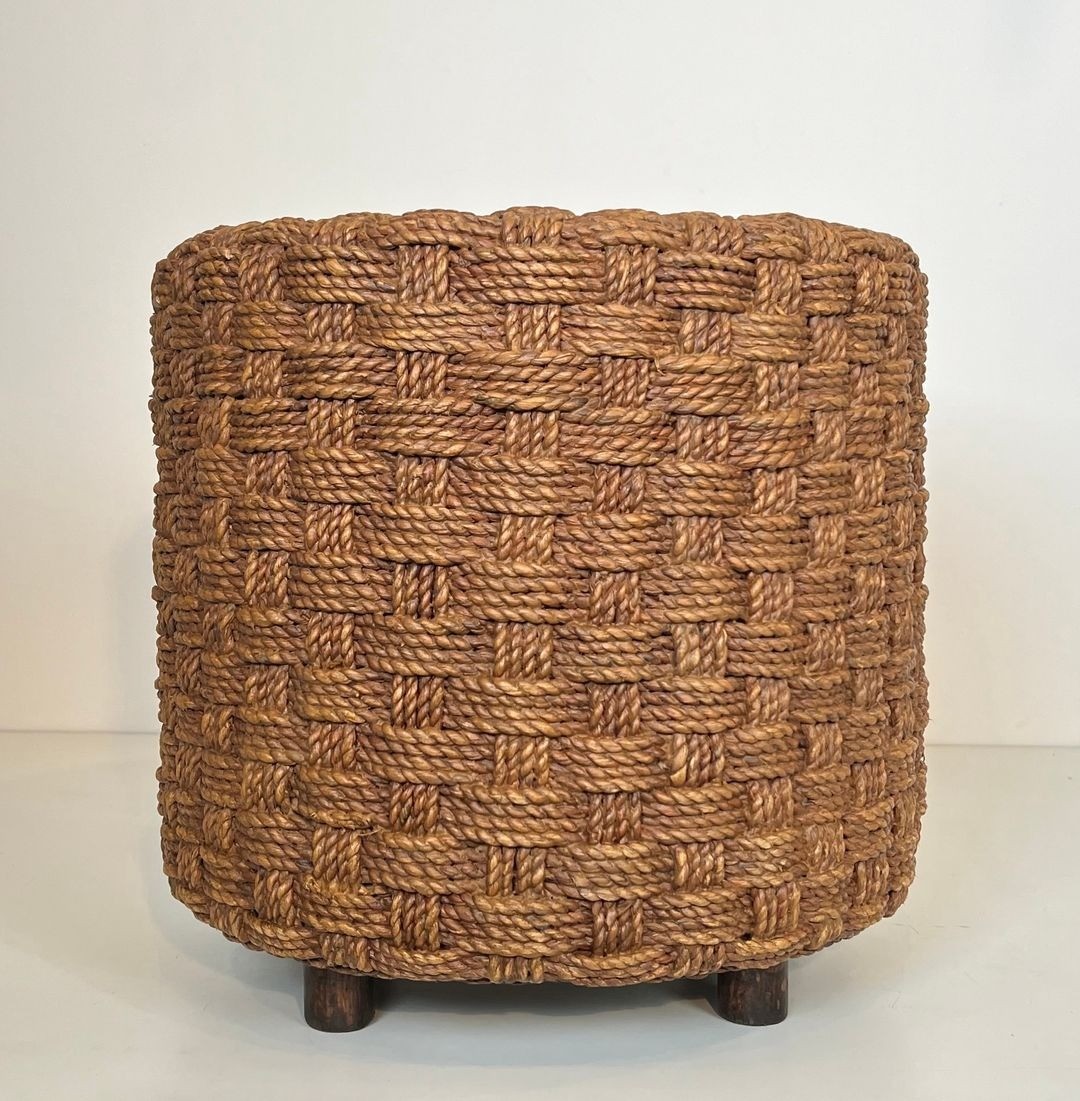
The rope stool occupies a rare place in the history of French furniture: it is an object that carries the memory of labour. Rope, before it reached the interior, belonged to the world of the corderie de marine — the naval ropemaking tradition that furnished the rigging of French fleets from the age of Colbert onward. When Adrien Audoux and Frida Minet began exploring natural fibre as a structural material in the 1950s, they were not working in the abstract: they were translating a material that had been tested at sea, under load and in salt air, into the peaceable register of the modern living room. The result was furniture that felt both primordially simple and thoroughly contemporary.
Adrien Audoux (born 1900) and Frida Minet (born 1910) formed one of the most distinctive creative partnerships in postwar French design. Based in Paris but deeply influenced by coastal and artisanal traditions, they developed a vocabulary centred on natural rope — sisal, hemp, rattan — stretched or wound over metal or wooden armatures to create seats, stools, chairs and ottomans of remarkable strength and tactile warmth. Their work appeared in the pages of French interior design publications throughout the 1950s and 1960s, celebrated for its combination of modernist austerity and material sensuousness. By the 1970s, their aesthetic had become widely influential, inspiring a generation of workshop producers who adapted their formal language for a broader public. This stool, produced in that spirit, exemplifies the Audoux-Minet approach: rope given the dignity of structure, wood reduced to its most direct geometric function.
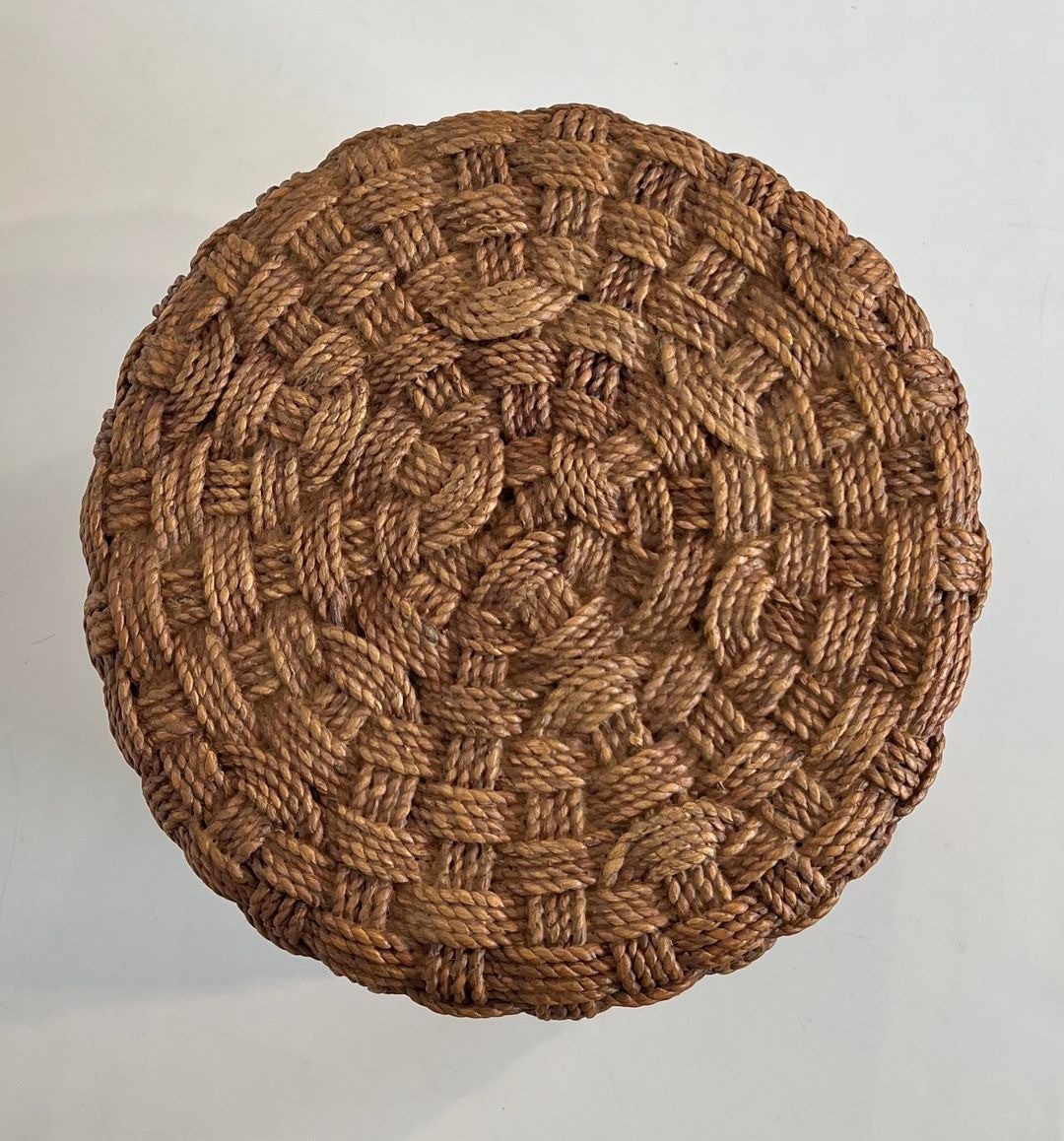
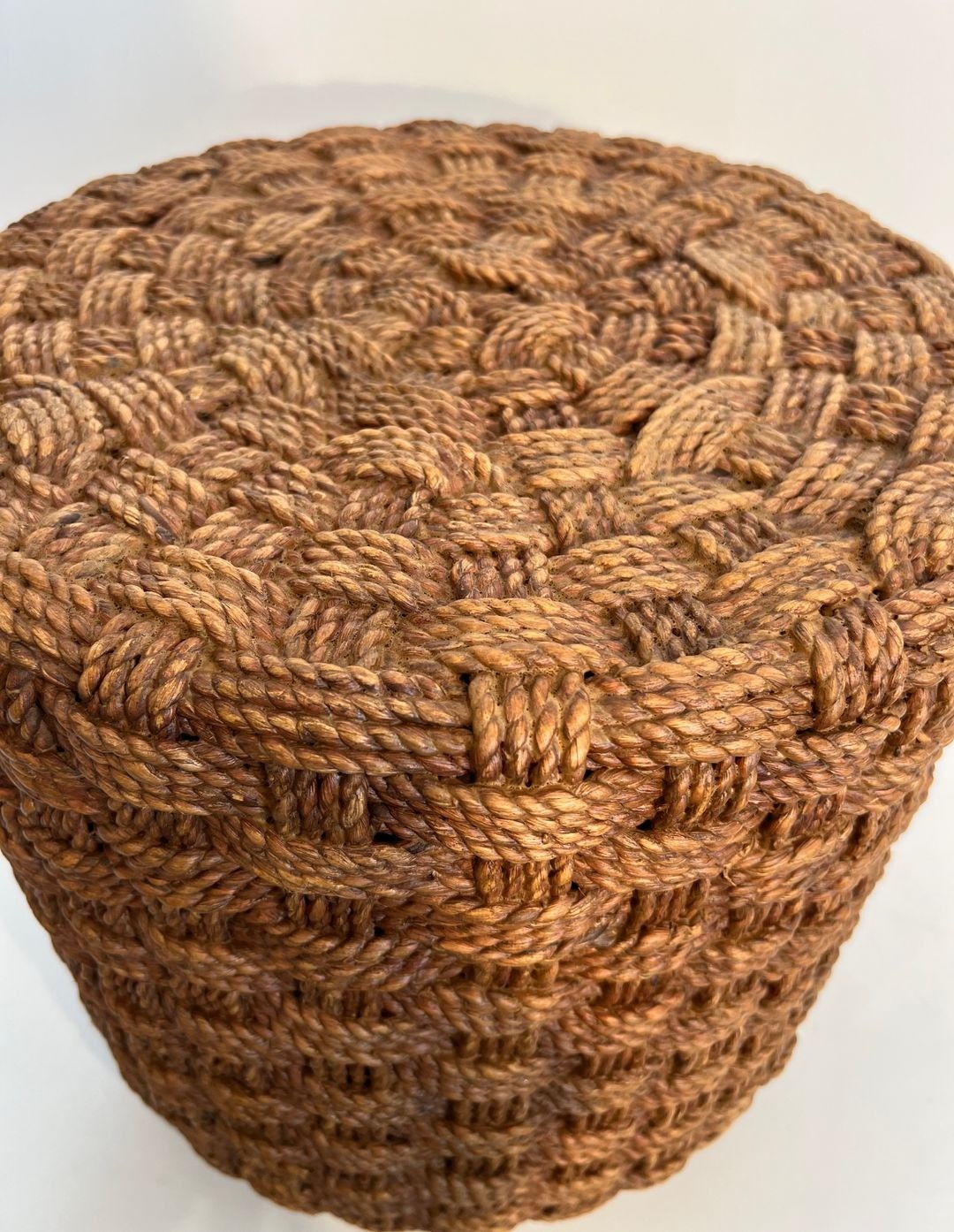
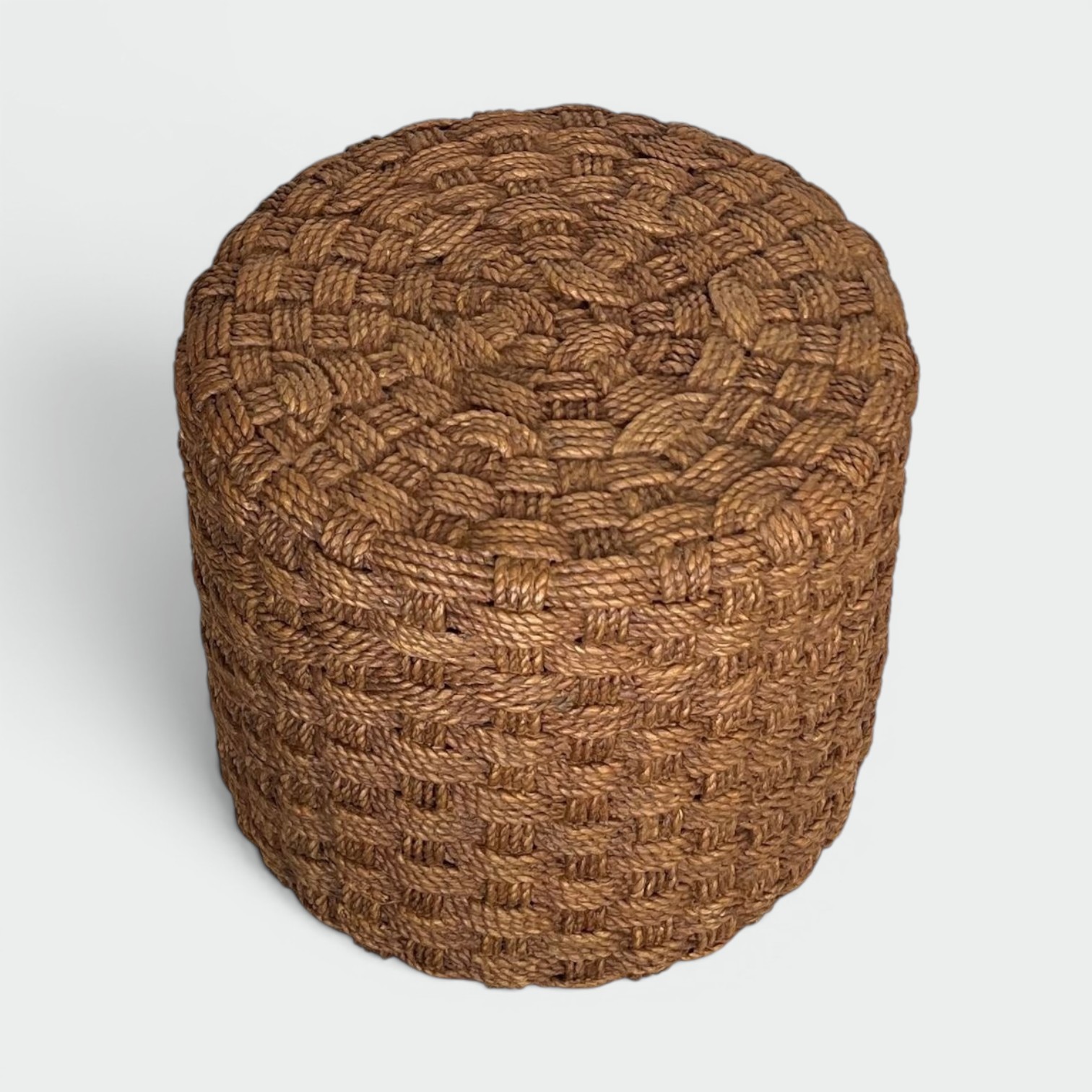
The stool is the most ancient and immediate of seating forms — no back, no arms, nothing between the person and the object except the seat itself. In this reduction there is a kind of rigour: the stool demands that its material be sufficient, that its form carry all the weight of the design without narrative supplement. The circular woven rope surface of this piece, taut and durable after fifty years of use, speaks to the quality of its fabrication. The round wooden feet, precise and undecorated, ground the piece without competing with the rope’s natural texture. Available in a series of twelve, these stools carry within them the logic of a designed interior: placed around a low table, arranged in a row, or used singly as accent pieces, they offer a flexibility that more monumental furniture cannot match.