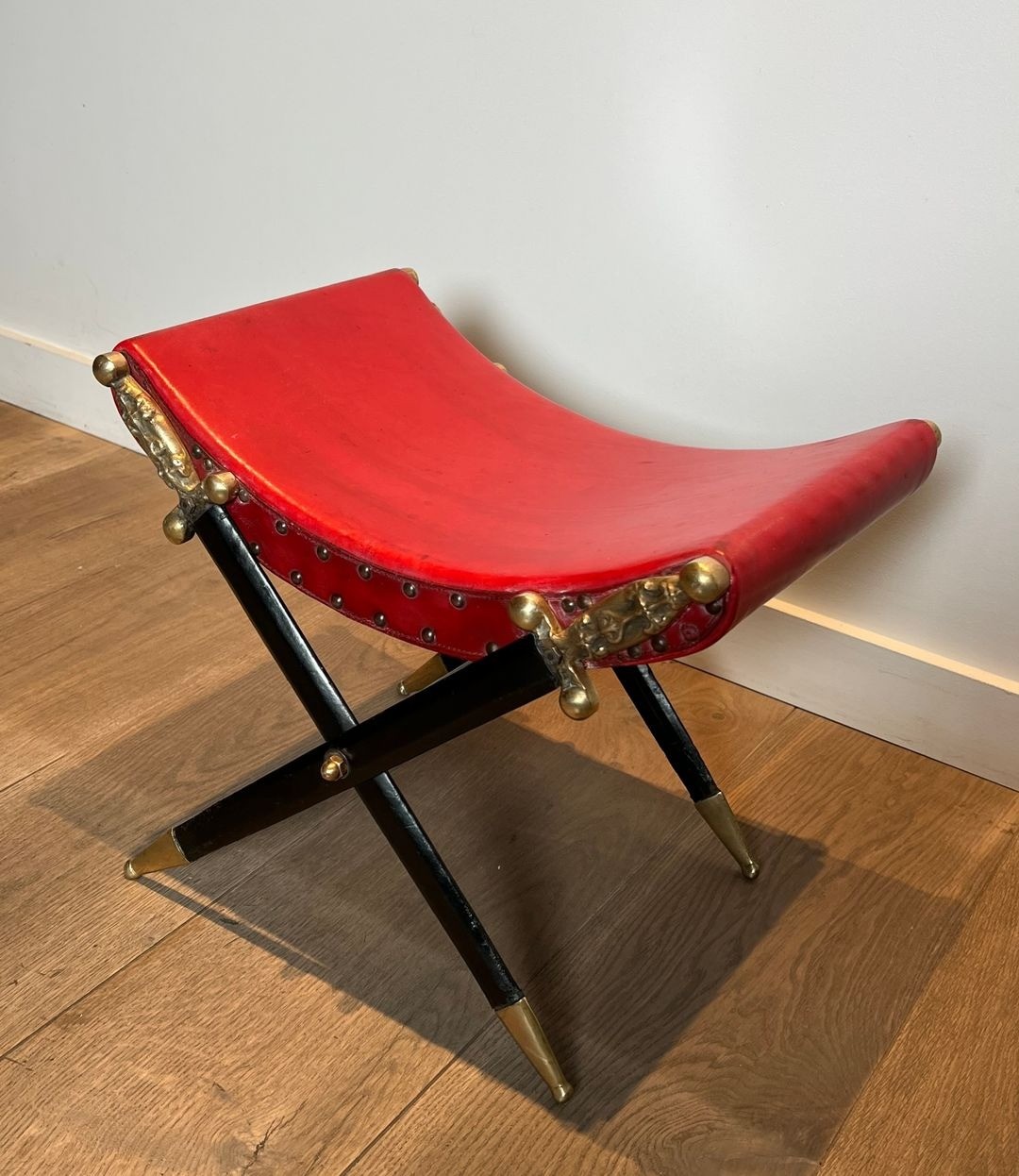
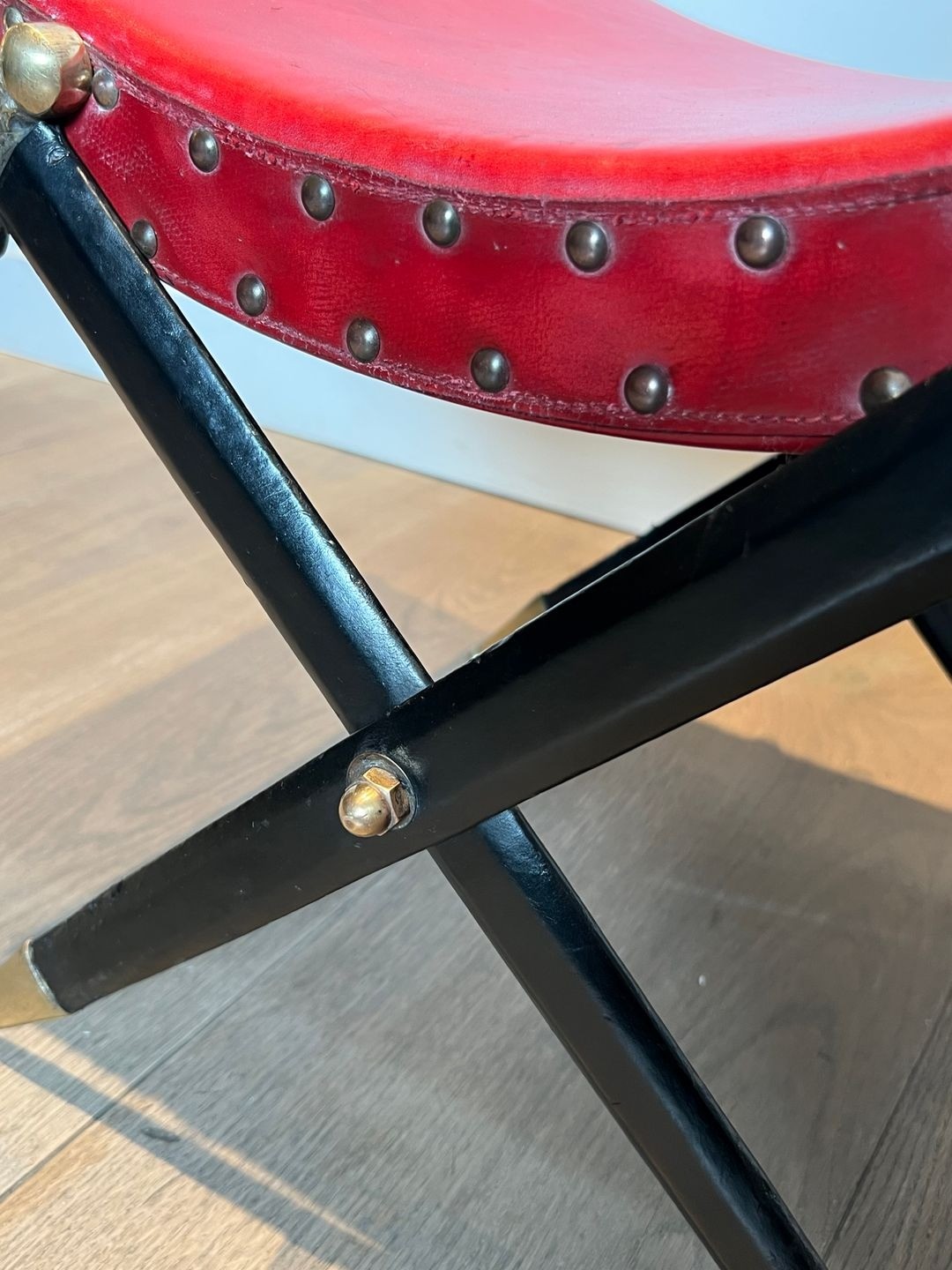
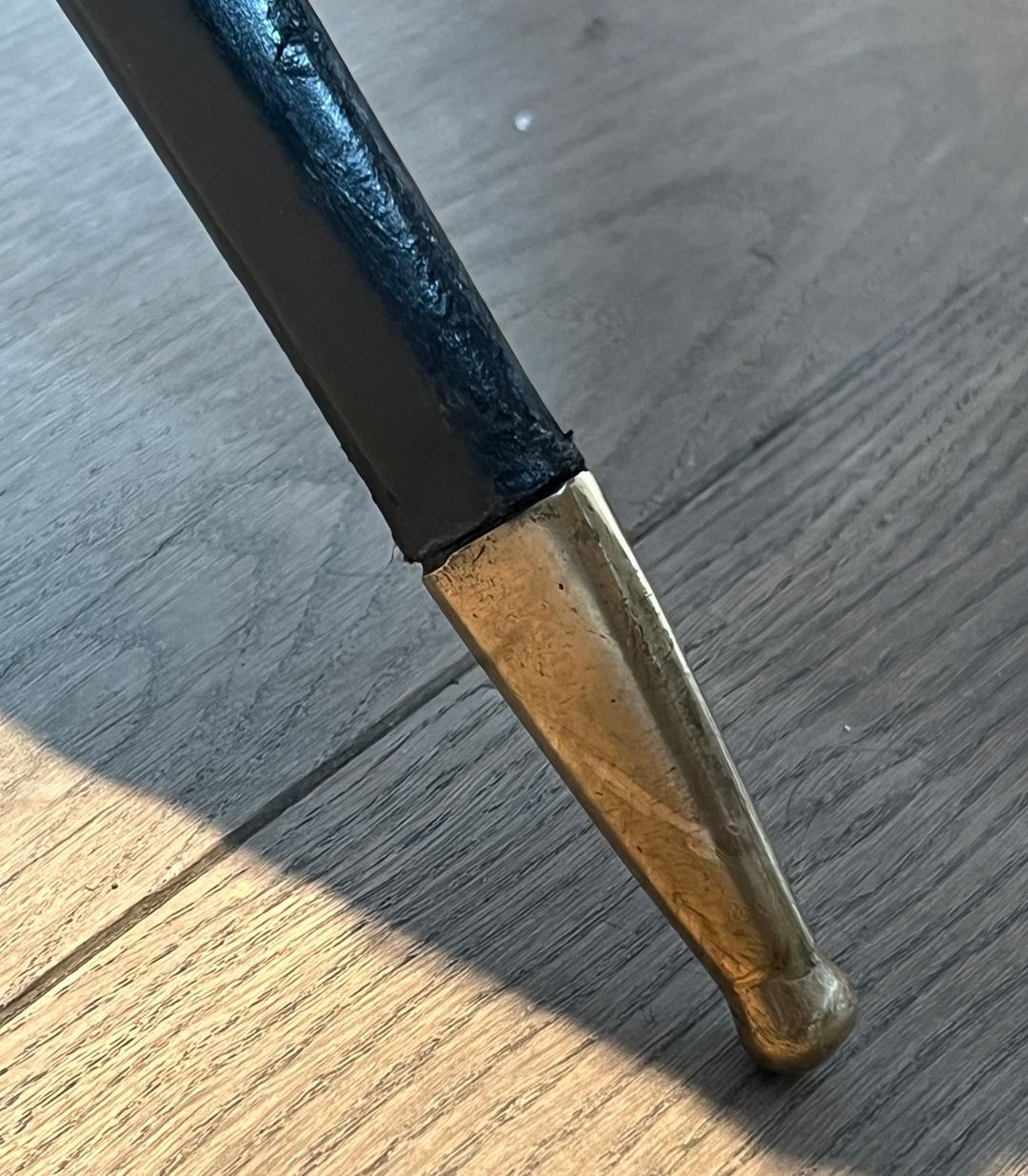
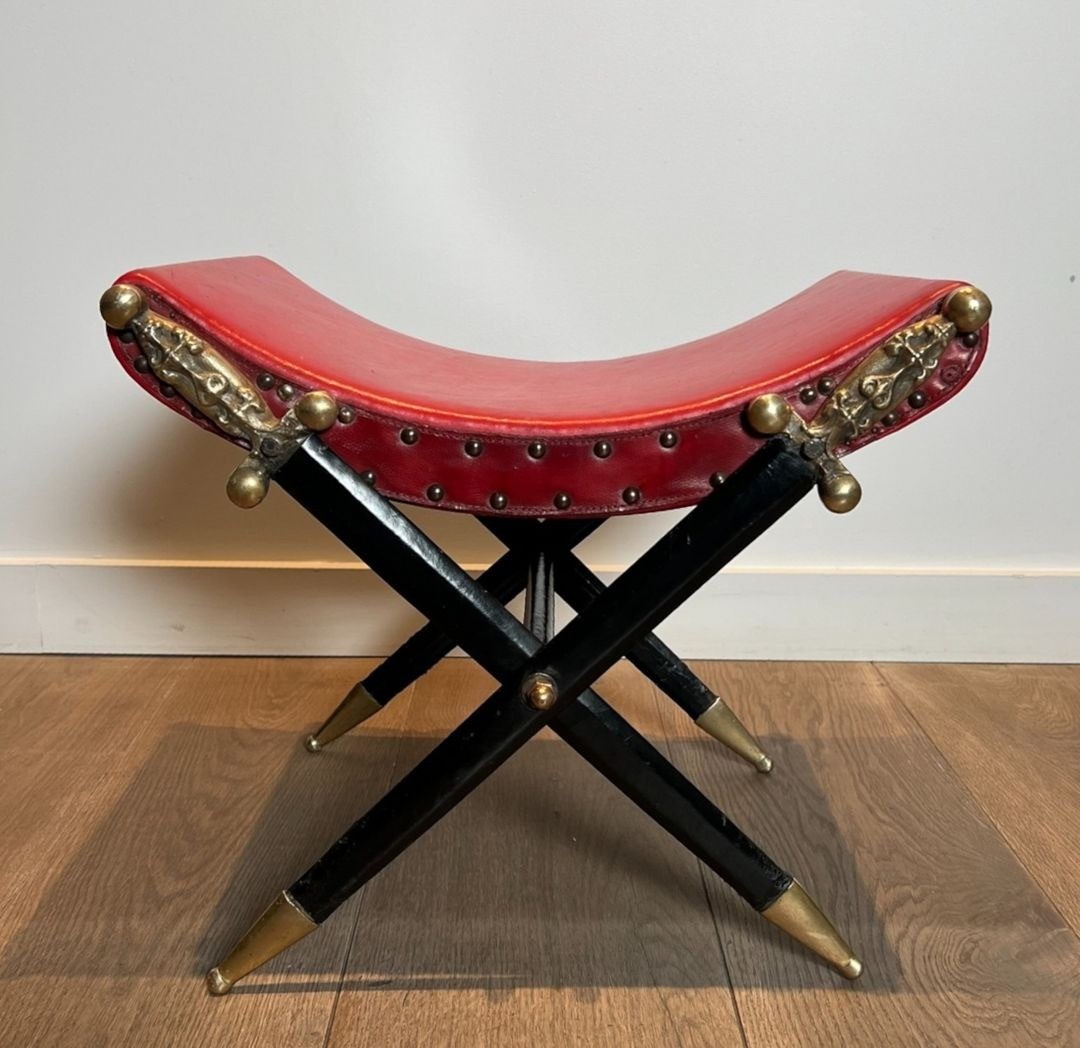
Few pieces of seat furniture pack as much symbolic content into so compact a form. This curule stool, measuring 45.5 centimetres wide, 36.5 deep, and 39 tall, presents a seat upholstered in red leather and secured with brass studs—a luxurious surface that rests upon a base of extraordinary invention: four crossed swords in bronze and black leather-covered metal, their blades forming the traditional X-frame of the ancient Roman curule. The combination of materials—imperial red, burnished brass, bronze, and the midnight register of black leather—constitutes a precise vocabulary of power.
The sella curulis—the Roman magistrate’s folding seat—was a symbol of the highest civil and military authority in ancient Rome, reserved for consuls, praetors, and the most senior magistrates. Its revival by Napoleon’s Empire style (circa 1800–1815) was deliberate and programmatic: the First Consul and then Emperor sought to connect his regime to Roman republican and imperial precedent at every turn, from architecture to dress to furniture. The curule stool became a key piece in the Empire interior, its X-frame translated into bronze, ebony, and gilded wood, its legs transformed into swans, lions, and—as in this remarkable example—crossed swords. The latter motif added an explicitly martial dimension to the ancient form, celebrating military victory as the foundation of political authority.
Made in France circa 1900, this stool belongs to the Neo-Empire Revival that flourished during the Third Republic, when nostalgia for the Napoleonic era and its grandeur became a persistent cultural current. Objects of this type were made for military officers’ studies, civic institutions, and private collectors drawn to the prestige of Empire associations. The quality of execution—the precision of the bronze swordwork, the richness of the leather—places this piece in the upper register of its genre: a condensed manifesto of imperial iconography in furniture form.