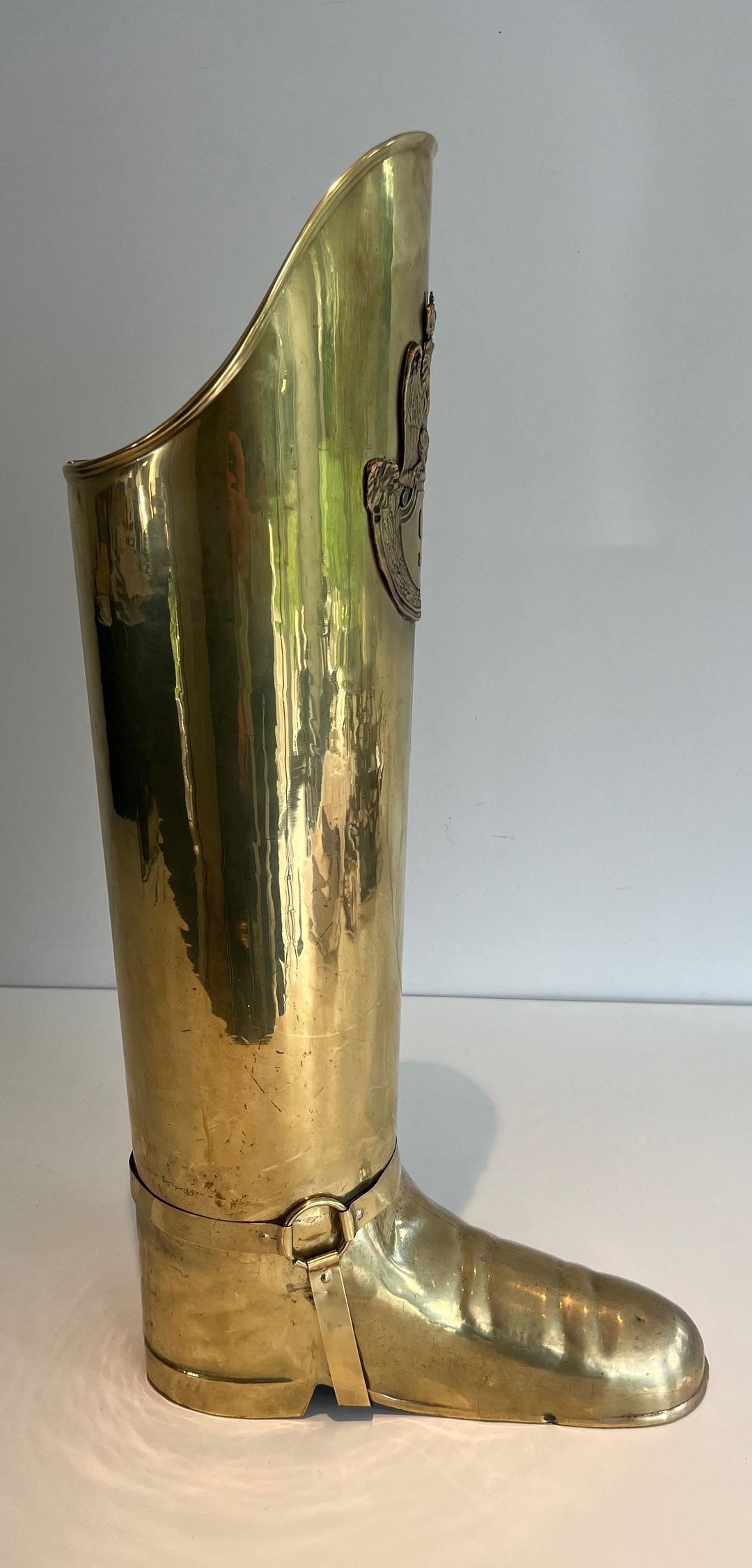
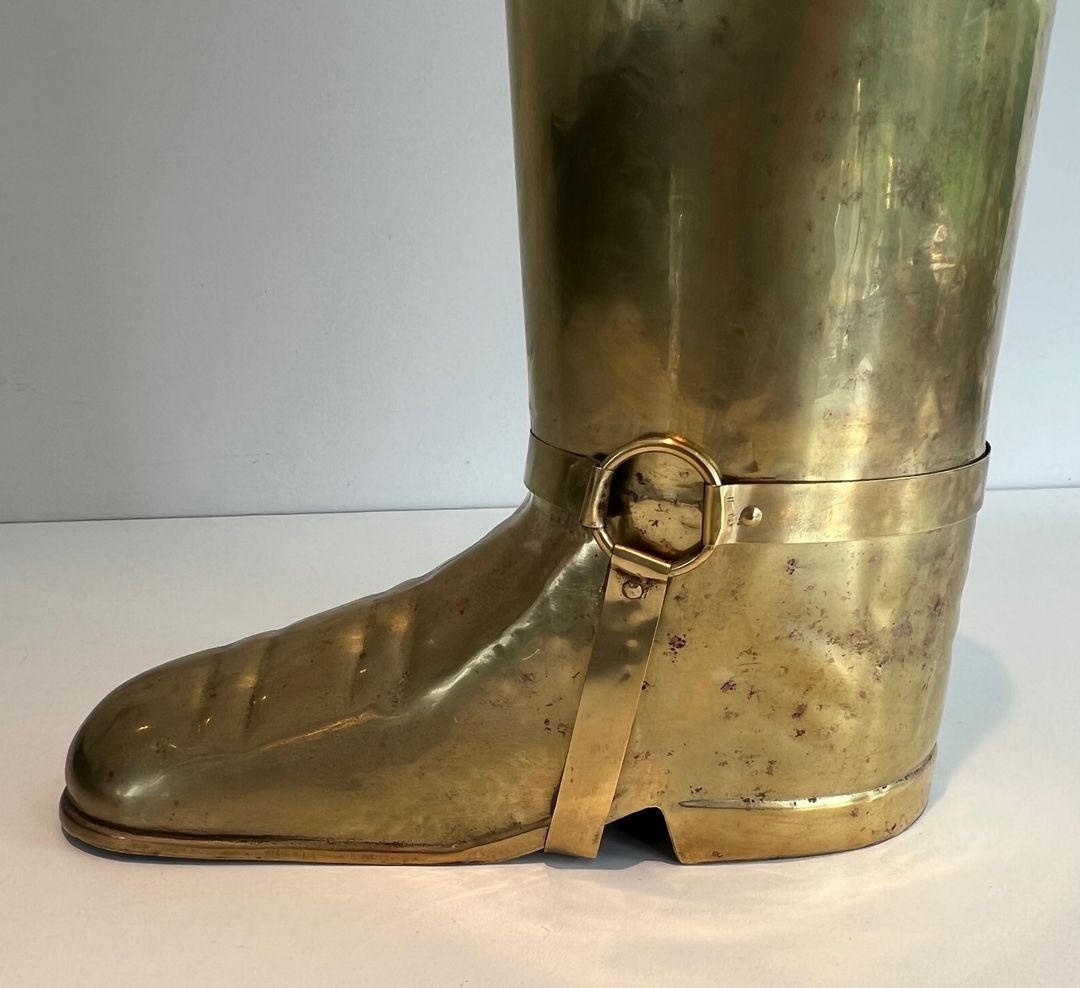
There is a particular kind of intelligence at work in the decorative arts when an object’s form comments directly on its function. The boot-shaped umbrella stand belongs to this tradition of wit : a brass riding boot, standing 59.5 cm tall, receives the umbrellas and walking sticks of the household with a knowing gesture — for what other vessel could be more naturally suited to holding the accoutrements of the outdoors than the boot, the most ancient and intimate of outdoor objects? This is not merely whimsy. The decorative arts of the 1930s were alive to the possibility of the object as a conceit told in material : a pun in brass, a trompe-l’œil that is all the more satisfying for being entirely transparent about its own joke. The intelligence of the piece lies in the fact that it earns its wit through quality of execution.
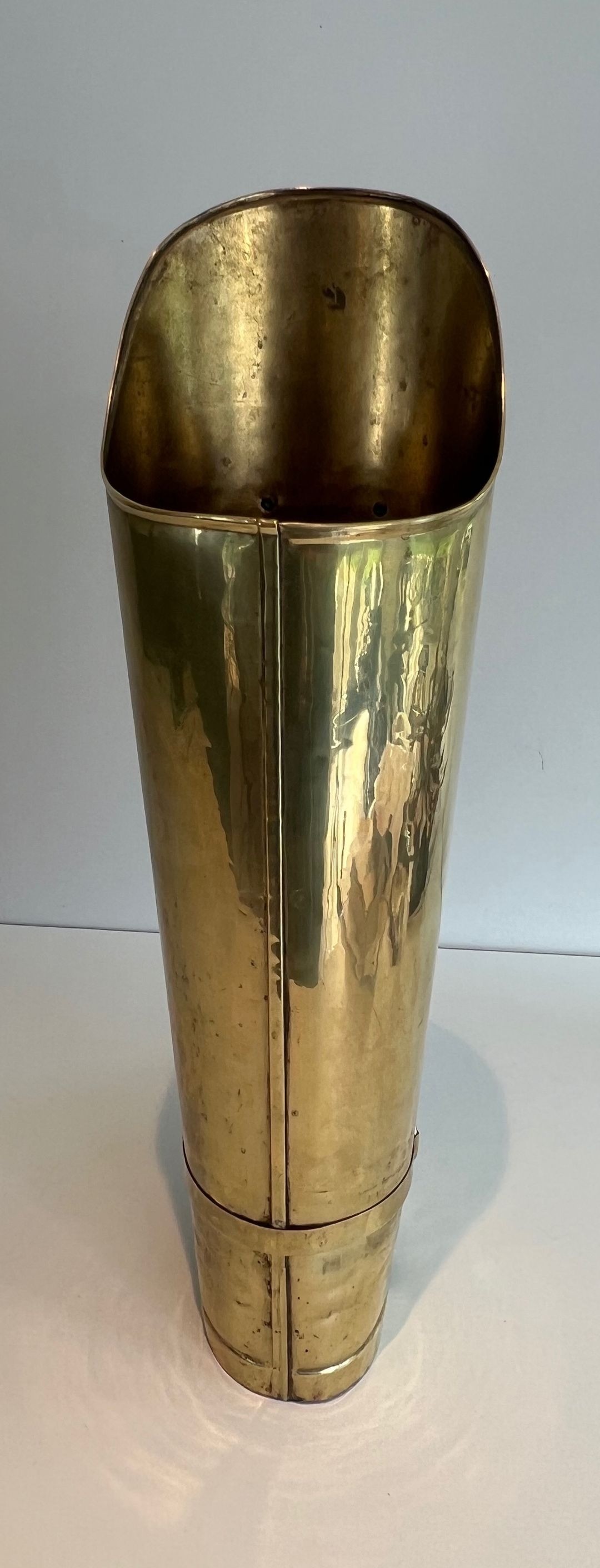
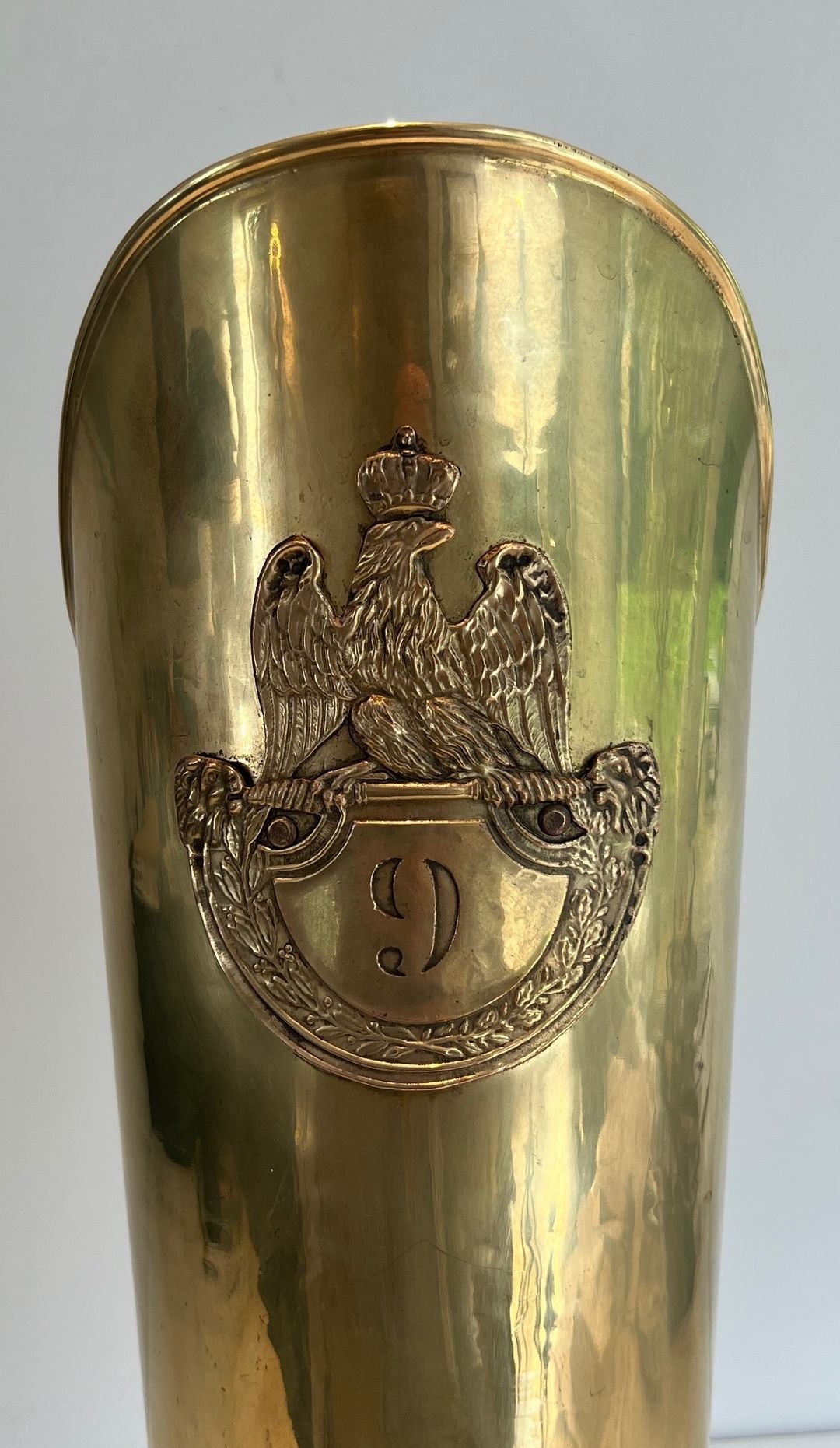
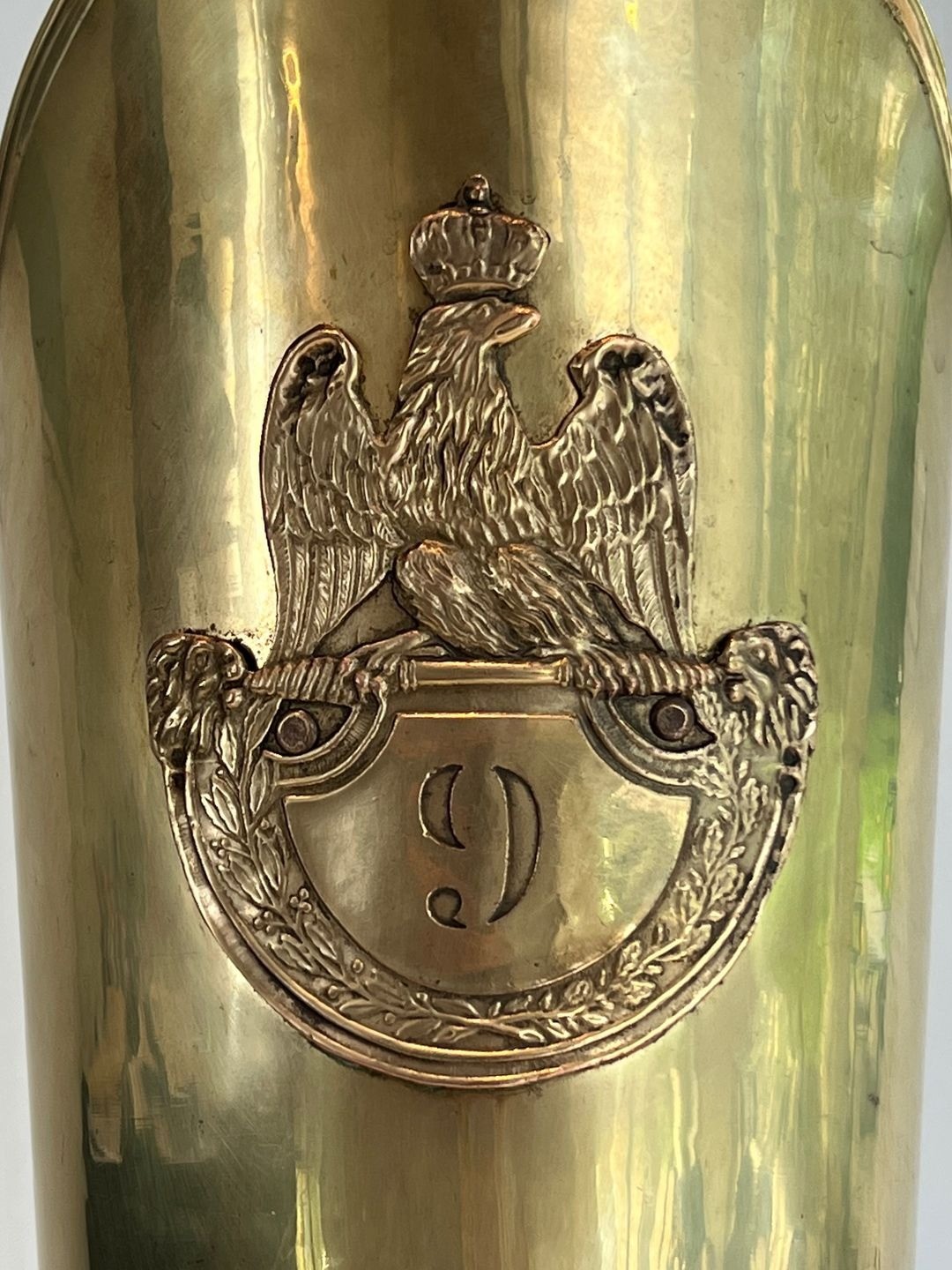
The piece, measuring 18 cm in width, 29.5 cm in depth, and 59.5 cm in height, reproduces the tall form of the riding or hunting boot with a precision that gives it sculptural credibility. In brass — cast, worked, and patinated — the boot has a warmth and solidity that distinguish it from the ceramic or zinc versions that also circulated in this period. Brass is the material that the French atelier reached for when it wanted an object to endure, and here the metal’s warm golden tone reinforces the riding-boot associations of the form. The proportions are those of a tall-shafted boot, faithful to the form in scale and attitude. The patina of the brass, developed over decades, amplifies both the sculptural presence and the quiet wit of the piece.
Boot-shaped umbrella stands are among the most desirable of their type in the contemporary market, combining the appeal of the well-made figurative object with the continuing practical utility of the piece. Their wit makes them immediately legible — a guest who encounters one in an entrance hall understands at once and is delighted — while their quality of execution ensures that they reward closer examination. This example, from the French production of the 1930s and 1940s, represents a particularly refined version : generous in scale, precise in modelling, and rich in the patina that only time can confer. A piece of genuine decorative intelligence and enduring character.