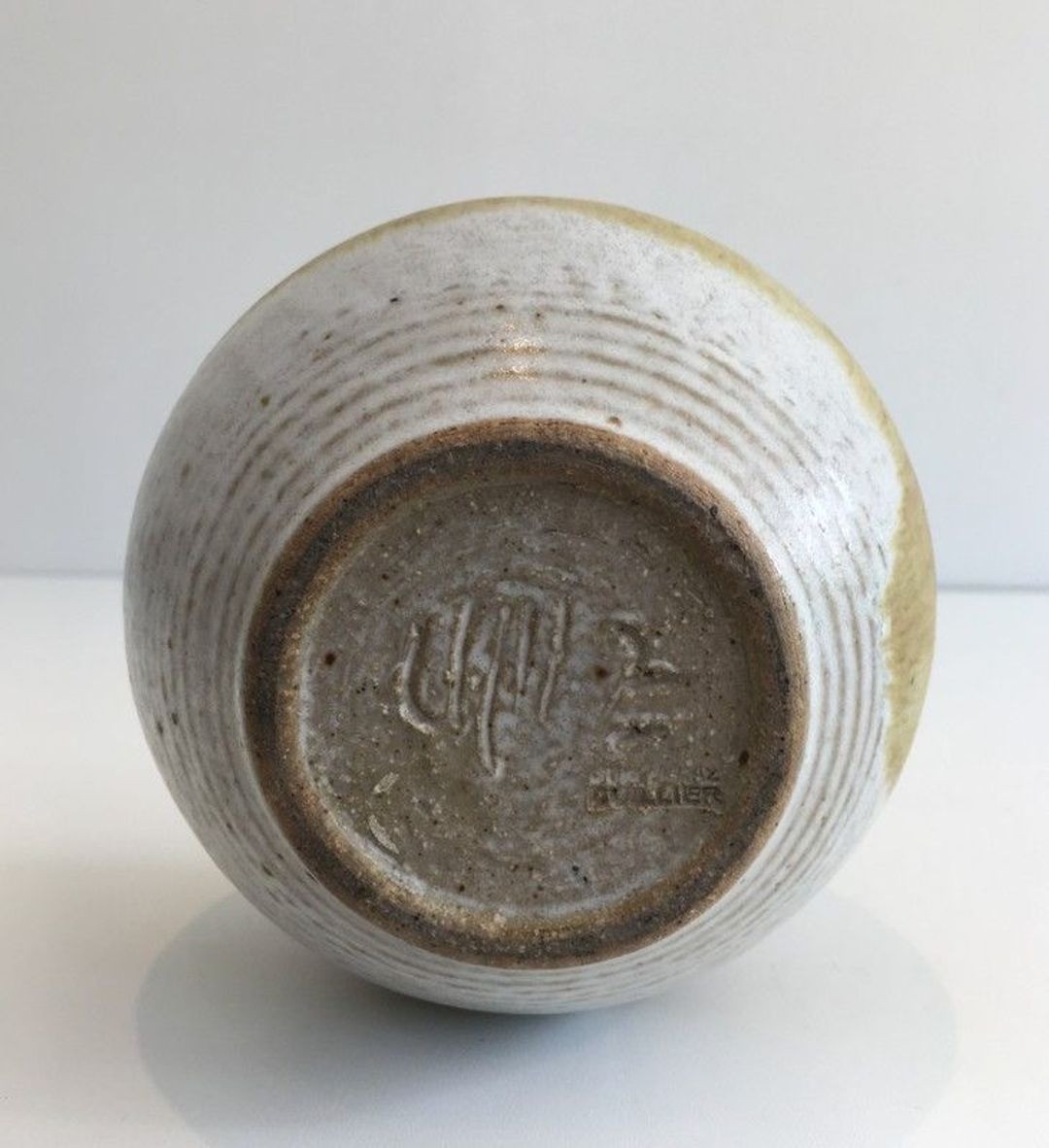
Stoneware Soliflore Vase by Edouard Chapallaz, Duillier, Switzerland, circa 1950
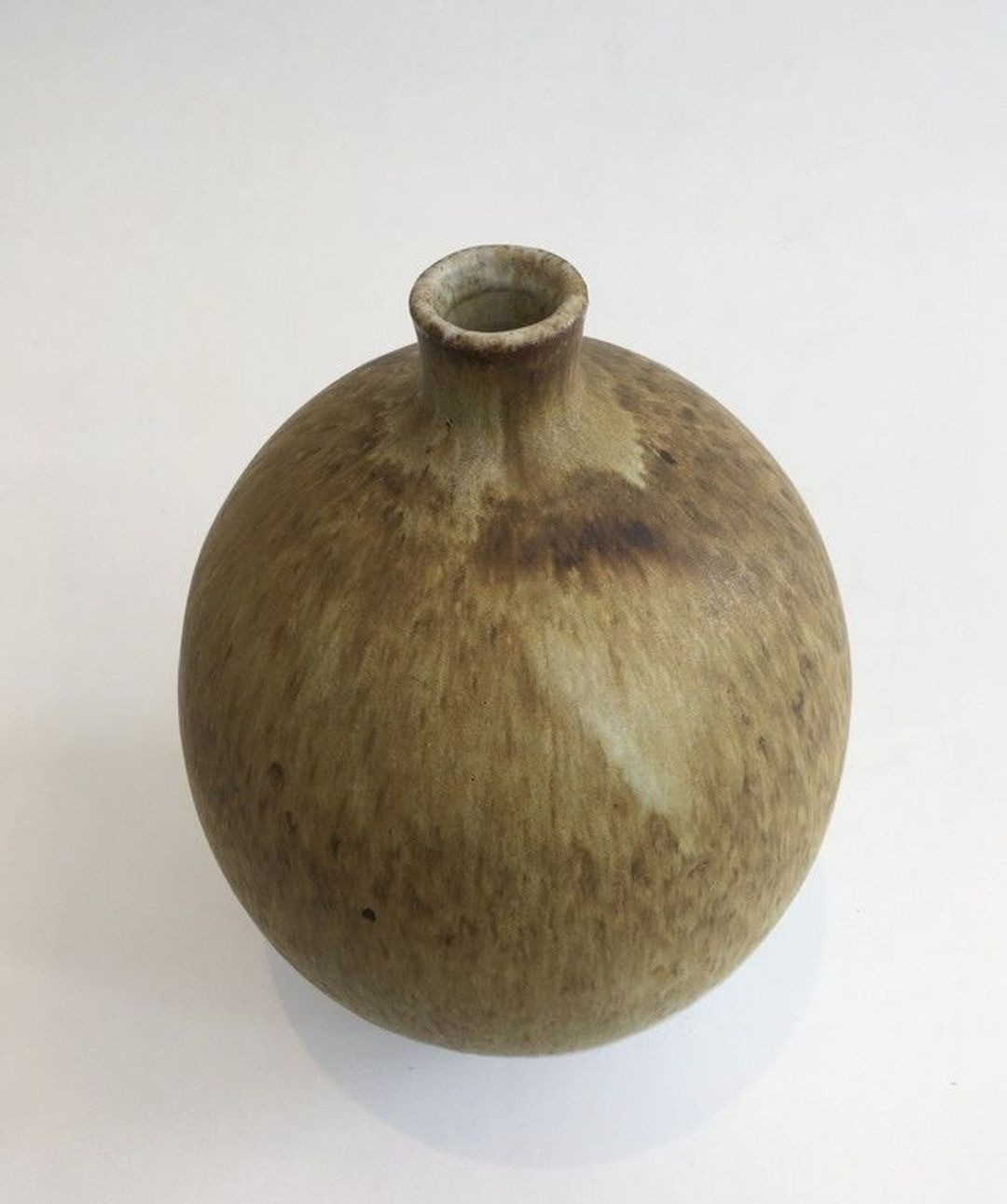
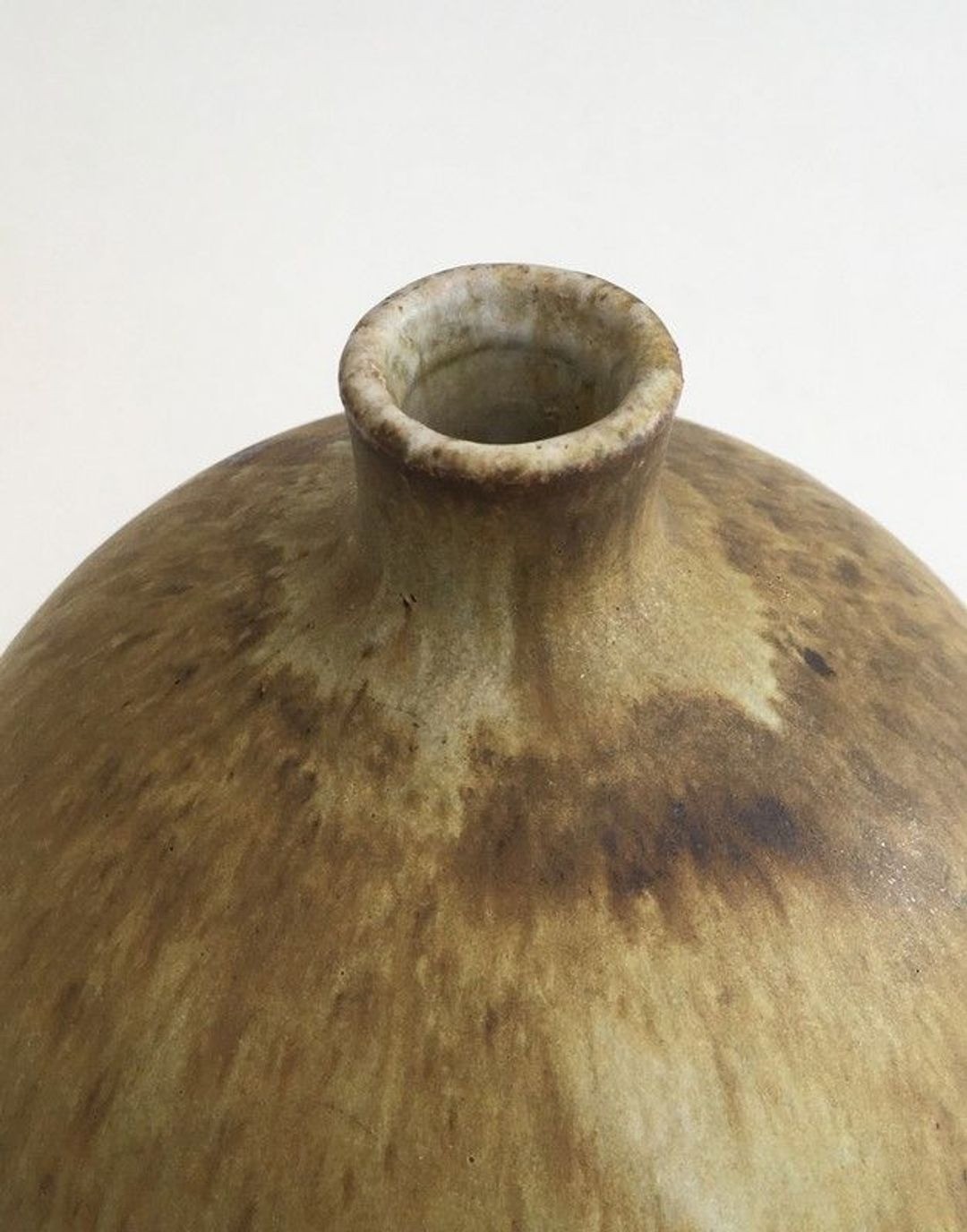
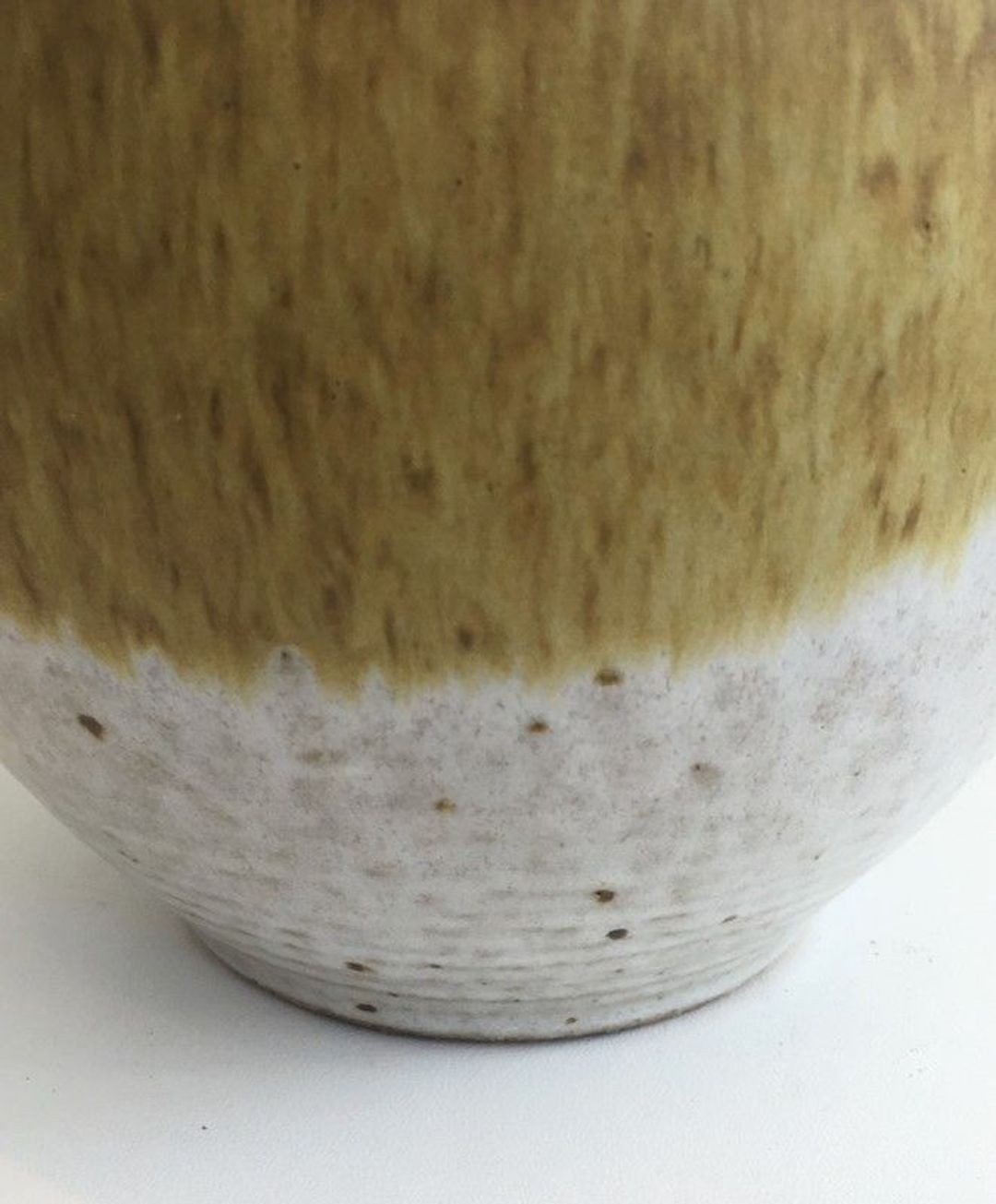
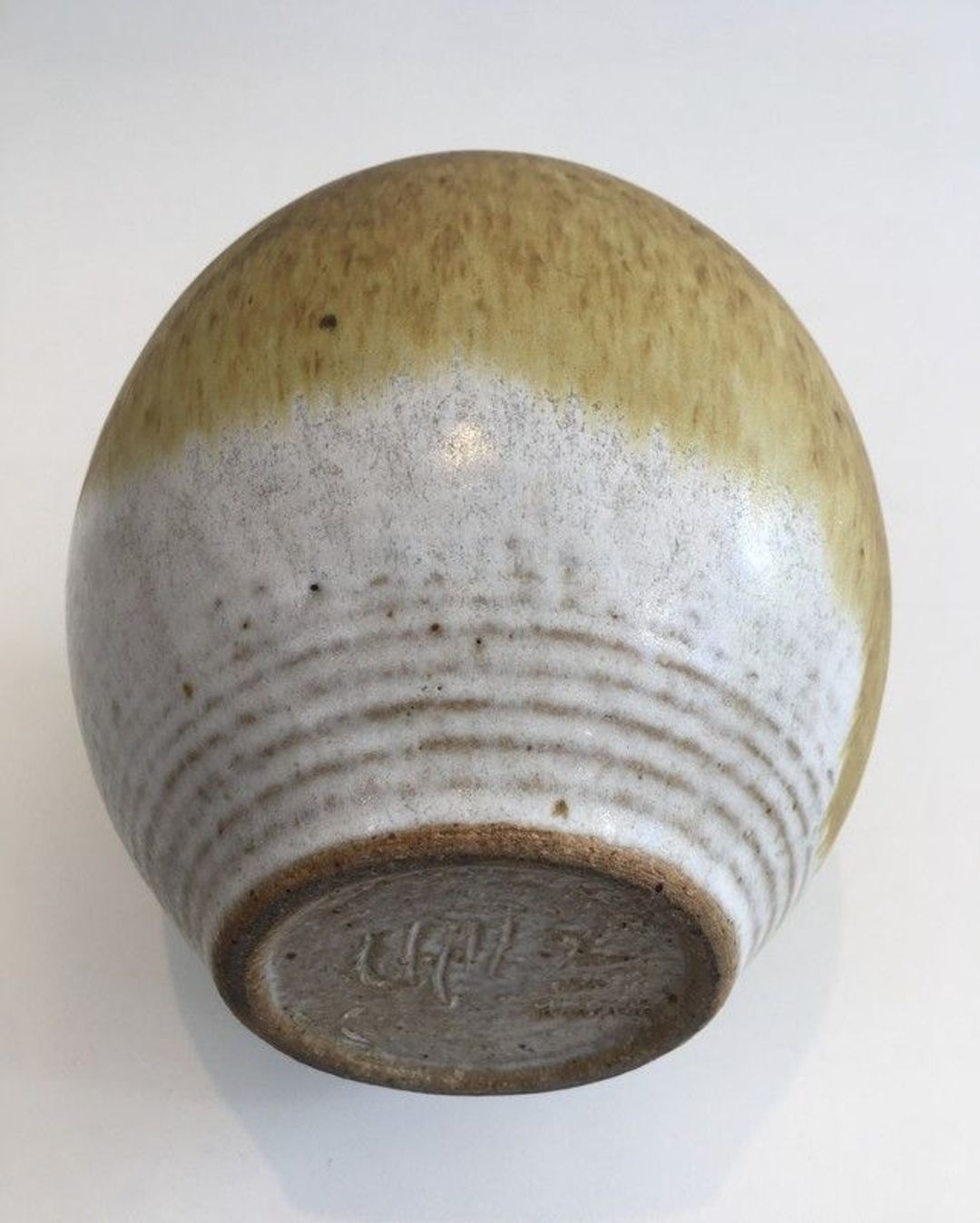
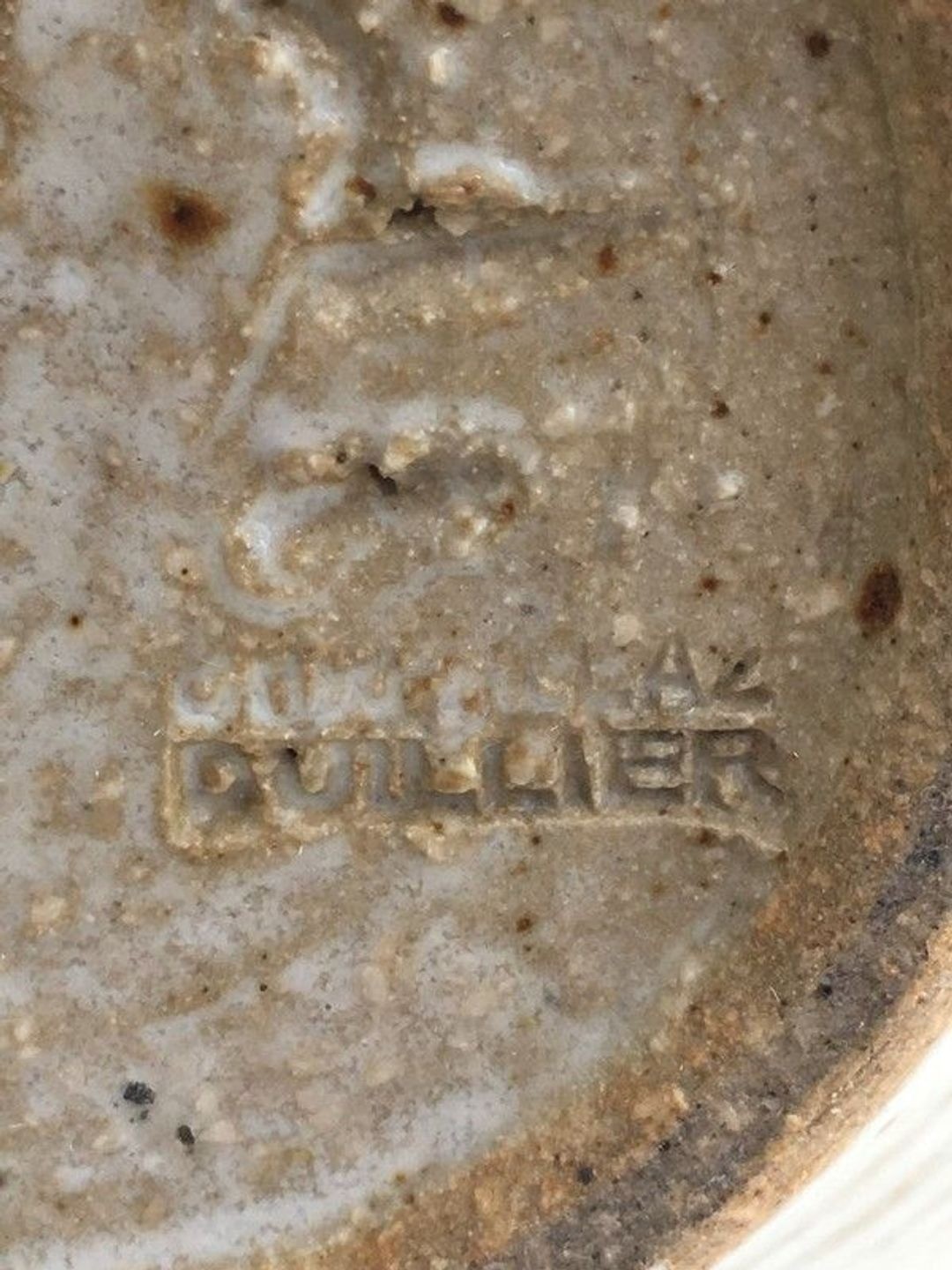
Compact stoneware soliflore vase by the Swiss studio potter Edouard Chapallaz, the globular body clad in a richly mottled olive-green glaze with ochre, khaki, and brown variations, the lower portion left in natural unglazed stoneware of warm cream tone. The contrast between the fired glaze and the bare clay creates a tactile and visually animated surface characteristic of the finest mid-century studio ceramics. Signed by the artist and stamped CHAPALLAZ DUILLIER. W. 14 × D. 14 × H. 19.5 cm. Switzerland, circa 1950.
A fine mid-century studio stoneware soliflore vase by the Swiss ceramicist Edouard Chapallaz, working from his atelier at Duillier in the canton of Vaud. The vase is of globular form with a narrow neck—classic soliflore proportions designed to display a single stem to maximum effect. The body is covered in a richly mottled glaze that moves between olive green, khaki, warm ochre, and flashes of rust brown, each variation the product of the kiln’s unpredictable chemistry and the artist’s experience in working with it. The lower portion of the body is left in natural unglazed stoneware, the warm cream tone of the fired clay providing a grounding contrast to the animated glaze above. The transition between glazed and unglazed surfaces is confident and deliberate, one of the characteristic decisions of mid-century studio potters who valued the honest expression of clay as a material as much as the surface effects of glaze.
Edouard Chapallaz worked from Duillier, a small village on the shores of Lake Geneva, in the heart of the French-speaking Swiss cultural sphere that produced a remarkable concentration of studio artists and craftsmen in the mid-twentieth century. Swiss studio ceramics of this period—characterised by their organic forms, earth-tone glazes, and high-fire stoneware bodies—were produced for a cultivated clientele that valued craftsmanship, natural materials, and the quiet authority of functional beauty. Chapallaz’s work, signed and stamped with his mark and the name of his village, was clearly made for a market that prized the individual hand of the maker and the authenticity of the signed object over anonymous production.
The soliflore vase—designed for a single flower or stem—is a form with particular resonance in the context of mid-century decorative arts. Its economy of purpose—one vessel, one bloom—suited perfectly the aesthetic of simplicity and natural beauty that informed the decorating vocabulary of the most discriminating European interiors of the 1940s and 1950s. A single stem of a garden flower, a branch of blossom, or even a bare twig in a vase of this quality becomes an act of visual composition, the ceramic form and the natural object entering into a dialogue that is one of the most refined pleasures of the domestic interior.
In excellent condition, the glaze intact and brilliant, the stoneware body sound. Signed on the underside by the artist; stamped CHAPALLAZ DUILLIER. A piece of genuine quality from an underrecognised tradition of mid-century Swiss studio ceramics.