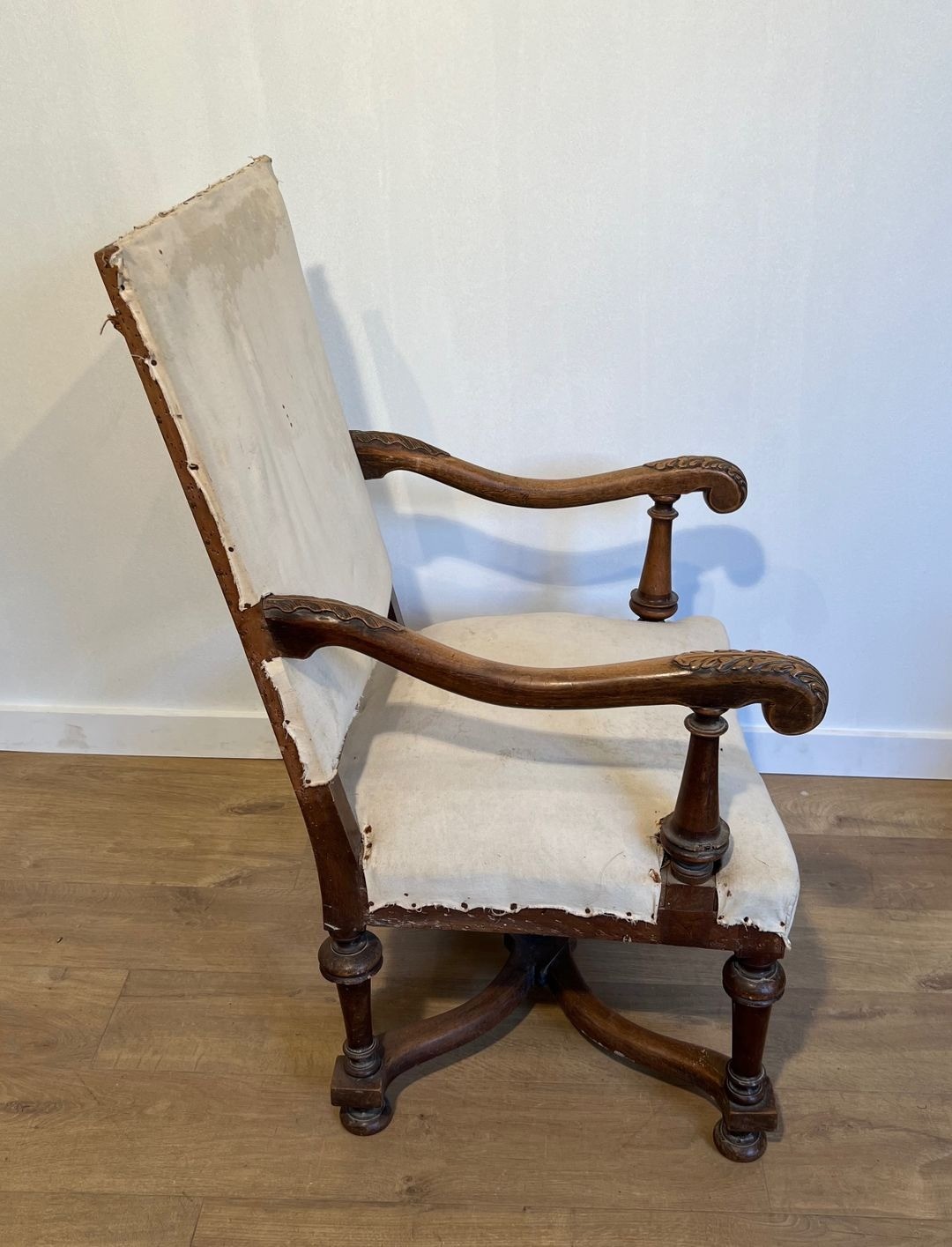
Few objects in the French interior were more politically charged than the armchair. Under the Ancien Régime, the type of seat a person was permitted to occupy in the presence of royalty was precisely codified: the tabouret, the backless stool, was granted to duchesses; the chaise, the chair without arms, to lesser ladies; the fauteuil, the armchair, to princes of the blood and the highest nobles. This hierarchy, formalised by ceremonial precedent over centuries, was encoded into the very material forms of French seating furniture. The high-backed armchair — taller, more enclosed, more throne-like than any modern chair — was the most authoritative form, conferring upon its occupant a dignity bordering on the regal. When the Louis XIII revival of the Third Republic reproduced these forms in walnut, it was not merely reviving a style but reproducing an entire grammar of social authority.
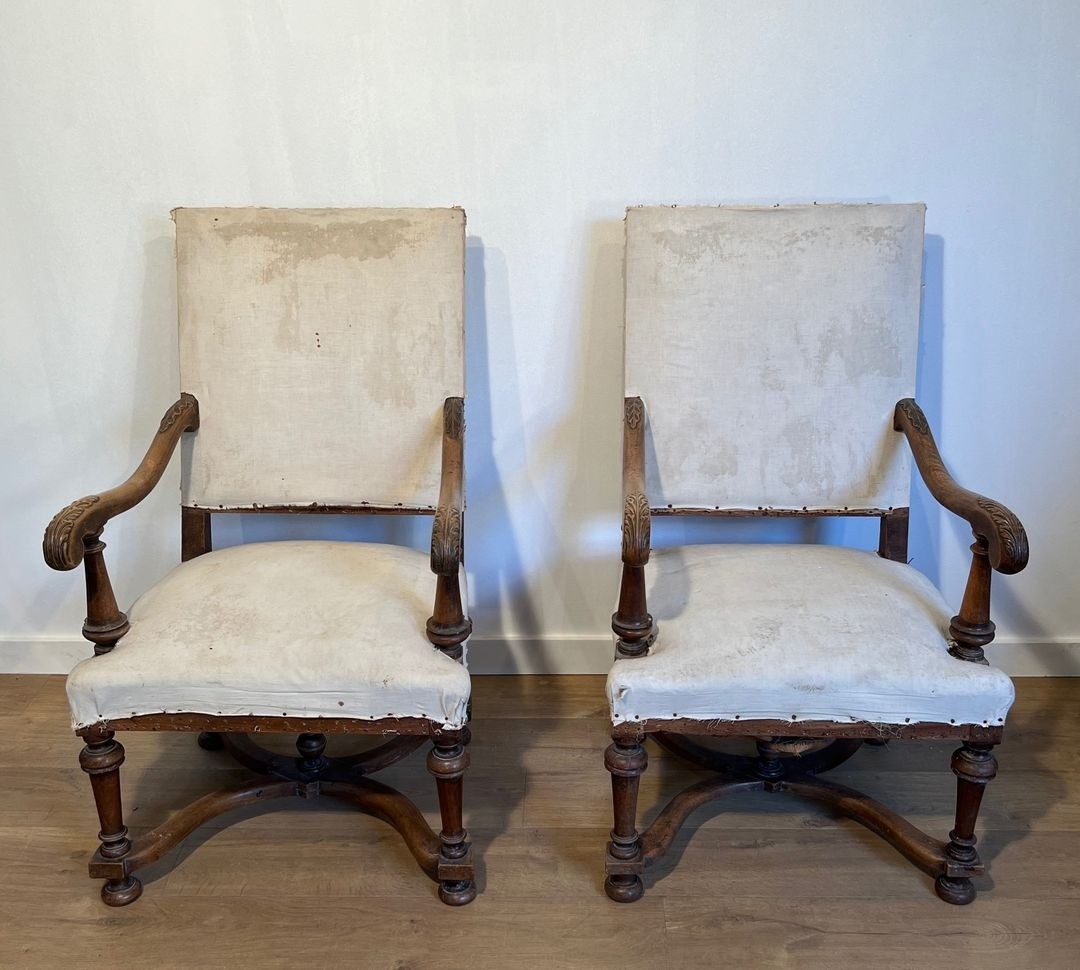
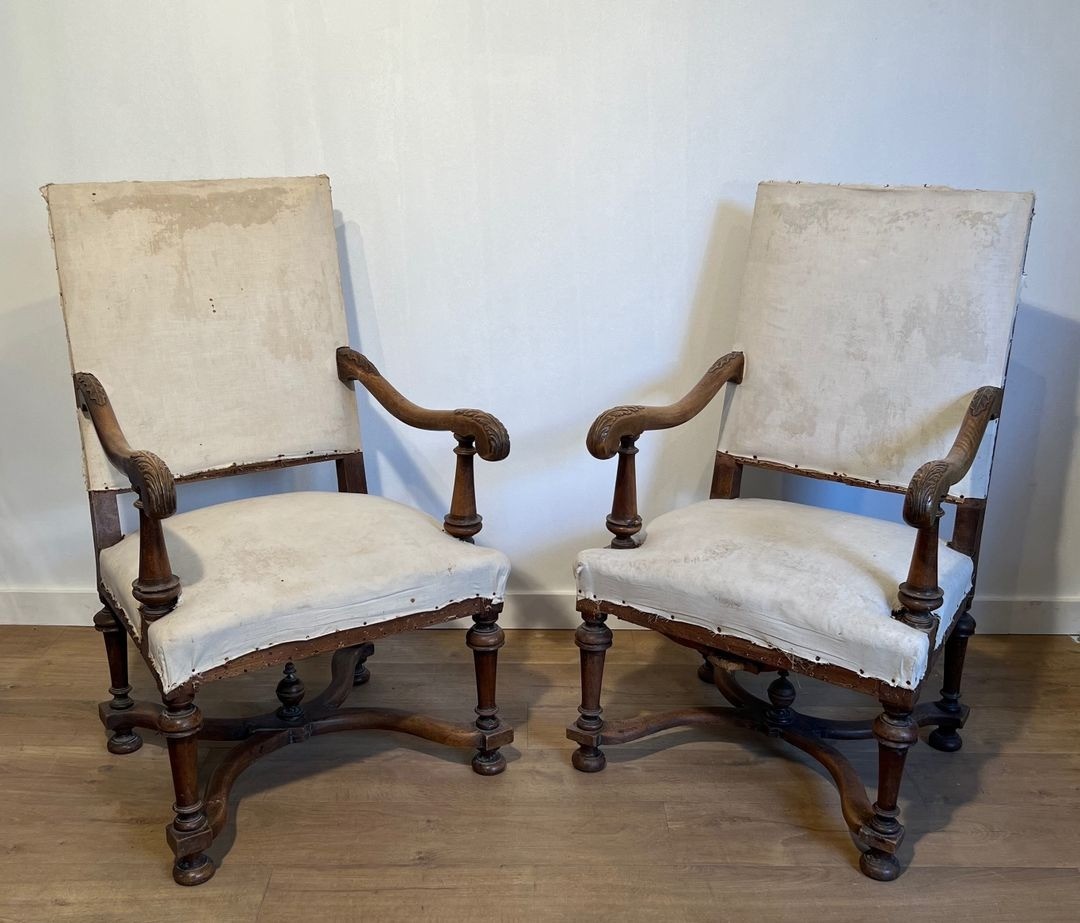
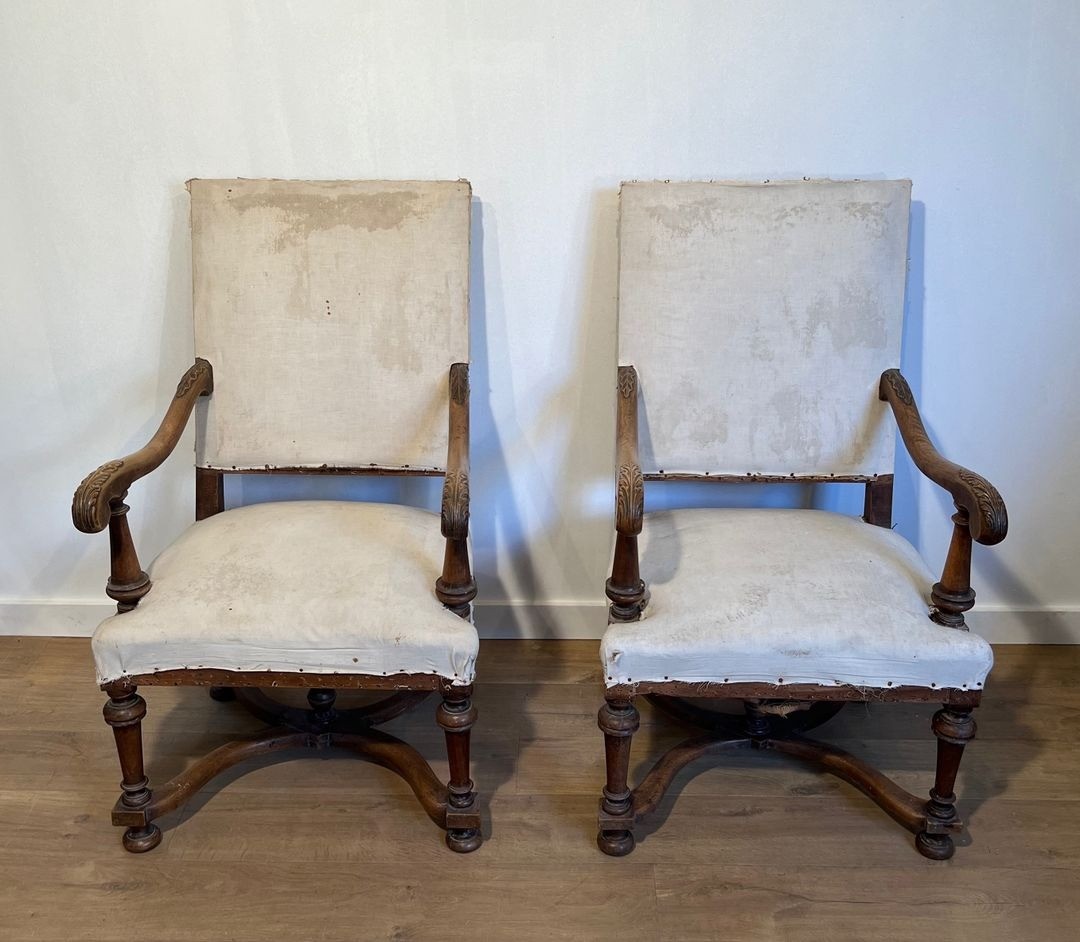
Sold as a pair, these armchairs embody a specifically French spatial logic: the symmetrical arrangement of matching seats flanking a fireplace, a doorway, or a console, creating the hierarchical axis that structured the French interior from the seventeenth century onward. The salon as the French designed it was never accidental in its arrangement; it followed rules of symmetry, axis and weight that governed where chairs were placed, which faced which, and which positions were reserved for hosts and guests of honour. A pair of matched high-backed armchairs, placed facing each other or flanking a central point, creates this spatial architecture with the greatest economy. Each chair is complete in itself, yet the pair only achieves its full meaning in relation to the other.
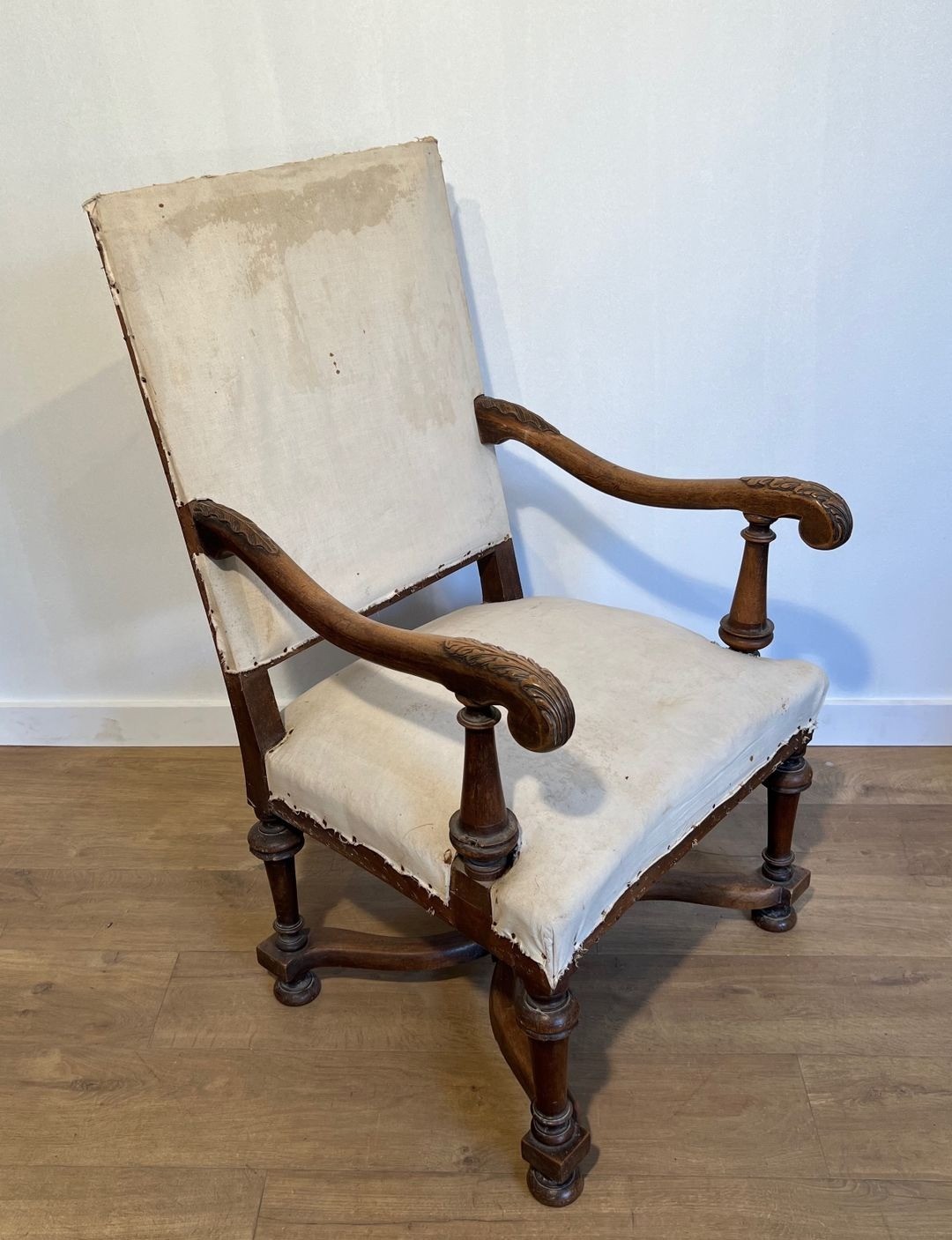
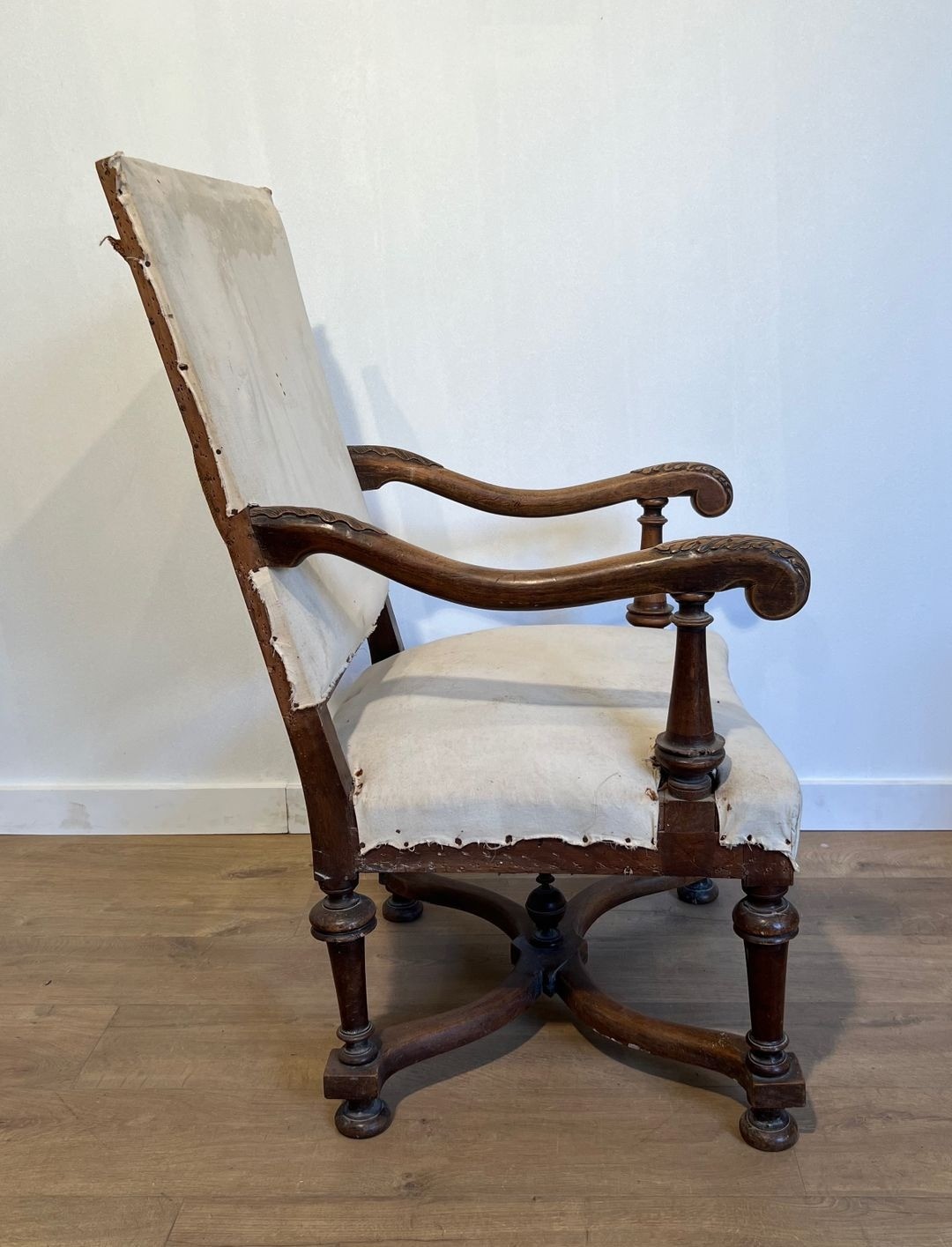
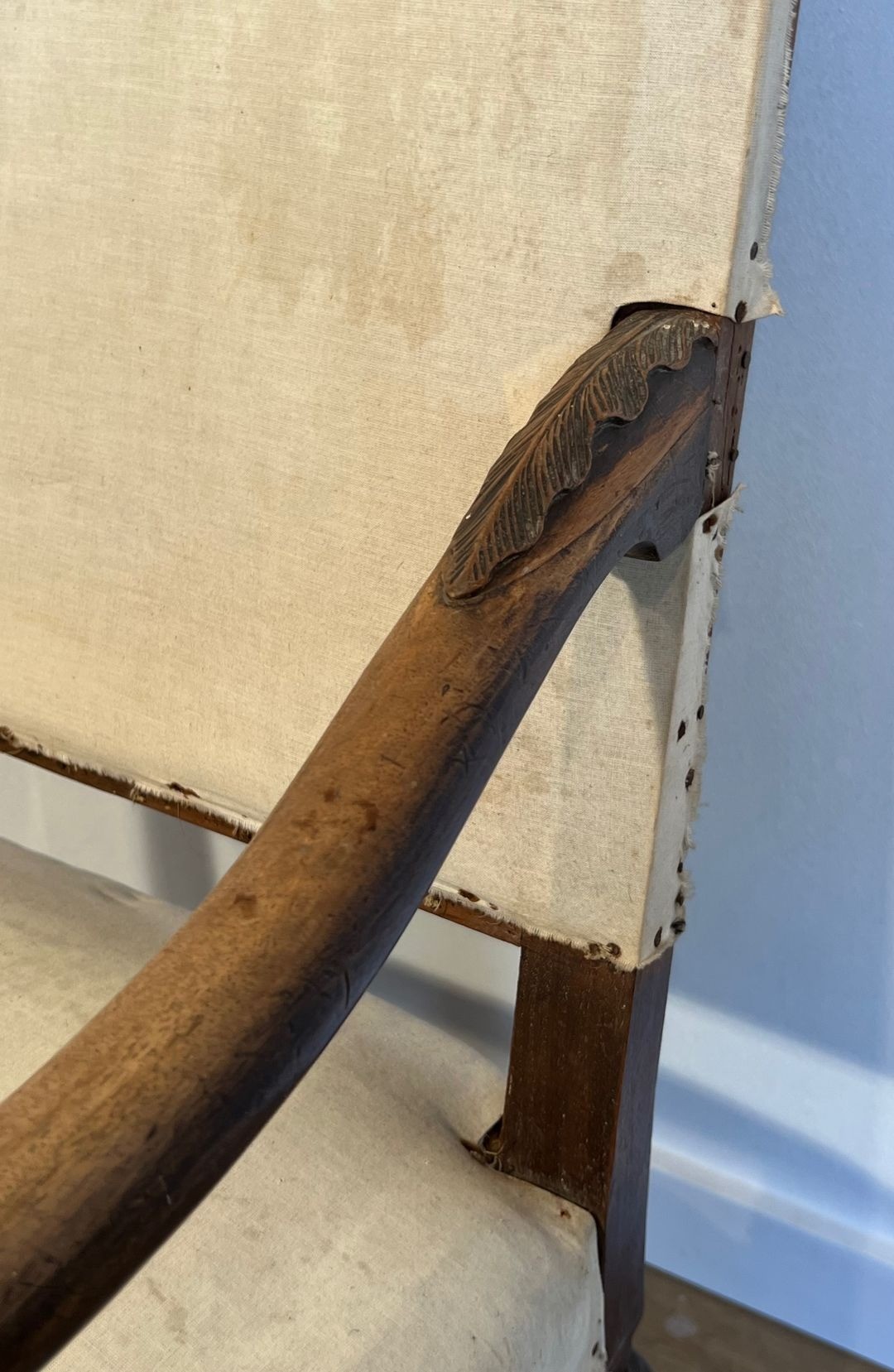
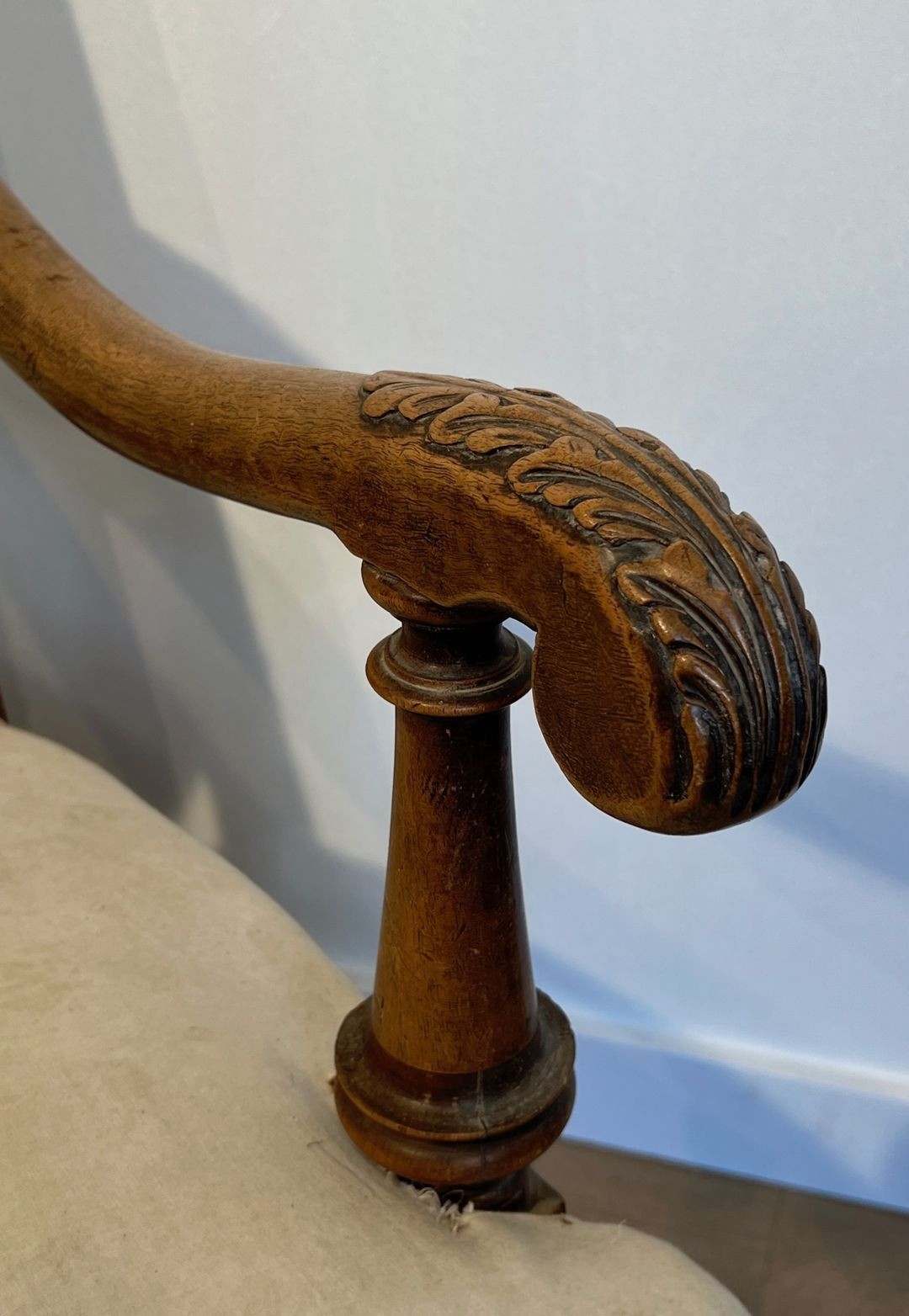
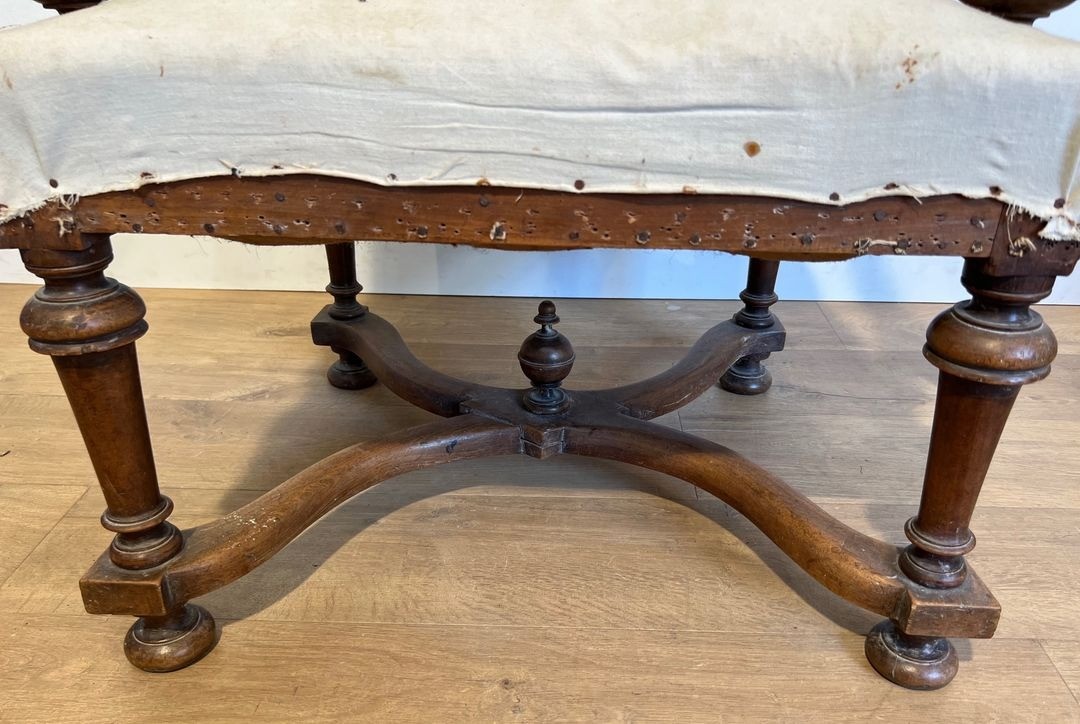
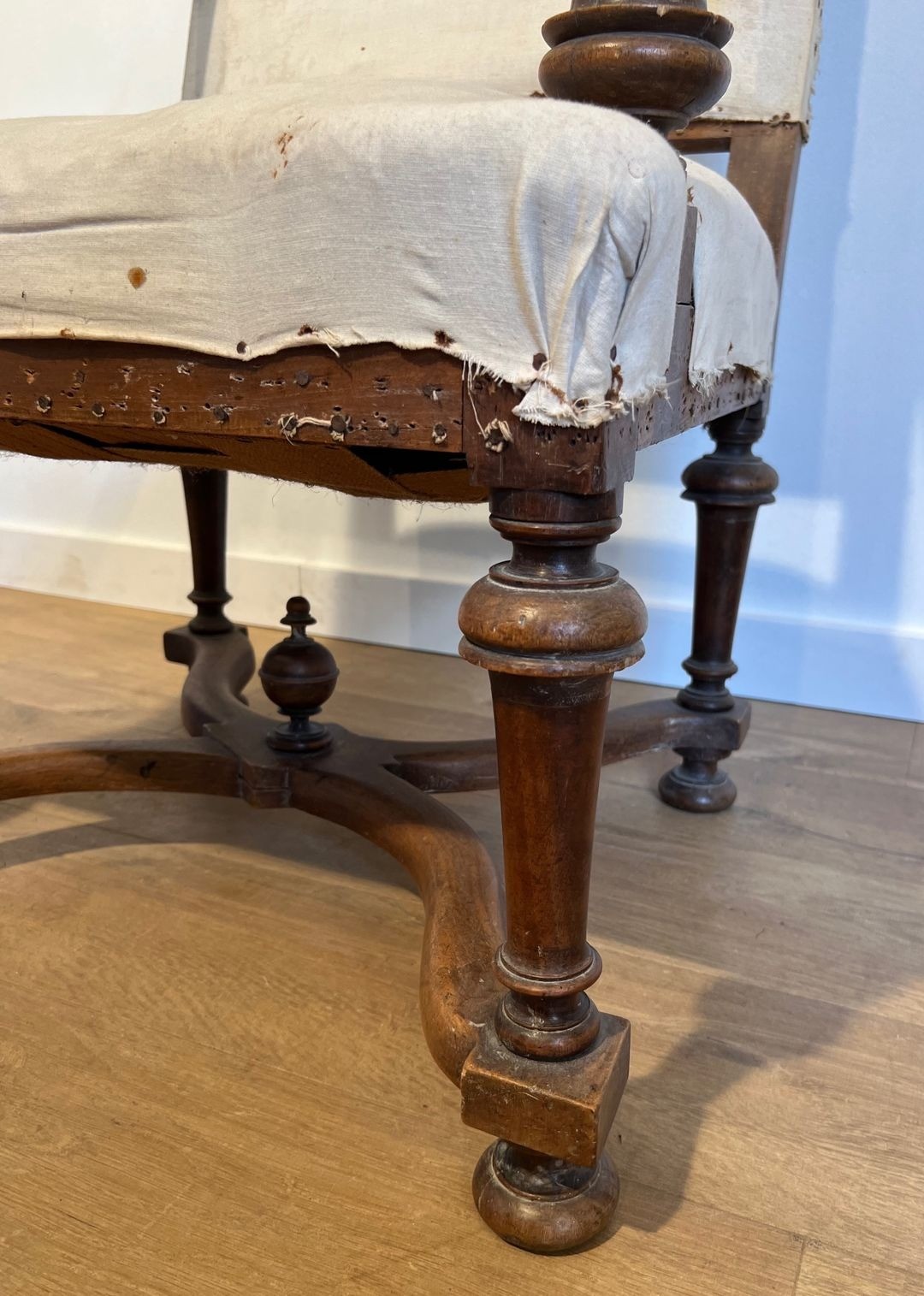
Executed in solid walnut with the turned elements, geometric structure, and high rectangular back characteristic of the Louis XIII idiom, these armchairs carry the visual authority the style demands. The 110-centimetre height of the back gives them a distinctly architectural quality, framing the seated figure and providing the kind of enclosure that transforms an act of sitting into one of presence. The warm amber of aged walnut, the precise turning of the front legs, and the structural integrity of the overall form speak to the skill of the nineteenth-century workshop that produced them — craftsmen who had absorbed the Louis XIII grammar and deployed it with the confidence of a living tradition rather than the anxiety of revival.