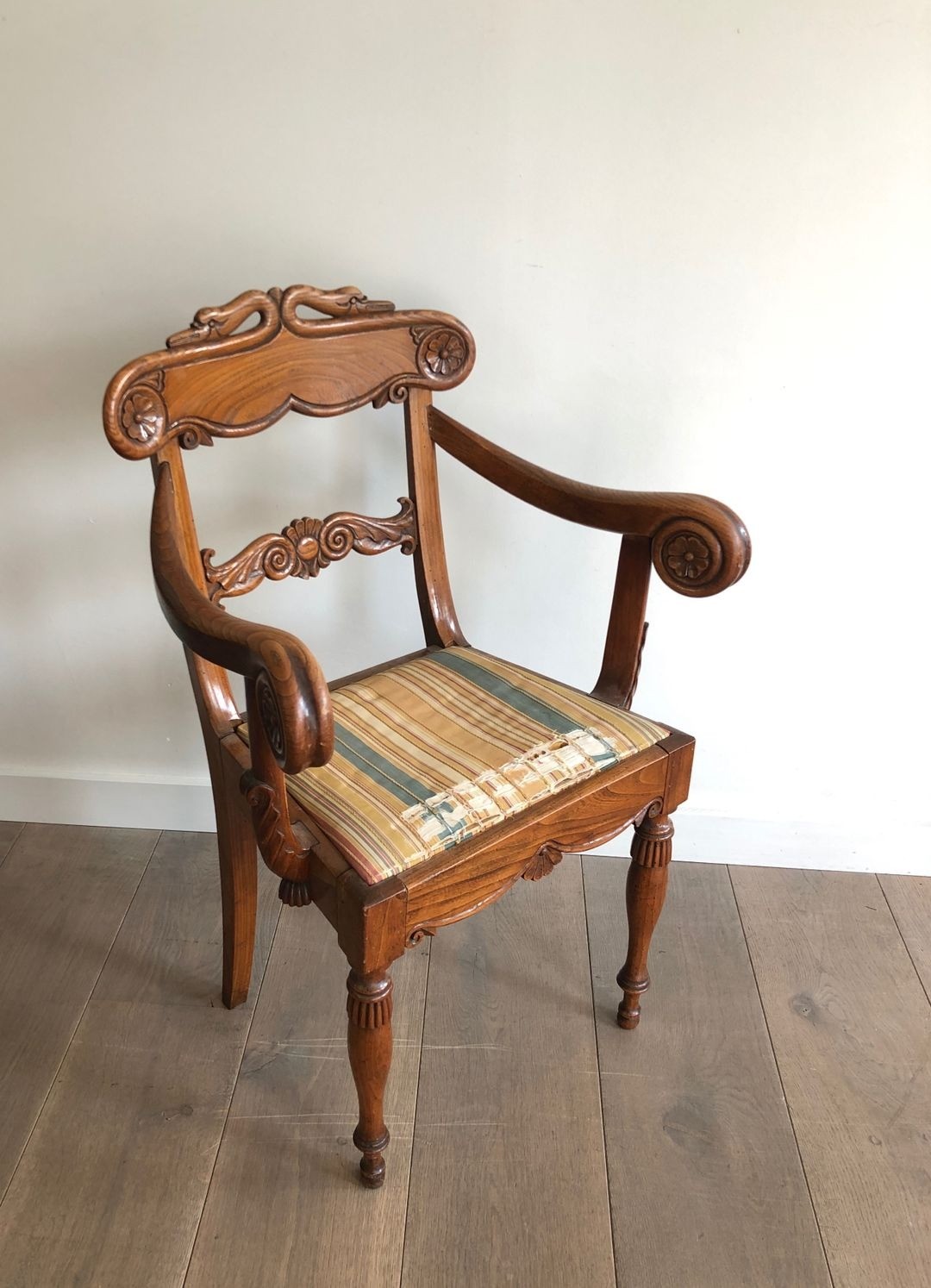
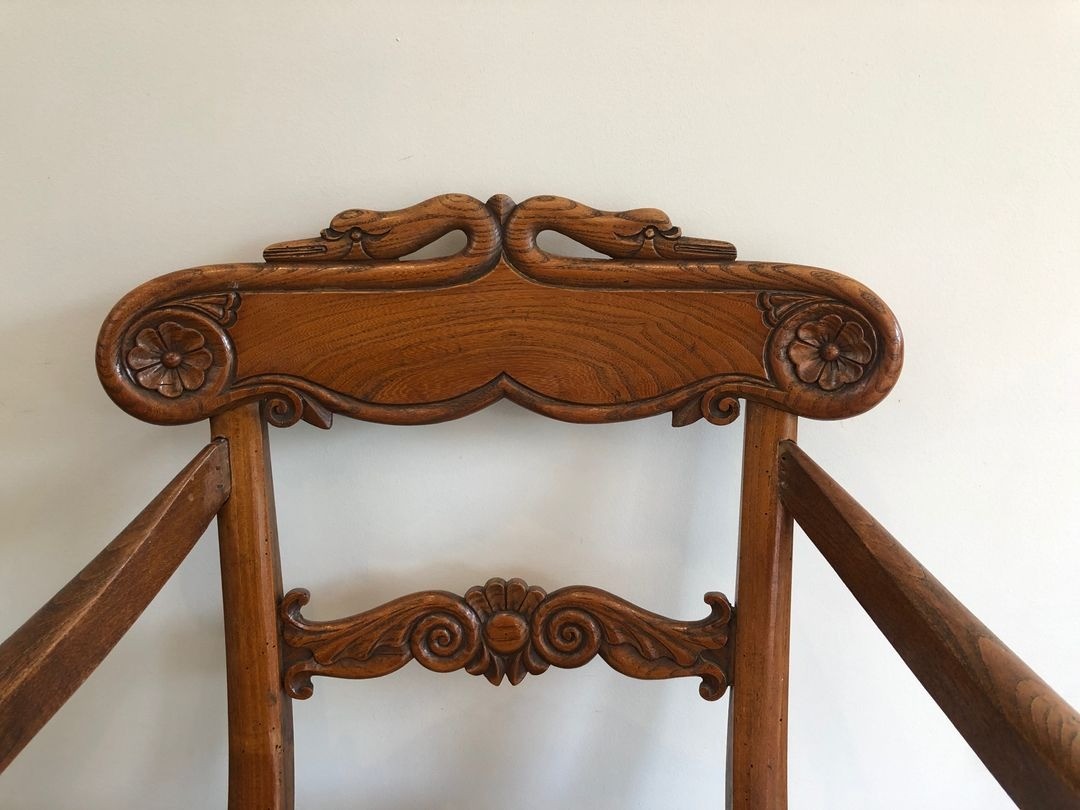
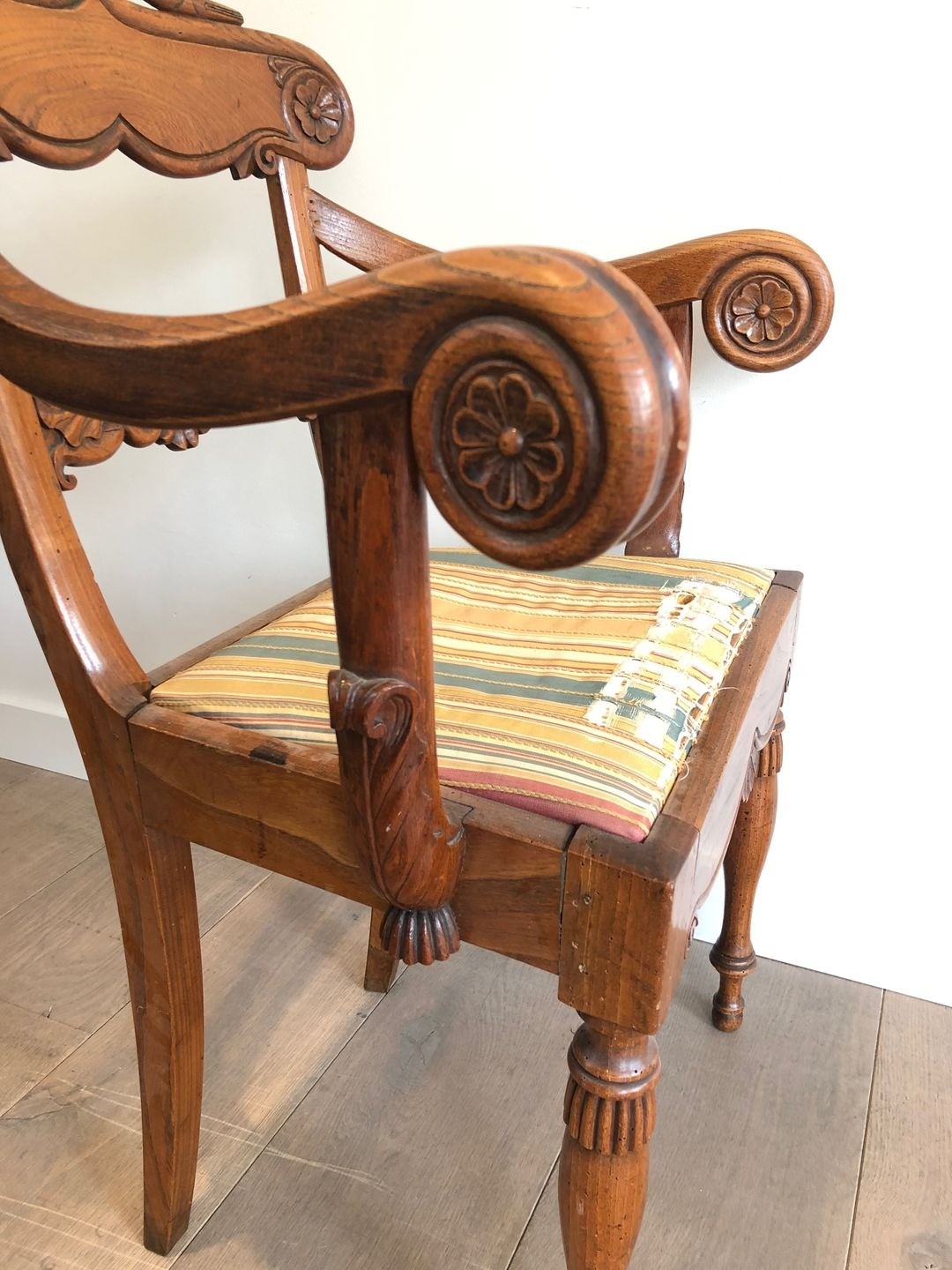
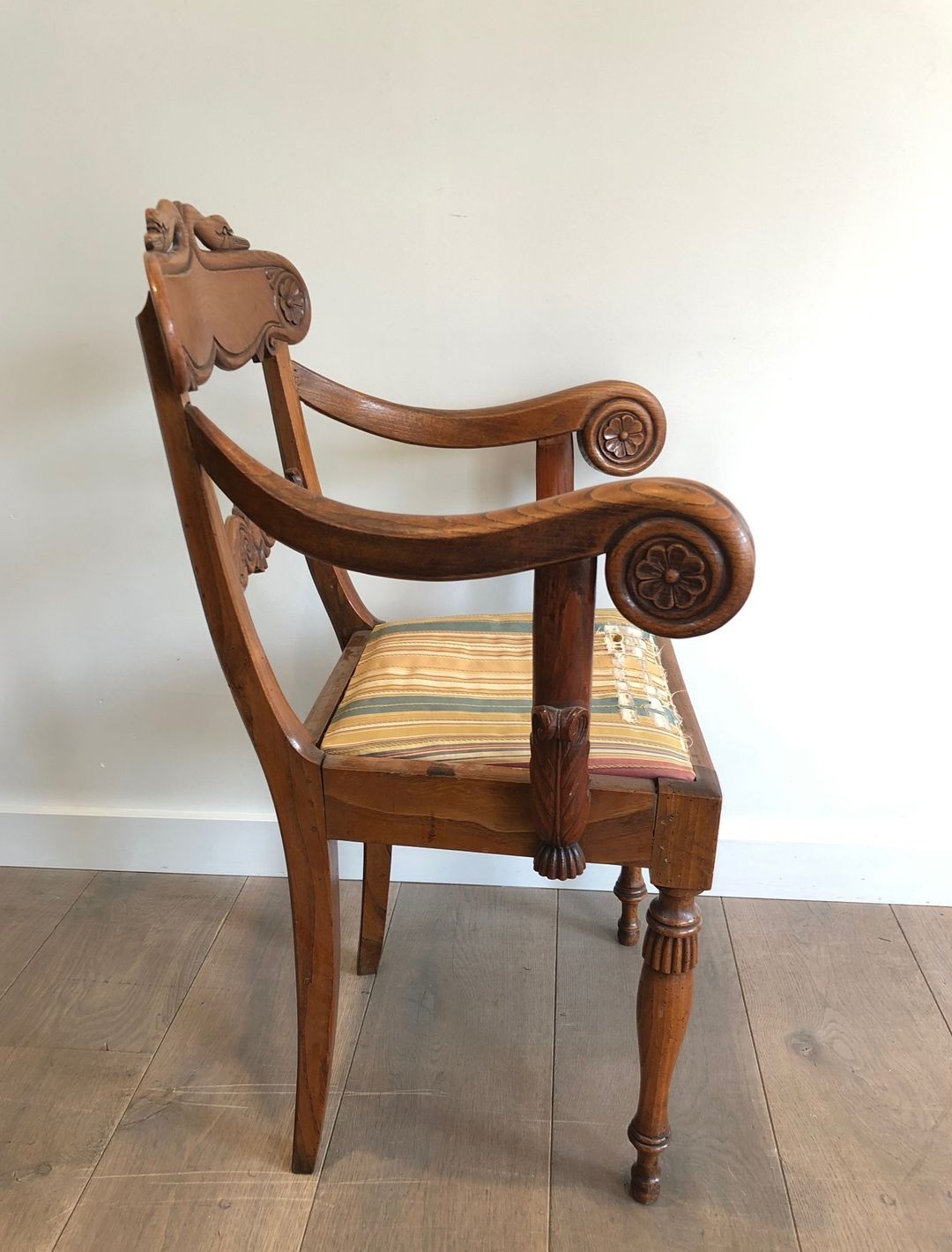
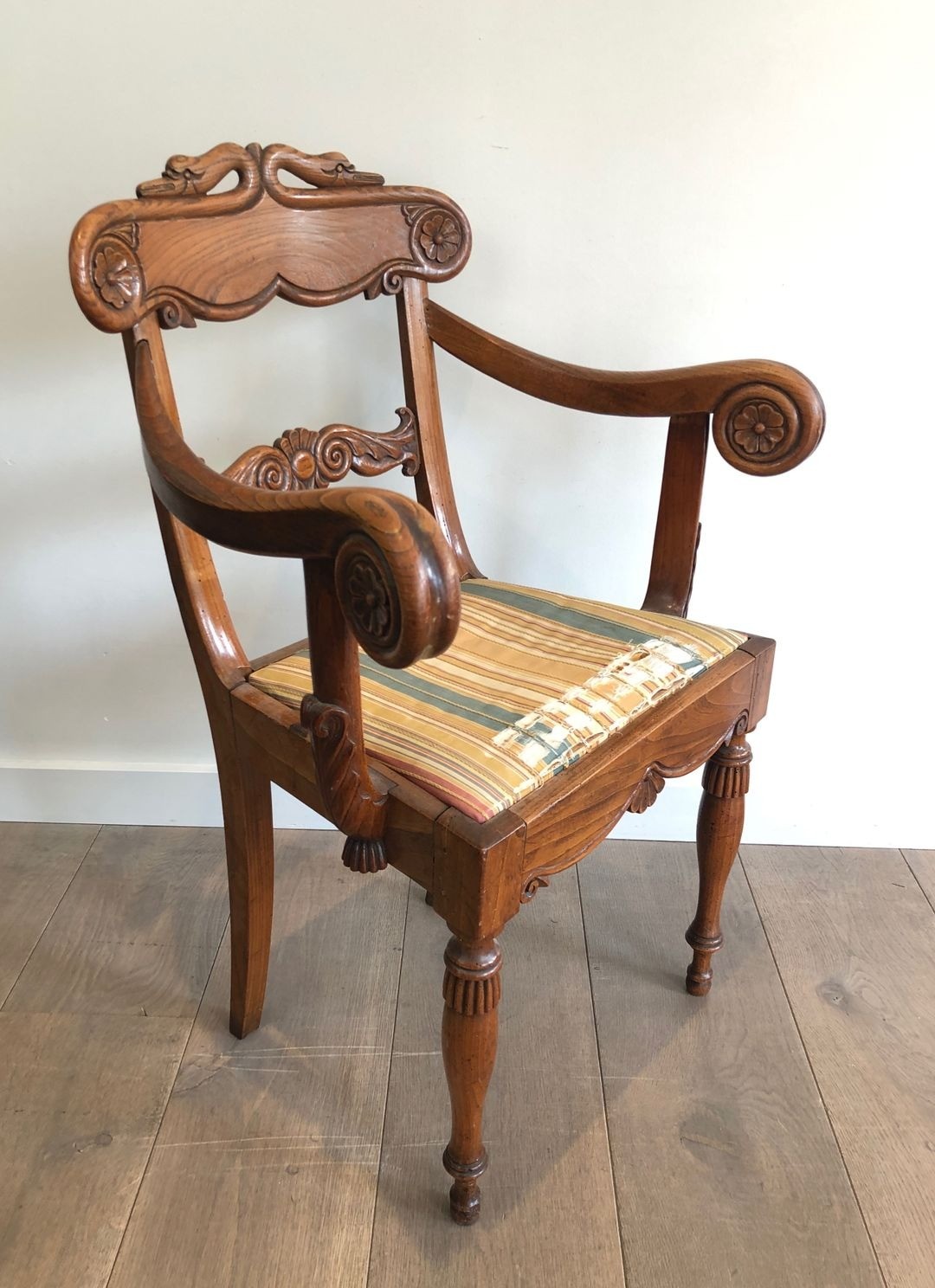
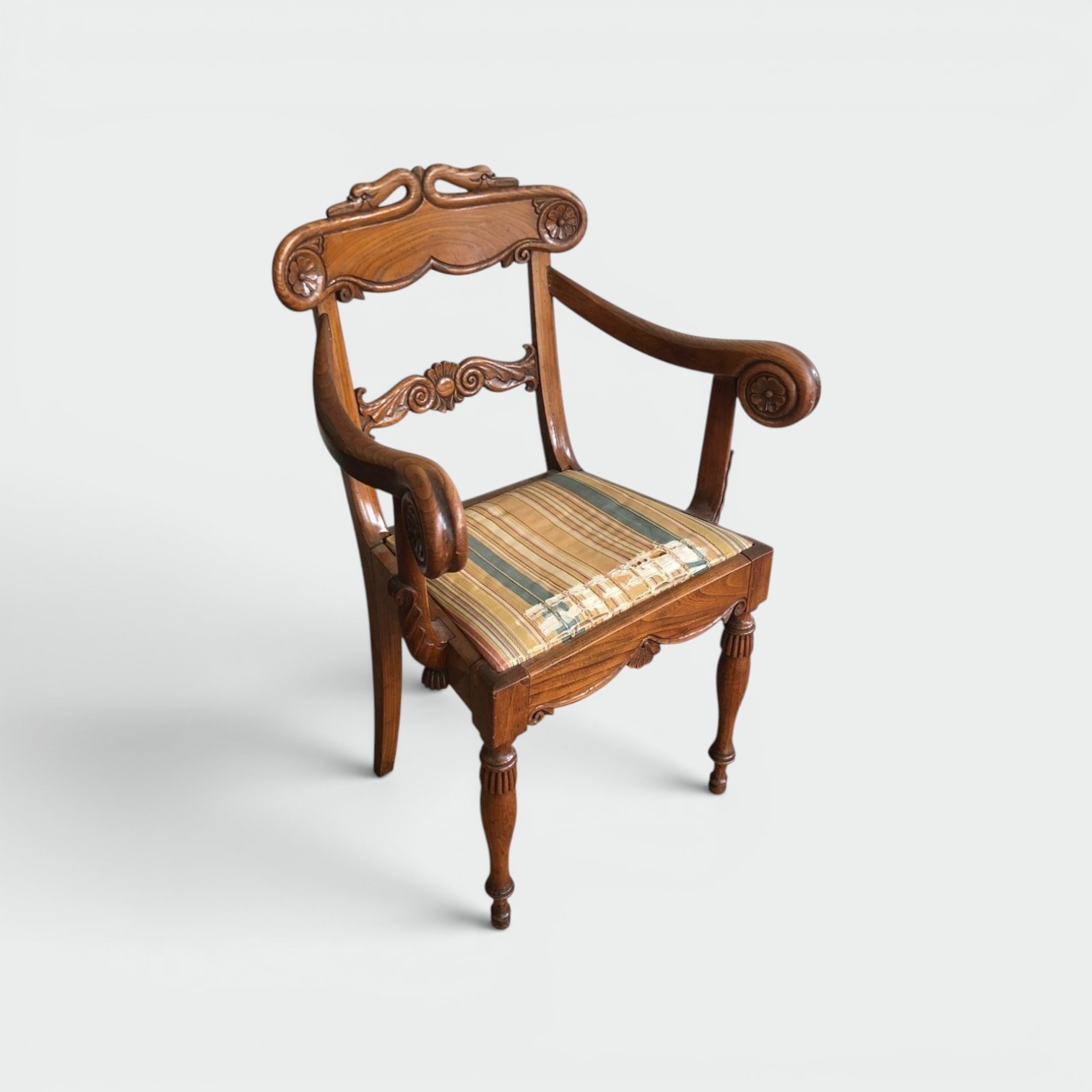
The English Regency — those years between 1811 and 1820 when the Prince of Wales governed in place of his incapacitated father — gave its name not merely to a regency but to an entire aesthetic. Under the guidance of theorists like Thomas Hope, whose Household Furniture and Interior Decoration of 1807 became the movement’s manifesto, English cabinet-makers translated antiquity into forms of startling elegance. This office armchair belongs fully to that tradition: its proportions, its mahogany, and above all its swan-neck decoration place it within the refined vocabulary that the Regency bequeathed to the early Victorian age.
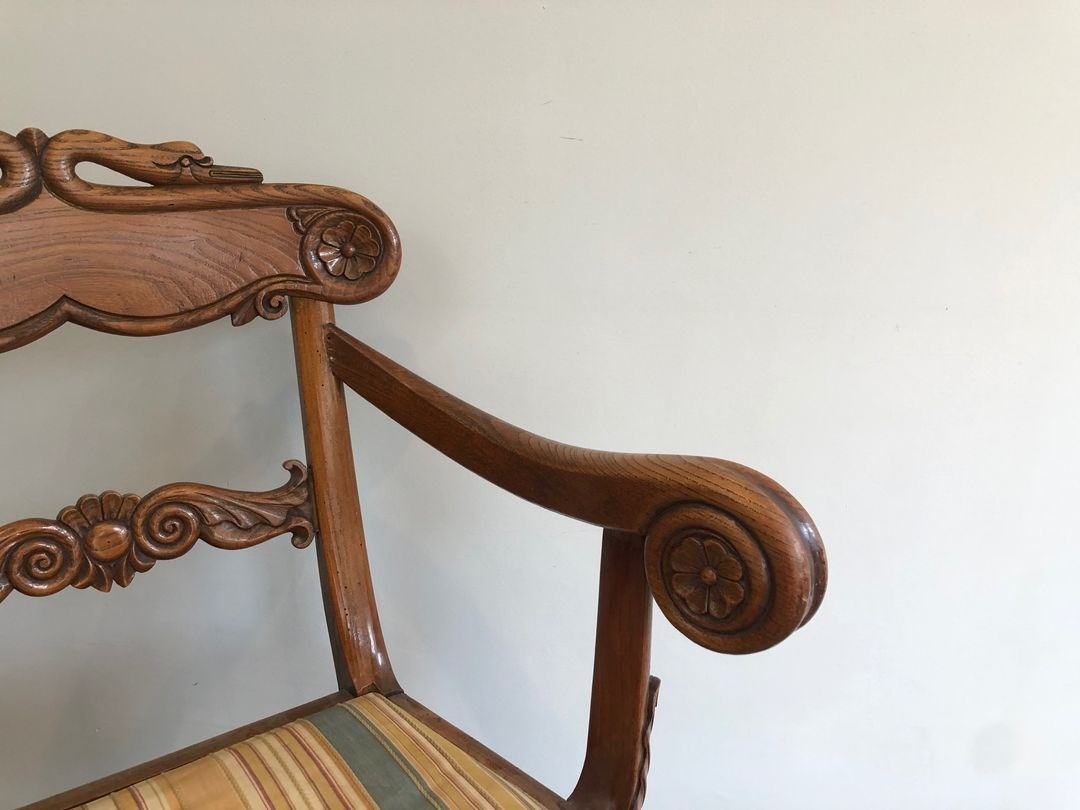
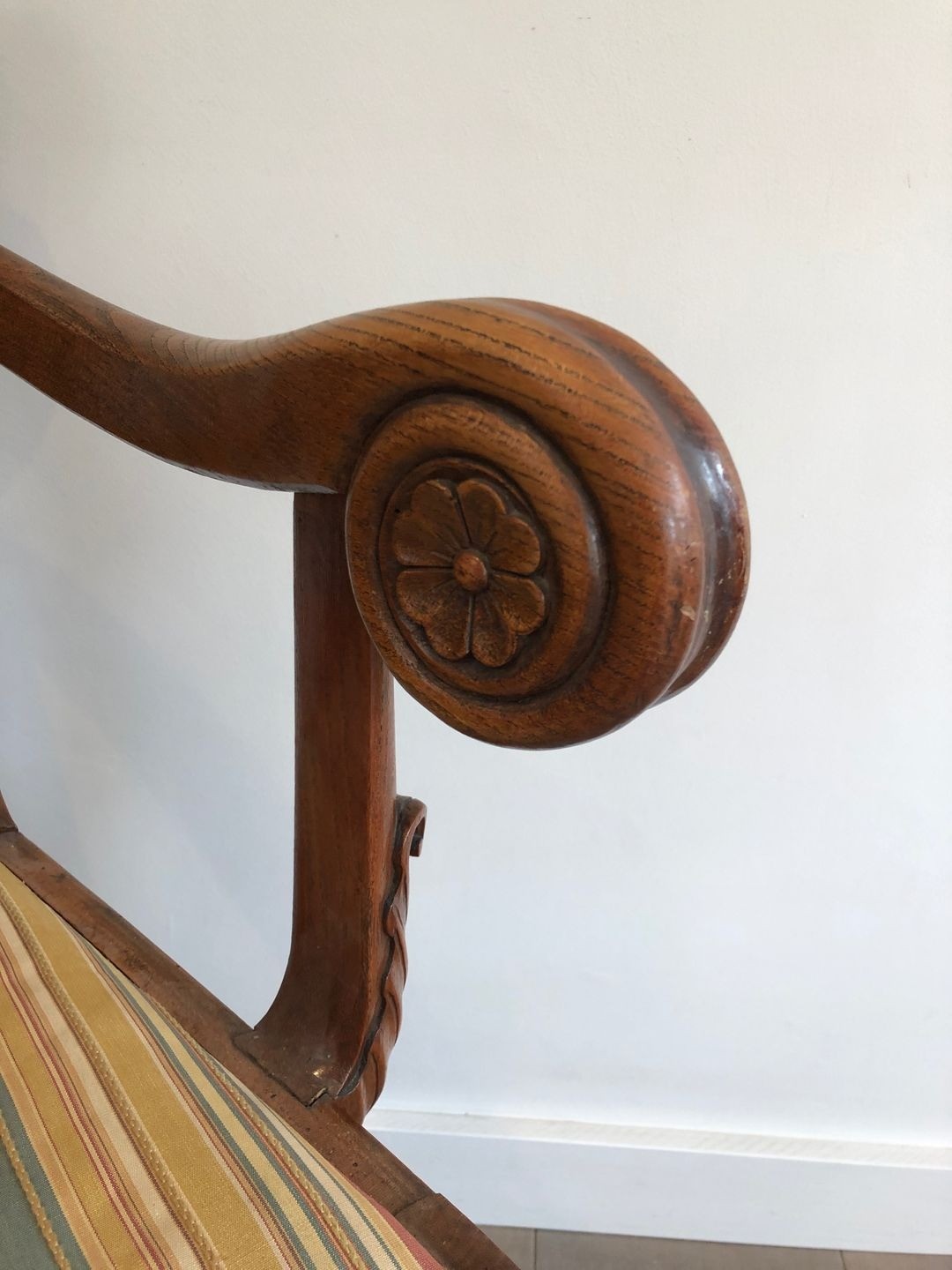
The swan — in Greek myth the bird of Apollo, in Regency iconography an emblem of aristocratic grace — appears here as curved supports recalling both the zoomorphic furniture of ancient Egypt and the scrolled arms of the Greek klismos. What the French called the col de cygne was never mere ornament; it was a structural solution that distributed weight with the economy and beauty the finest period cabinet-makers demanded. In mahogany — the great imperial wood, harvested in the Caribbean and prized for its close grain and resistance to warping — those swan necks achieve a burnished authority perfectly suited to the private study.
The office armchair occupies a singular place in furniture history: it is the seat not of public ceremony but of private power. To be found at one’s desk in the armchair was the mark of the gentleman scholar, the landed administrator, the man whose decisions, however quietly made, shaped the world around him. At 58.5 × 45 × 88 cm, this chair has the proportions of command — upright without rigidity, supportive without softness — and its two centuries of survival testify to the integrity of English craftsmanship at its Georgian peak.