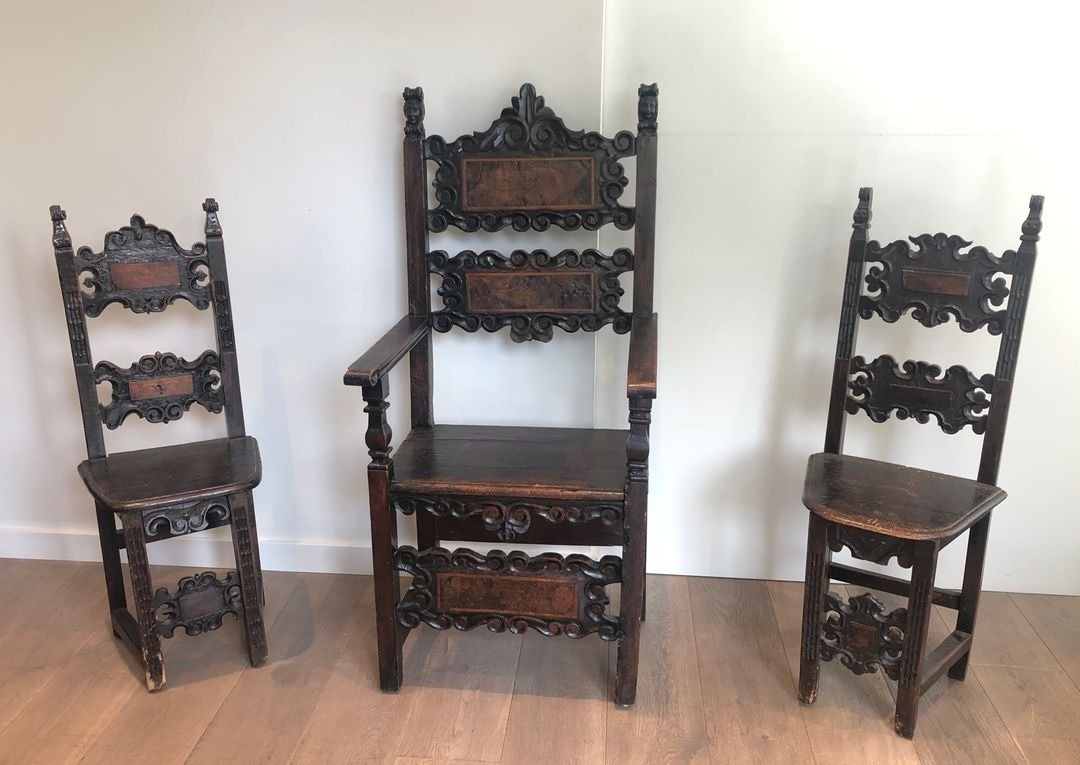
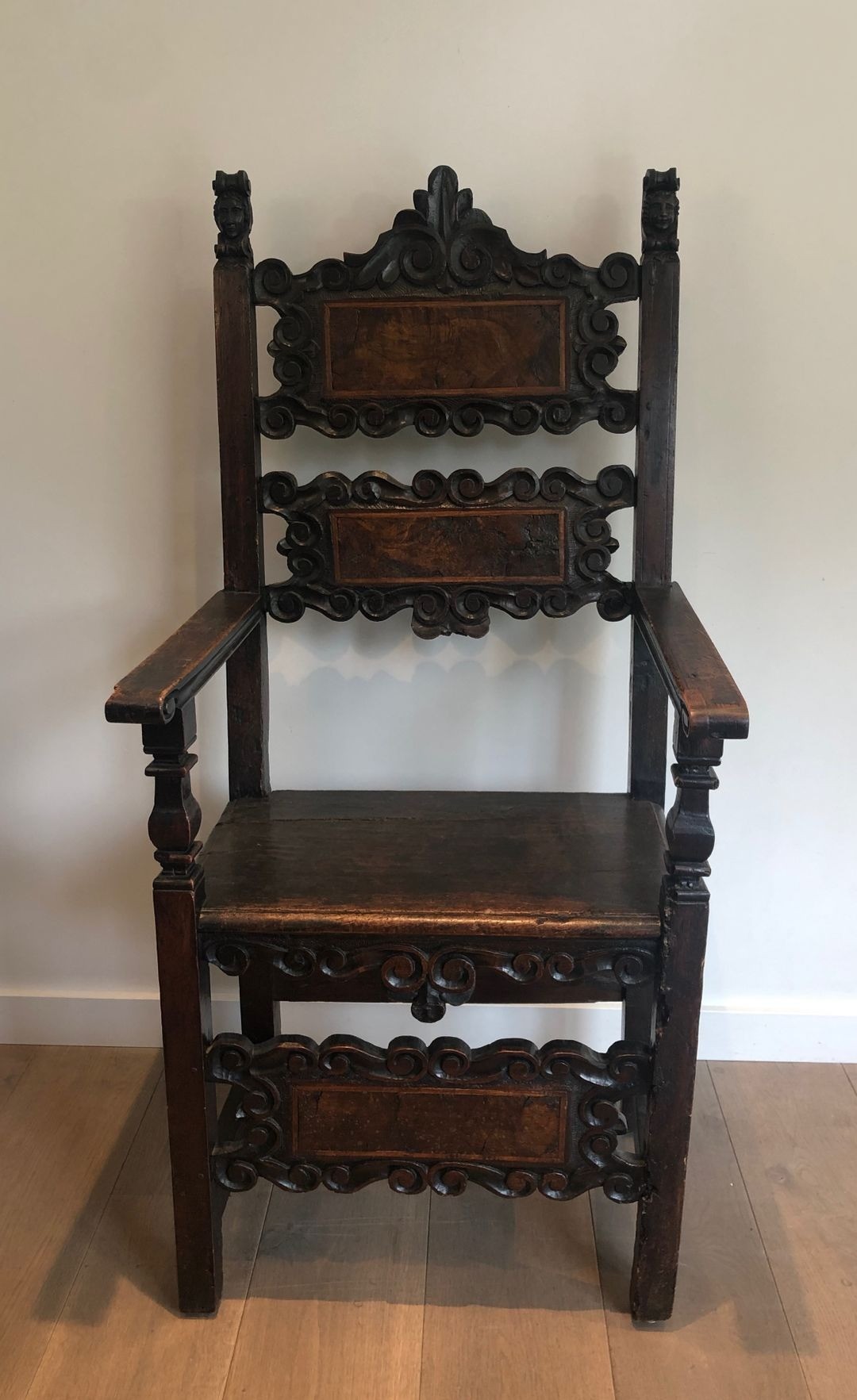
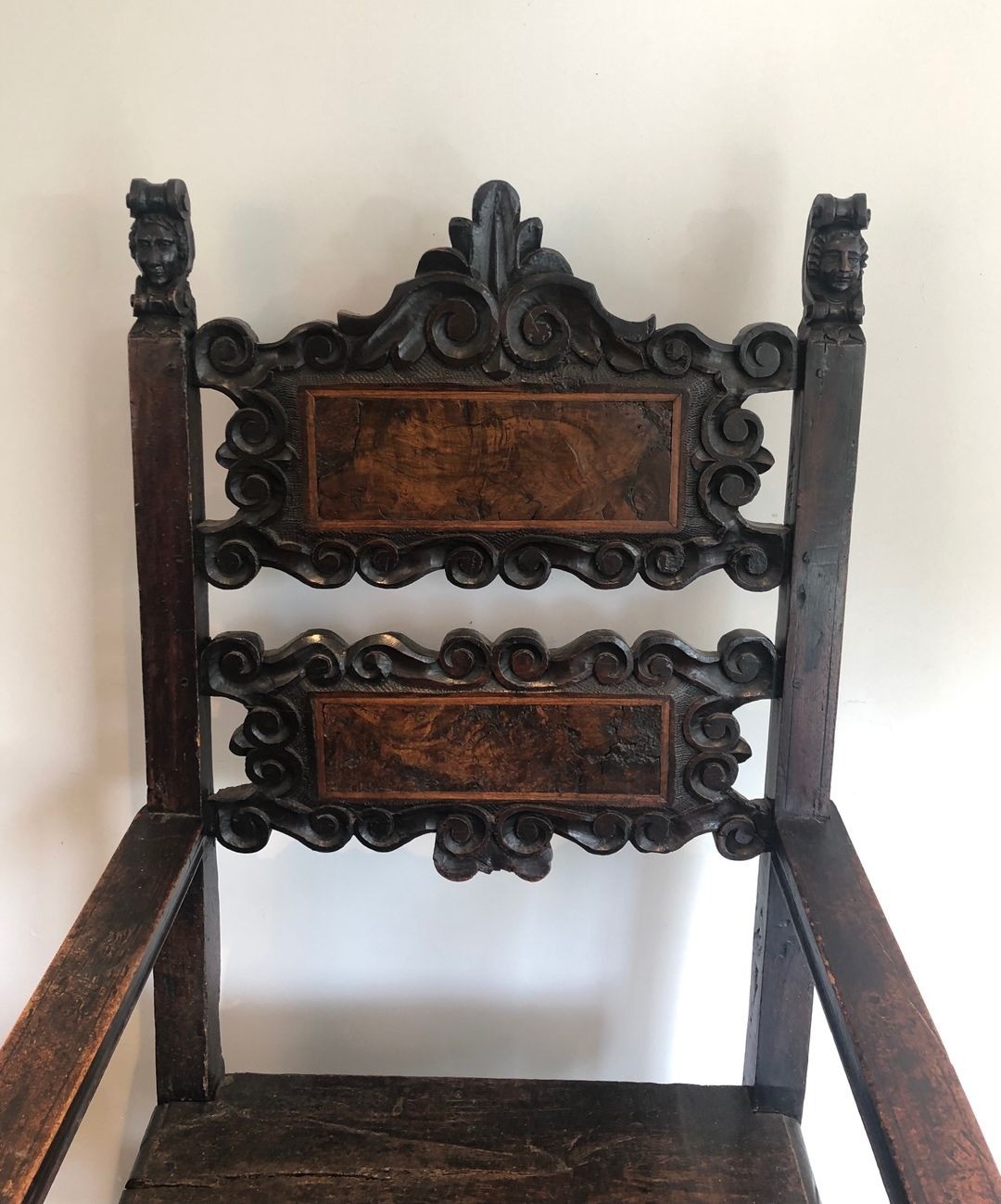
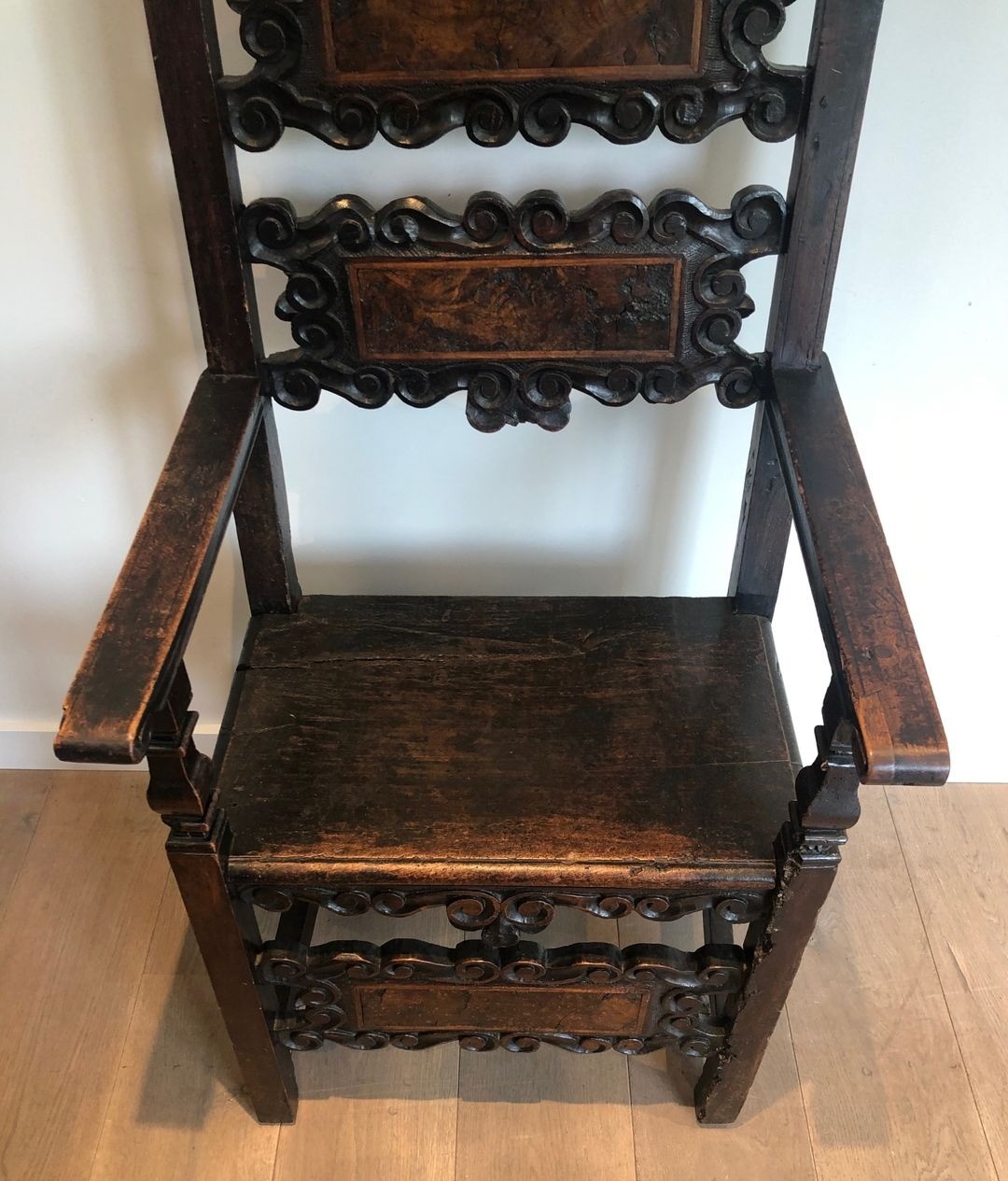
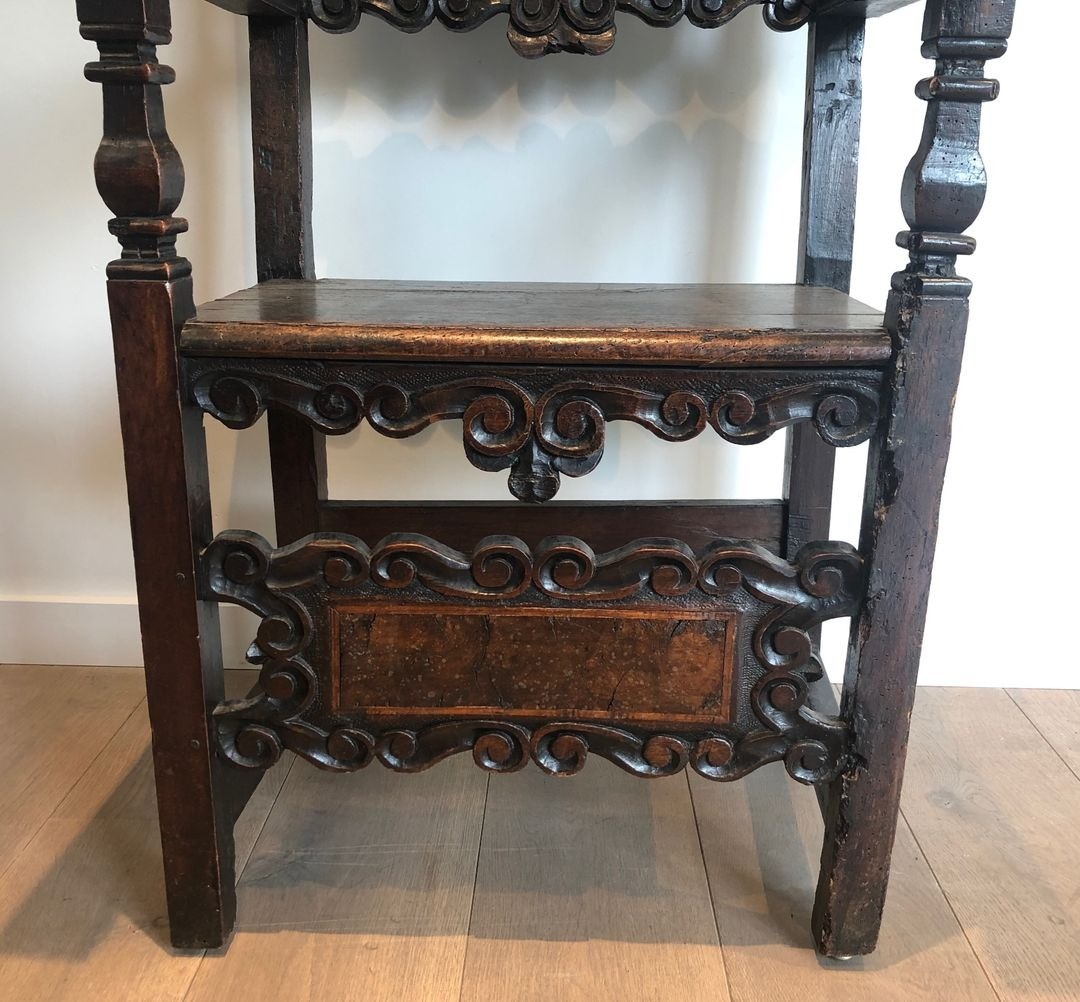
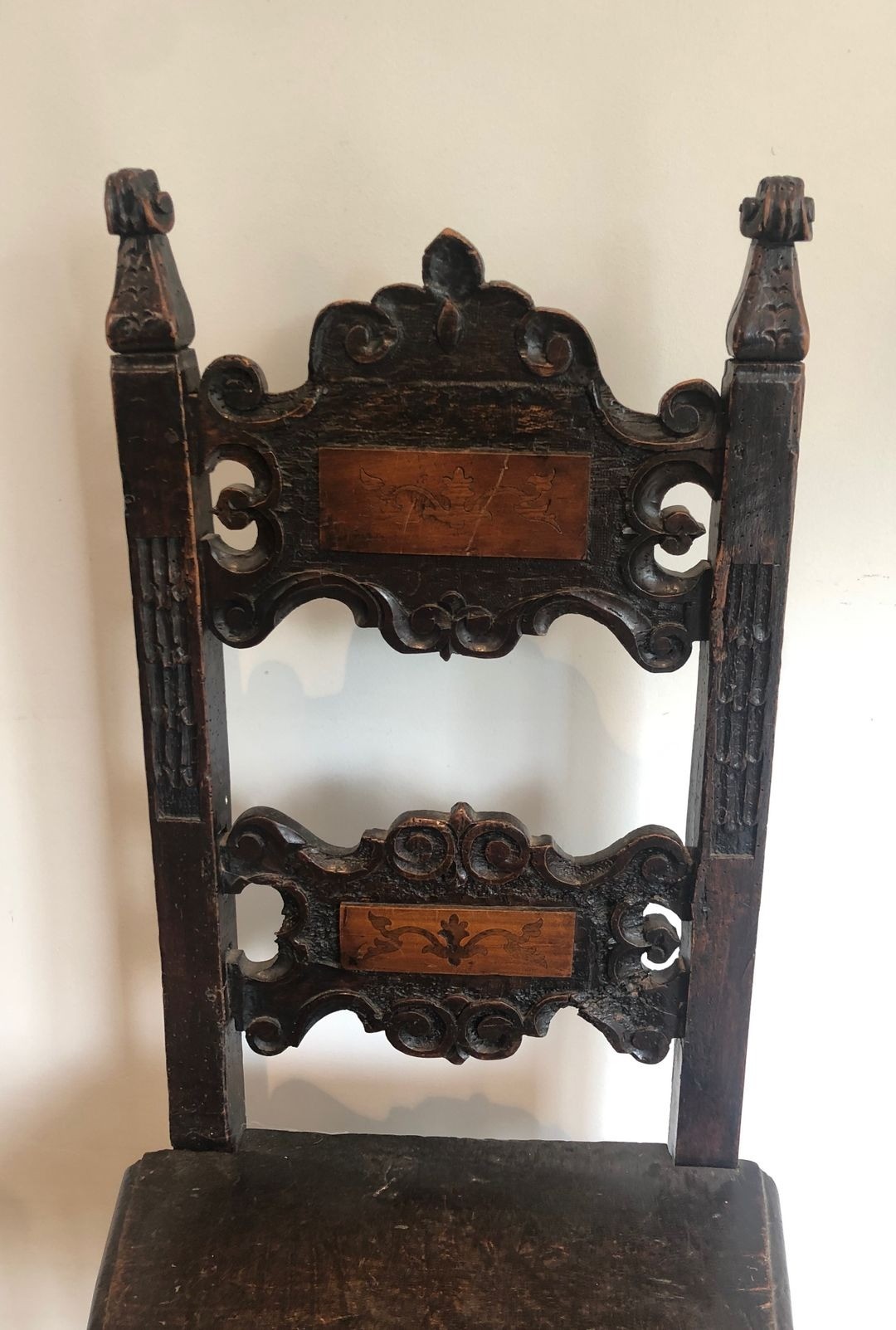
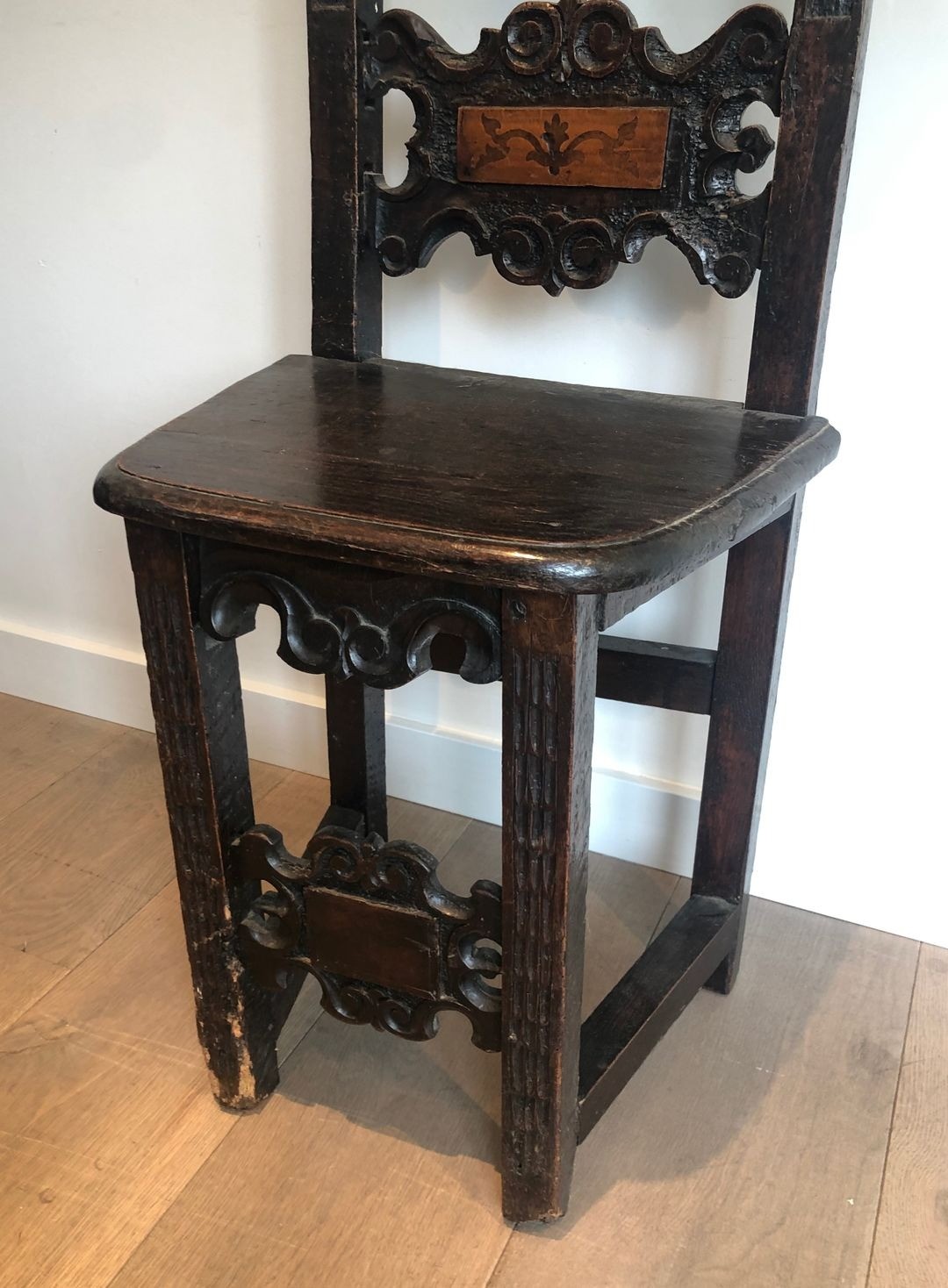
This suite of three seats—one armchair and a pair of chairs—in dark walnut stands as a rare survivor from the Italian Renaissance of the seventeenth century. The armchair, rising to 137 centimetres, commands the room through the authority of its high back, a structural gesture inherited from medieval thrones and refined through two centuries of Italian palatial culture. The walnut, dark and close-grained, carries the deep lustre of four hundred years of age, its surface a record of use and care that no restoration could replicate.
Italian Renaissance furniture in walnut represents one of the supreme achievements of European decorative art. The workshops of Tuscany, Lombardy, and Emilia developed a tradition of seat-making that drew on Roman antiquity, on the authority of the Church, and on the competitive patronage culture of the Italian courts and merchant aristocracy. Walnut—“noce” in Italian—was the noble wood of the peninsula: harder and darker than oak, resistant to worm, capable of receiving elaborate carved ornament while retaining the severity of its grain. The high-backed chair was both a functional object and a social instrument: in Renaissance Italy, the allocation of seating—who sat in the armchair, who on a side chair, and who stood—was a carefully managed choreography of rank.
What distinguishes this suite is its survival as an ensemble. Three matching pieces from the same workshop, sharing the same carved grammar, the same wood, and the same proportions—such coherence across four centuries is rare. Separated, each seat is a significant antique; together, they reconstitute a fragment of the domestic theatre of the Italian Renaissance interior, where every object played a role in the performance of civilisation, hospitality, and power.