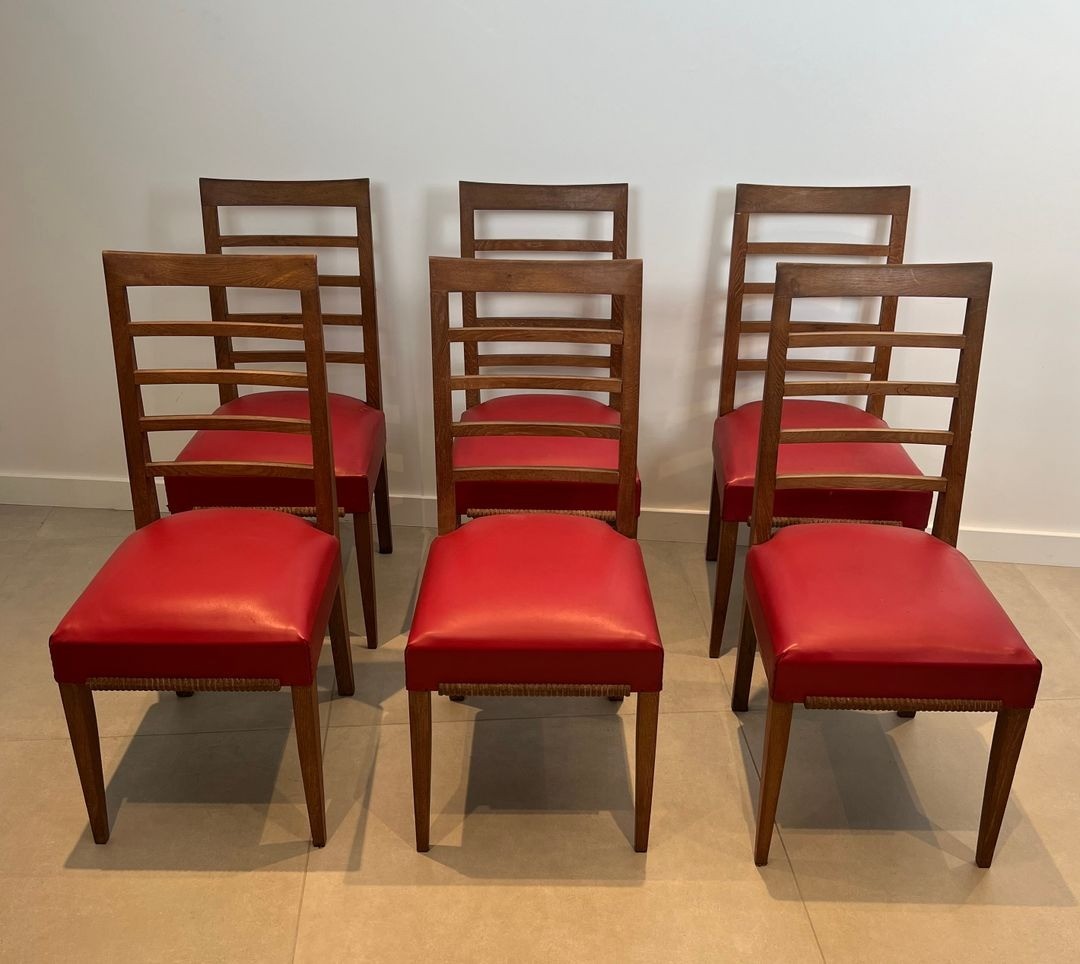
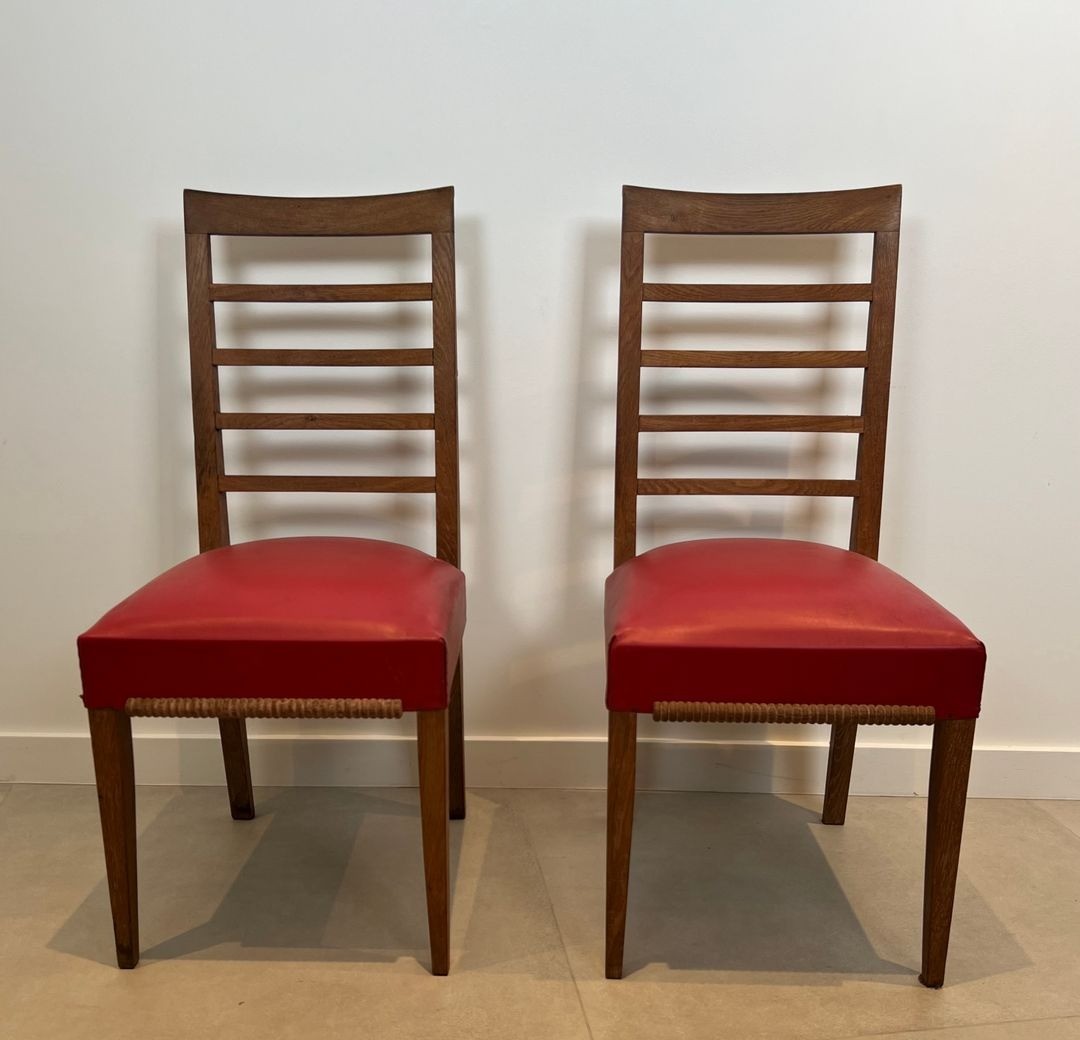
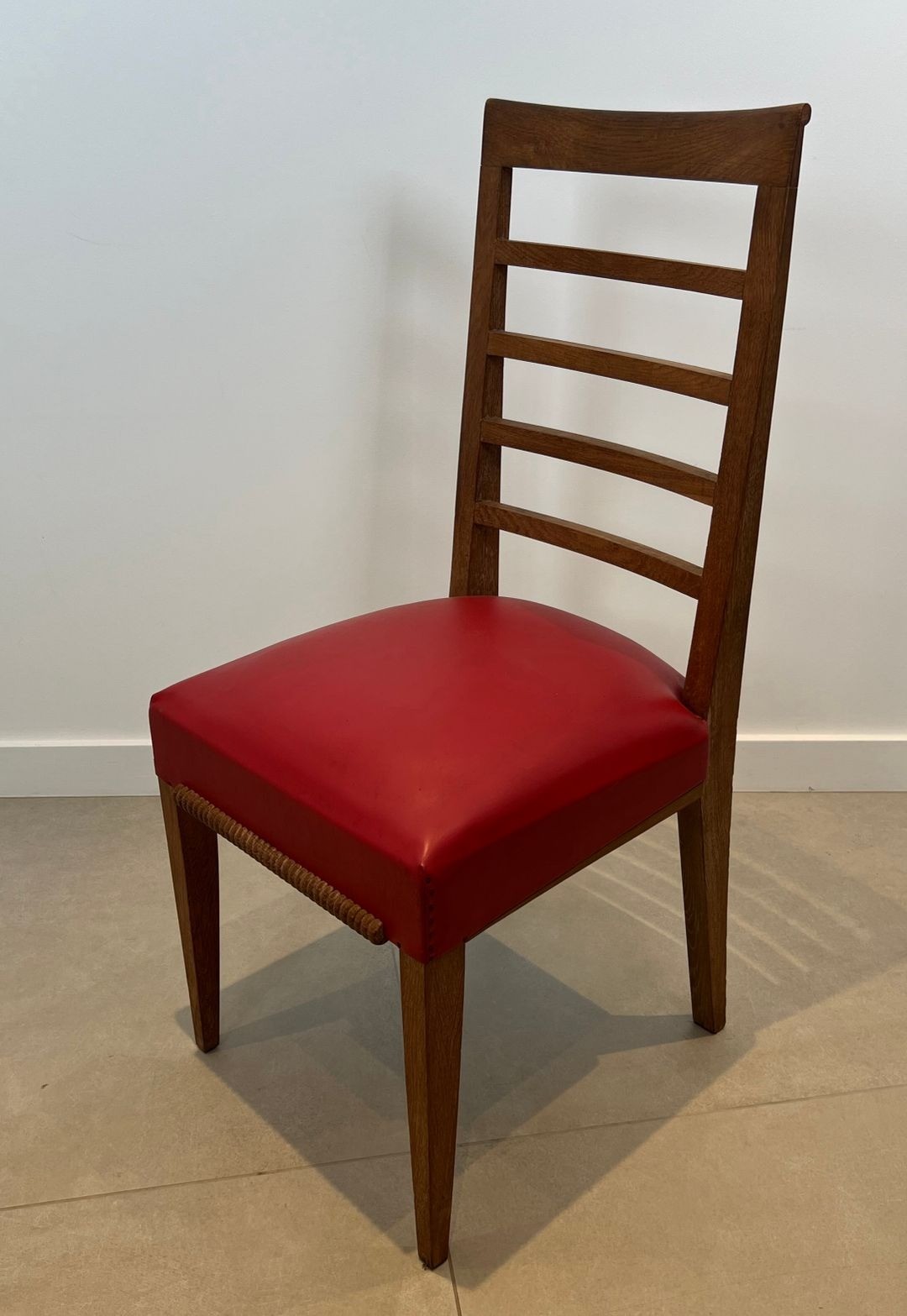
The set of six chairs is not merely a quantity but a social proposition. In the French provincial tradition of the interwar years, the dining room table for six was the canonical configuration of the bourgeois household — intimate enough for a family dinner, sufficient for a proper invitation. It is no accident that manufacturers and workshops of the period produced suites of this exact number: six chairs implied a certain domestic standing, the equipment of a household that entertained, that observed the rituals of the table as a form of social life. This suite, in solid oak with red faux-leather seats, embodies that aspiration in its most resolved material form.
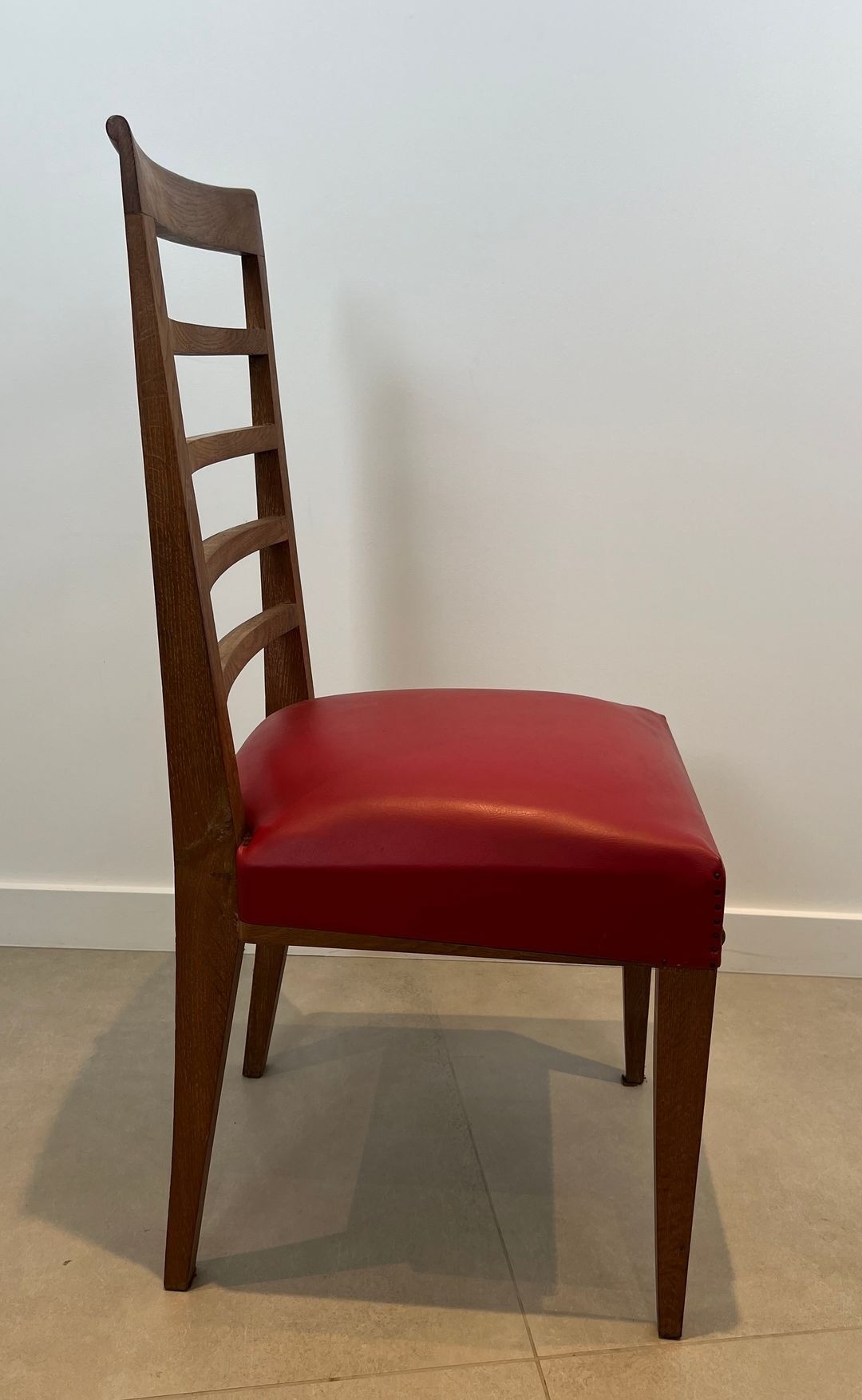
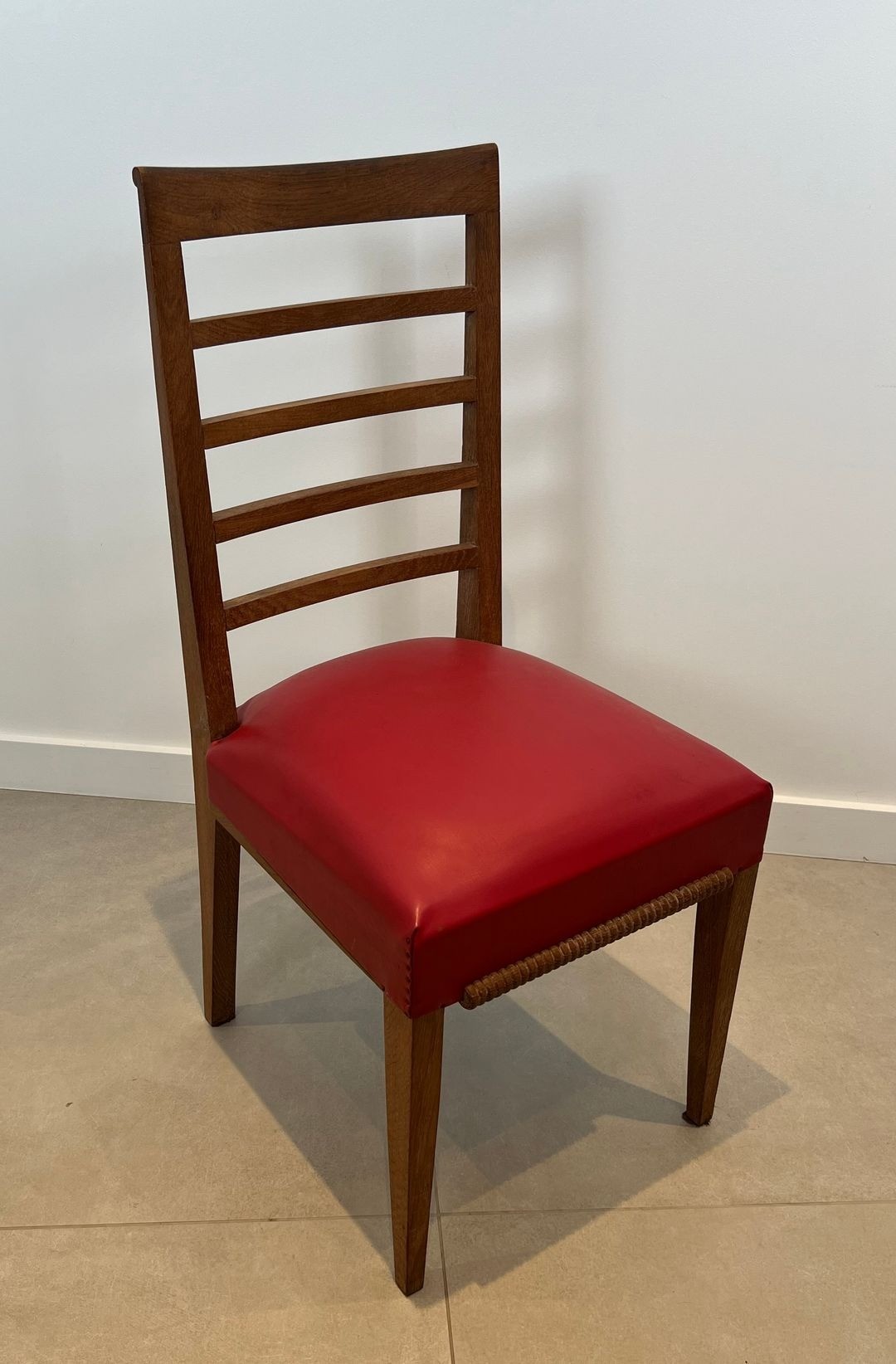
André Arbus (Toulouse, 1903 — Paris, 1969) was among the most influential figures in French furniture design of the mid-twentieth century, bridging the ornamental richness of Art Déco with the stricter vocabulary of neoclassicism. Son of a furniture-maker, trained in both the craft and theoretical dimensions of his discipline, he produced work of remarkable formal clarity — tapering legs, restrained mouldings, surfaces that expressed the natural grain of noble woods. The Arbus aesthetic proved highly influential beyond the atelier producing signed pieces: his formal solutions, themselves a synthesis of French classical tradition and modernist economy, were widely adapted by regional craftsmen and manufacturers seeking to bring a similar elegance to a broader public. This suite of six chairs, French work in the style of Arbus, is precisely that kind of intelligent diffusion: the silhouette and proportions absorbed and reinterpreted in oak and red faux leather for the provincial dining room.
Oak, the wood of French Gothic choir stalls and Normandy farmhouse dressers alike, brings to these chairs a particular quality of permanence and rootedness. Its dense grain receives the clean geometric profiles of Art Déco carving with exceptional authority, the austerity of the form amplified rather than softened by the material. Against the warm amber of the oak, the red faux-leather seats operate as a chromatic intervention — warm, confident, slightly festive — the kind of colour decision that transforms a set of functional objects into something with real personality. Skaï, the imitation leather widely adopted in French interiors of the 1930s and 1940s, was itself a material of democratic aspiration: durable, easily maintained, carrying the silhouette of luxury without its cost. In this suite, all the elements conspire toward a table arranged with pleasure and ready to receive.