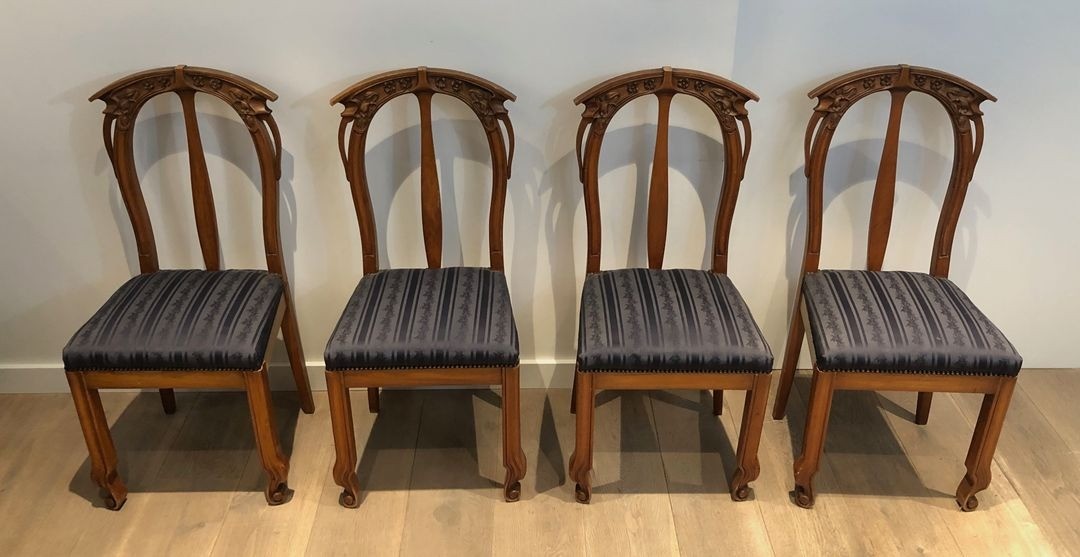
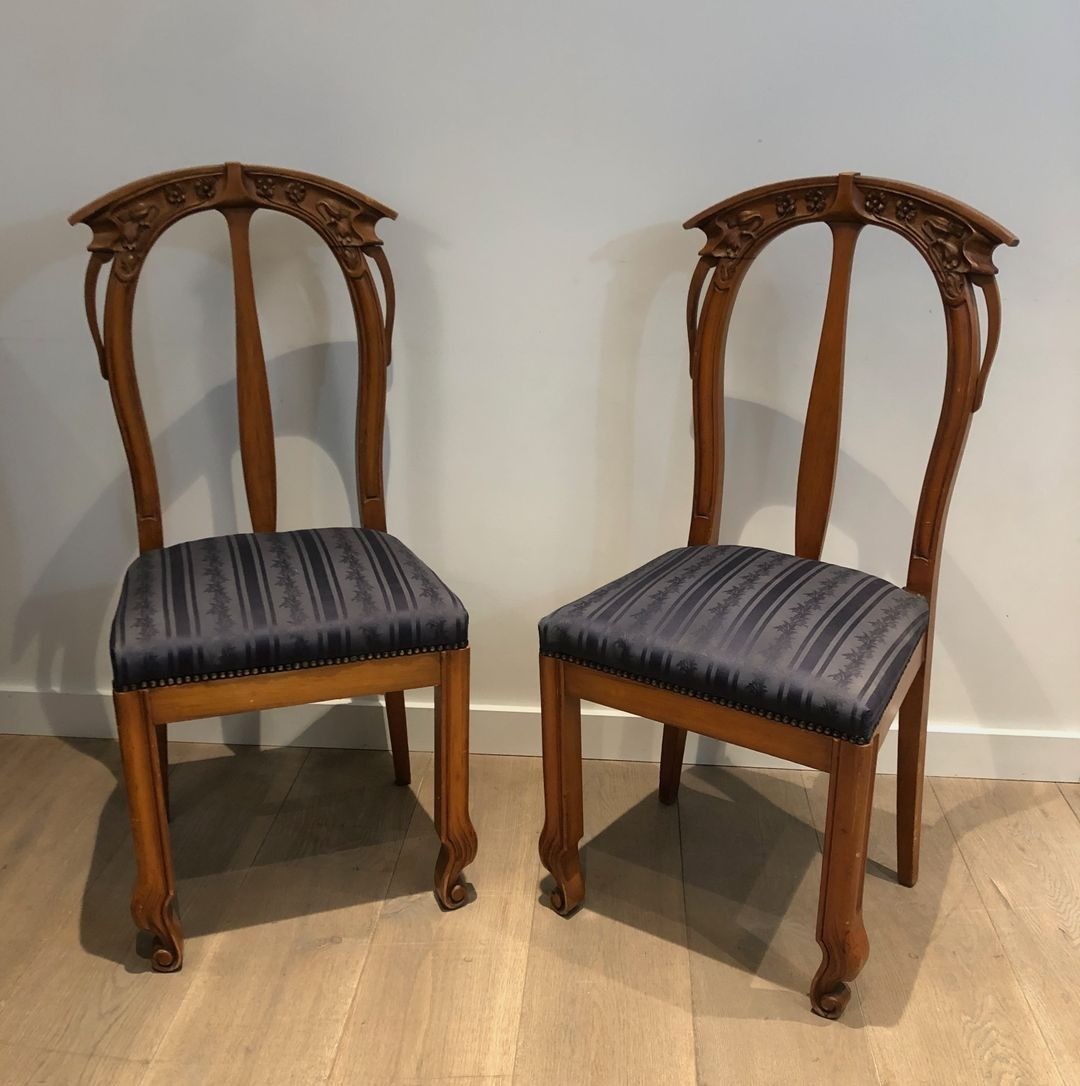
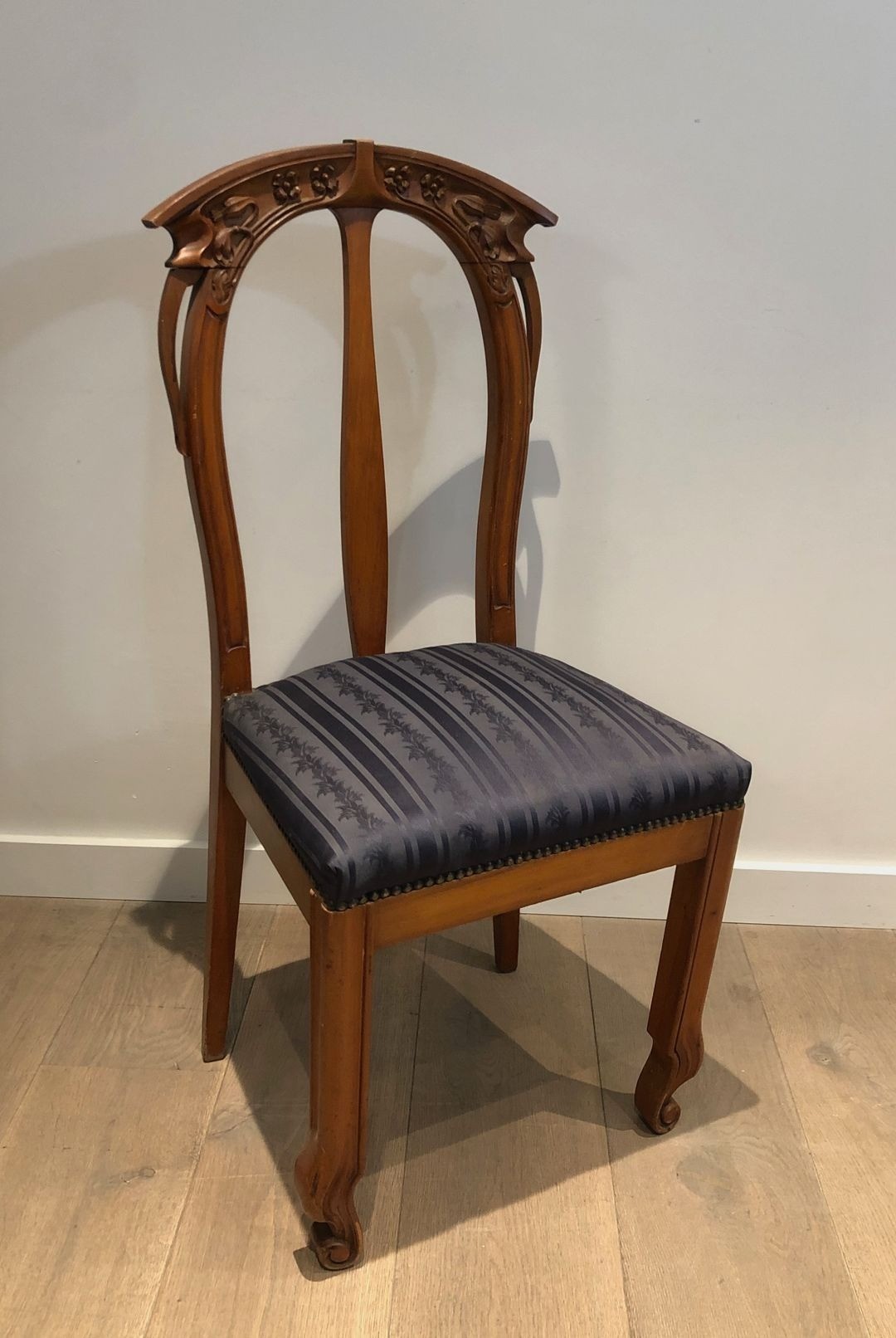
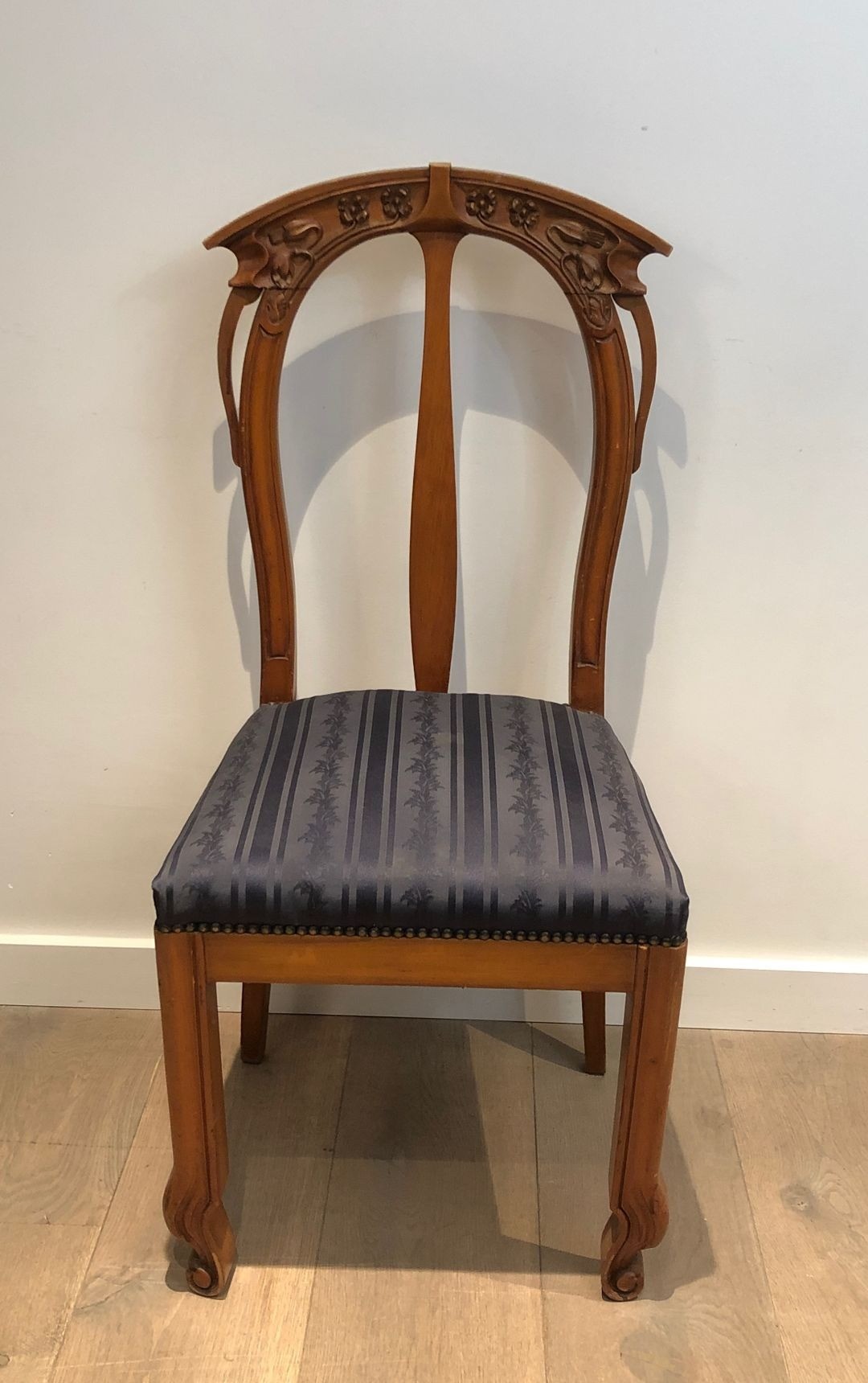
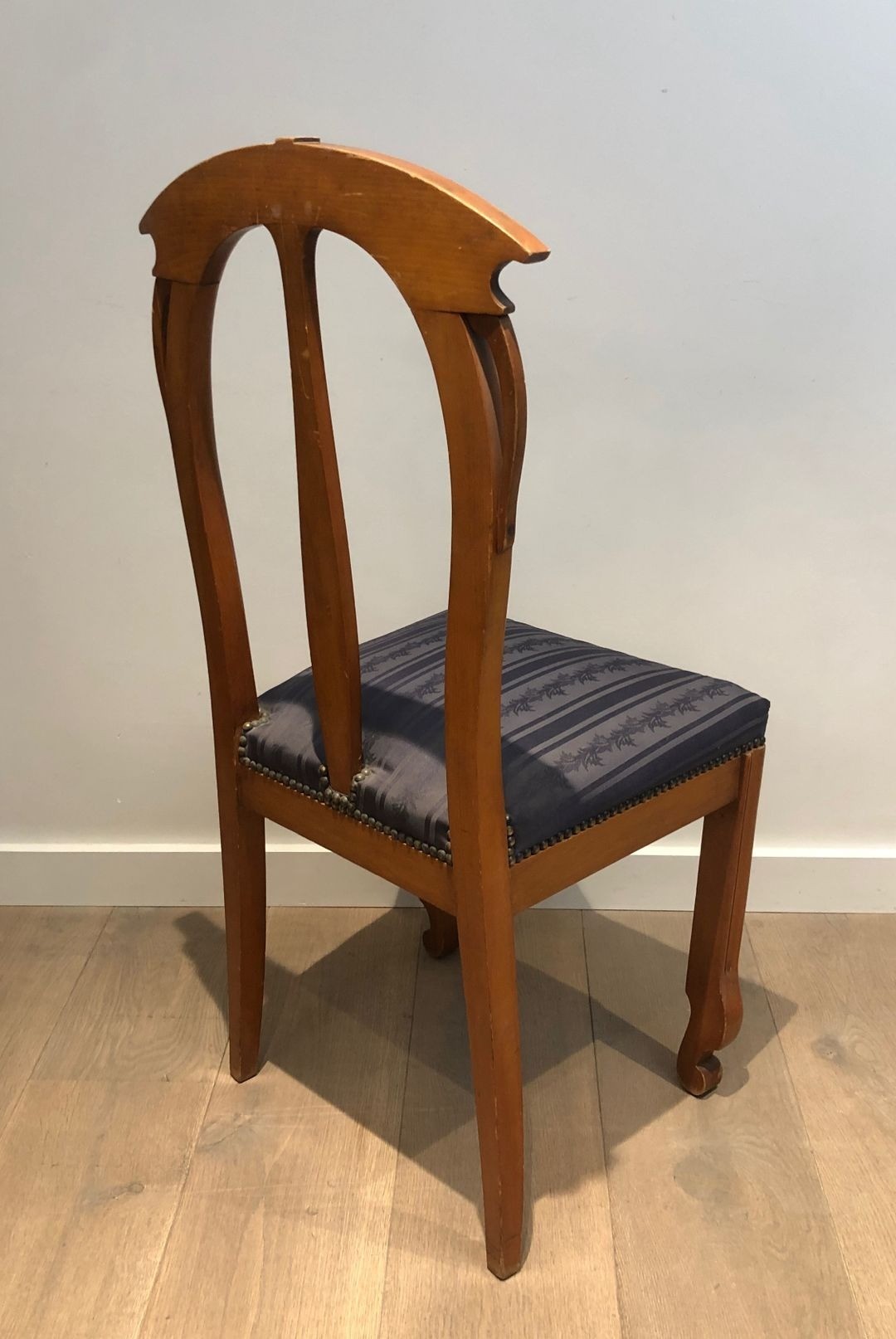
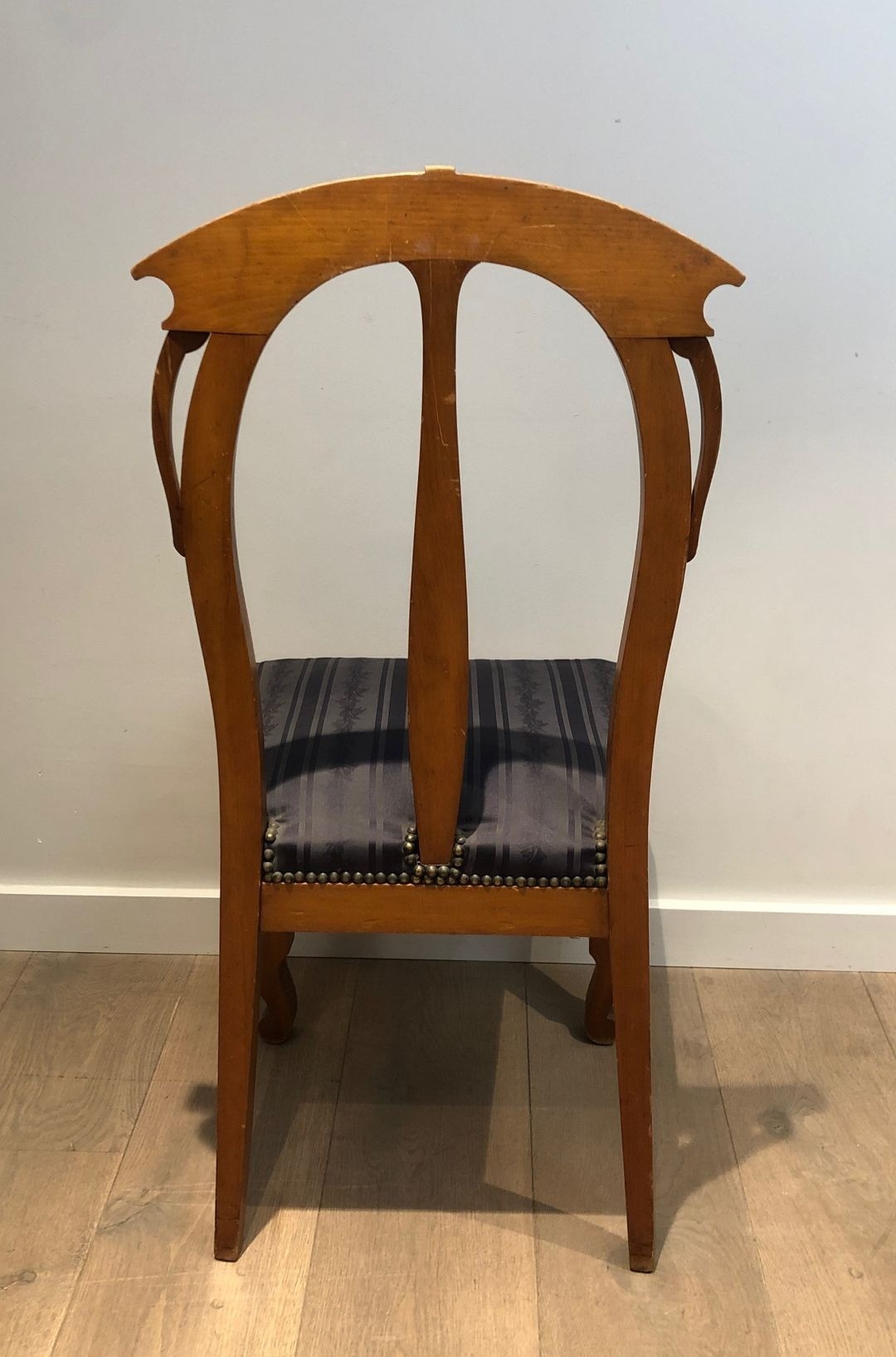
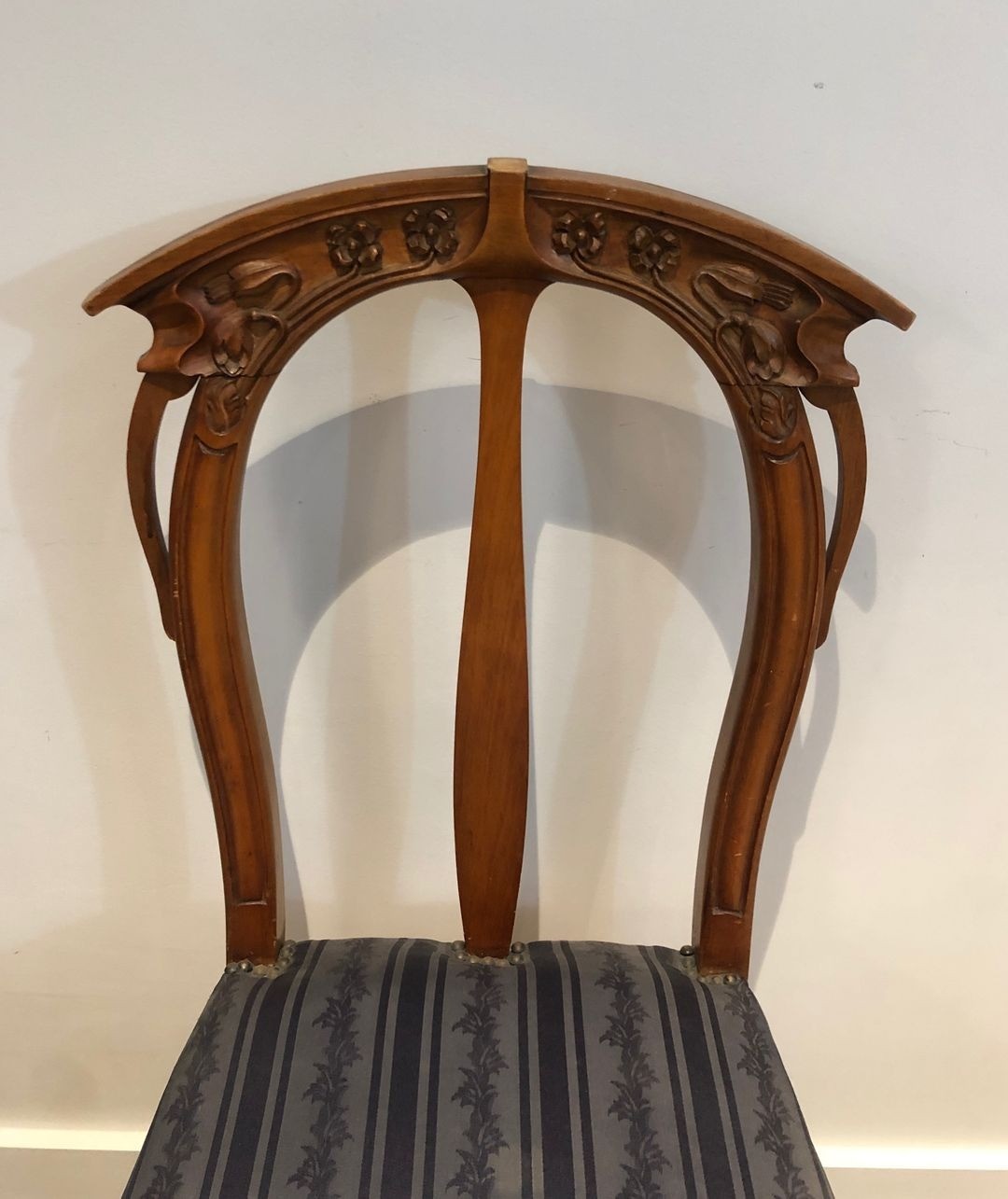
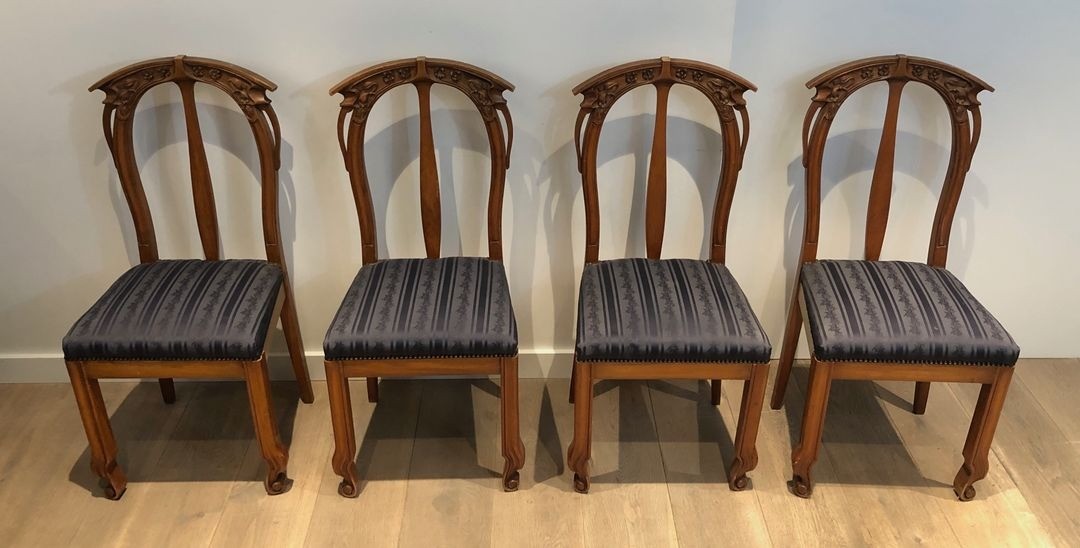
Art Nouveau was, before it was a style, a botanical revolution. The extraordinary richness of its floral ornament did not emerge from whimsy but from rigorous observation: the designers and craftsmen of the Nancy school — Louis Majorelle, Émile Gallé, Eugène Vallin — studied plants with the same care as the naturalists of their age, filling sketchbooks with the precise anatomy of irises, wisterias, chicory flowers, and water lilies. The carved flora of these four cherry wood chairs participates directly in that disciplined programme of visual research: flowers and plants rendered with an attention to their actual structure, their undulation, their way of growing toward light, that sets Art Nouveau ornament apart from the merely decorative.
The choice of cherry wood — merisier — is not coincidental. This warm, dense, deeply-grained fruit wood from the orchards and forests of Lorraine was the natural medium of the Nancy workshops, prized for its workability and the luminous quality of its reddish-brown grain. Where Paris workshops often favoured mahogany or rosewood, the Nancy school developed a particular intimacy with fruit woods — cherry, pear, walnut — materials drawn from the landscape immediately surrounding the workshops and the forests that had sustained the regional woodworking tradition for centuries. In these chairs, the warmth of the cherry and the movement of the carved plant motifs amplify each other: the wood seems to grow toward the flowers it carries.
The French term for the Art Nouveau aesthetic applied to furniture — mouvementé — captures something essential: these are objects in motion. The line does not rest; it curves, spirals, rises and falls in imitation of organic growth. Four chairs in this manner constitute an ensemble that animates any interior it inhabits, the flowing forms multiplying and echoing across the room, creating a visual atmosphere wholly different from the geometric certainty of Empire or the classicising restraint of Louis XVI. Produced circa 1900, at the precise moment when French decorative arts were transforming themselves under the twin influence of Symbolism and natural science, this suite is a document of one of the most radical aesthetic revolutions in the history of French furniture.