Charles Dudouyt (1885–1946) was one of the most singular figures in French furniture design of the interwar and immediate post-war period. Trained first as a sculptor before turning to furniture, he brought to his work an understanding of volume and material that owed more to monumental carving than to the cabinet-making tradition. His pieces in carved oak — massively proportioned, deeply worked with geometric and organic motifs drawn from medieval French craftsmanship, primitivist art and pre-Columbian sculpture — stand apart from both the ornamental refinement of Art Déco and the functional austerity of modernism, proposing a furniture rooted instead in the primordial materiality of wood itself. Dudouyt died in 1946, leaving a body of work that has since become among the most keenly sought in the market for French mid-century decorative arts.
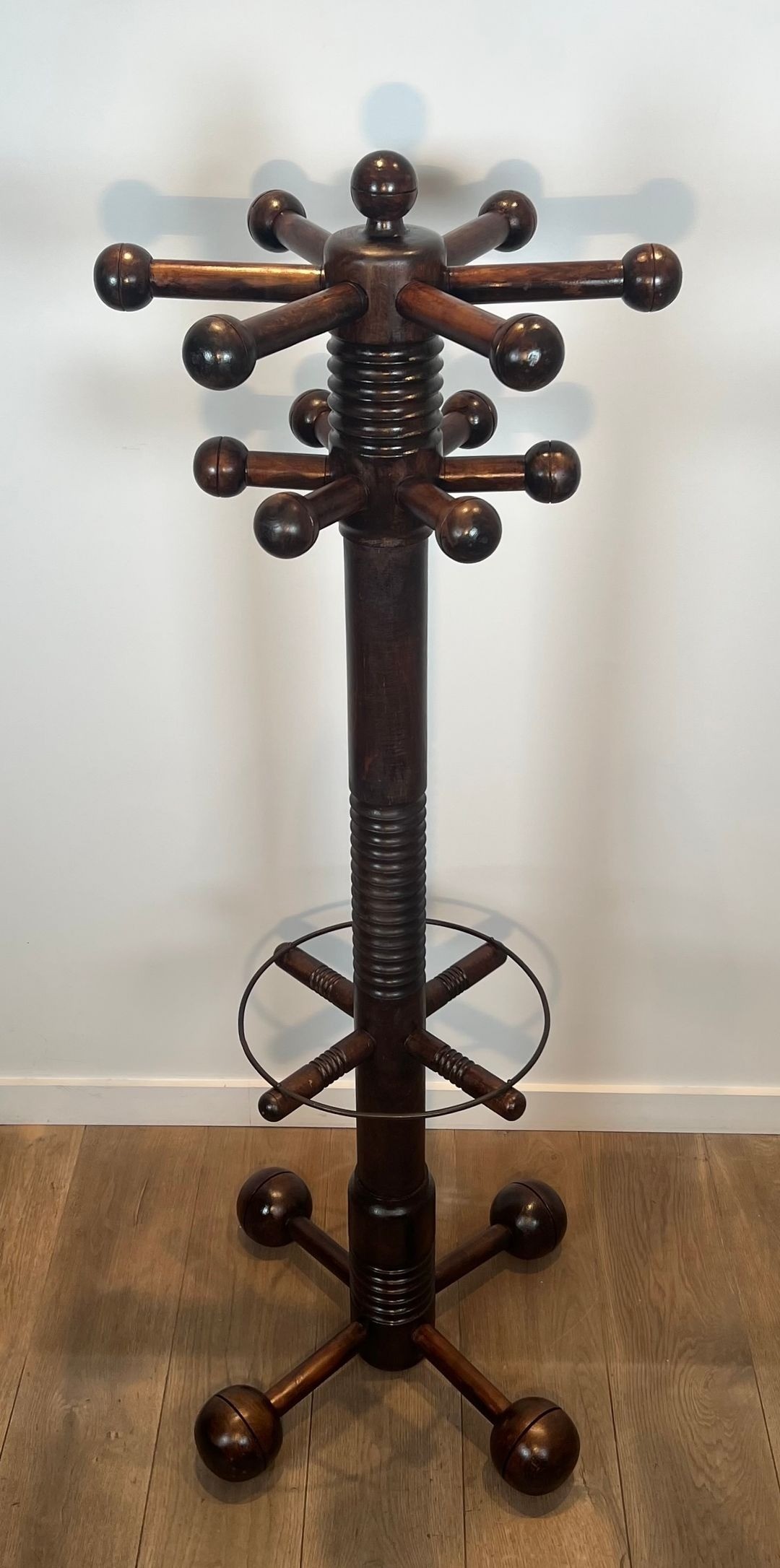
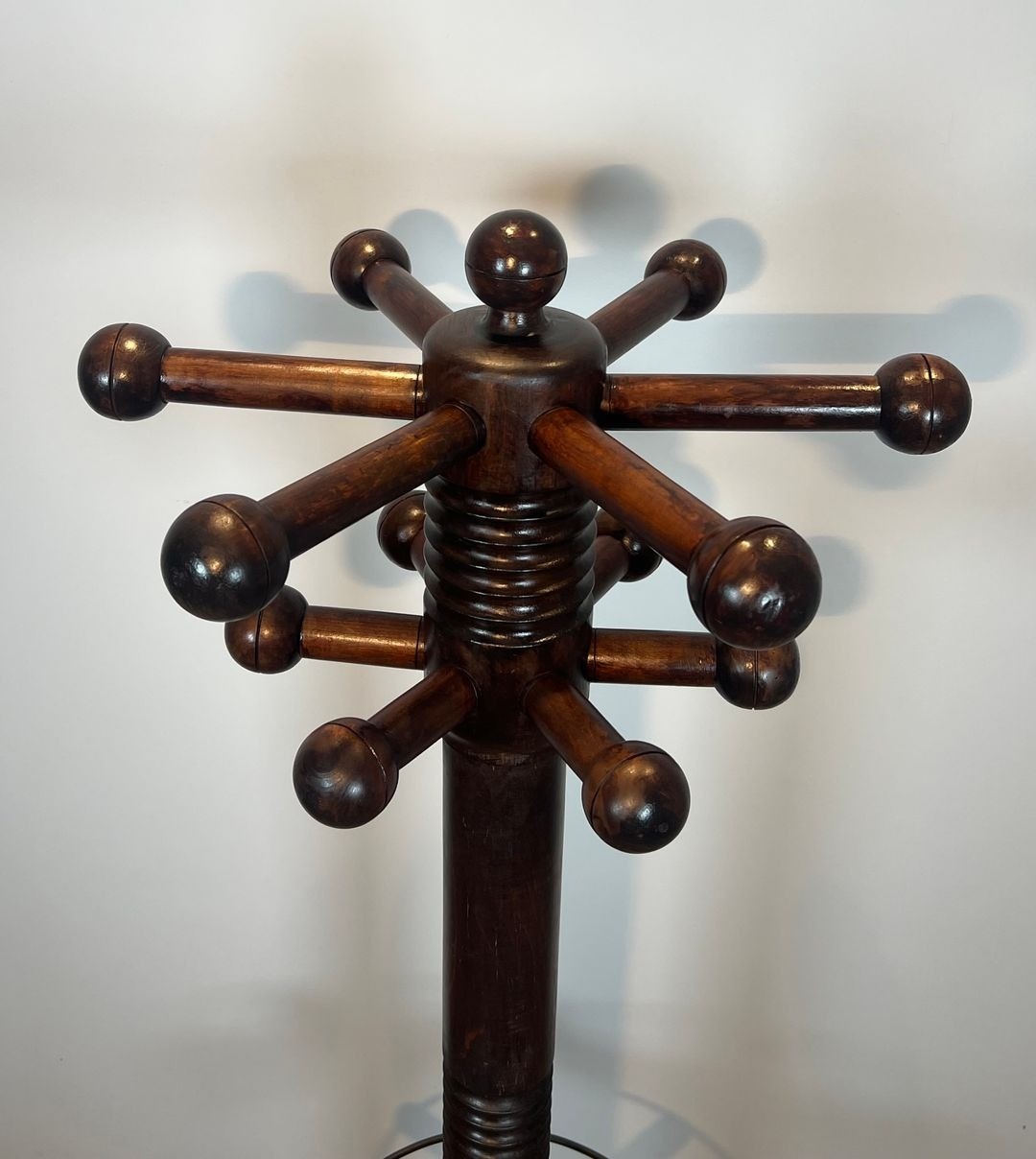
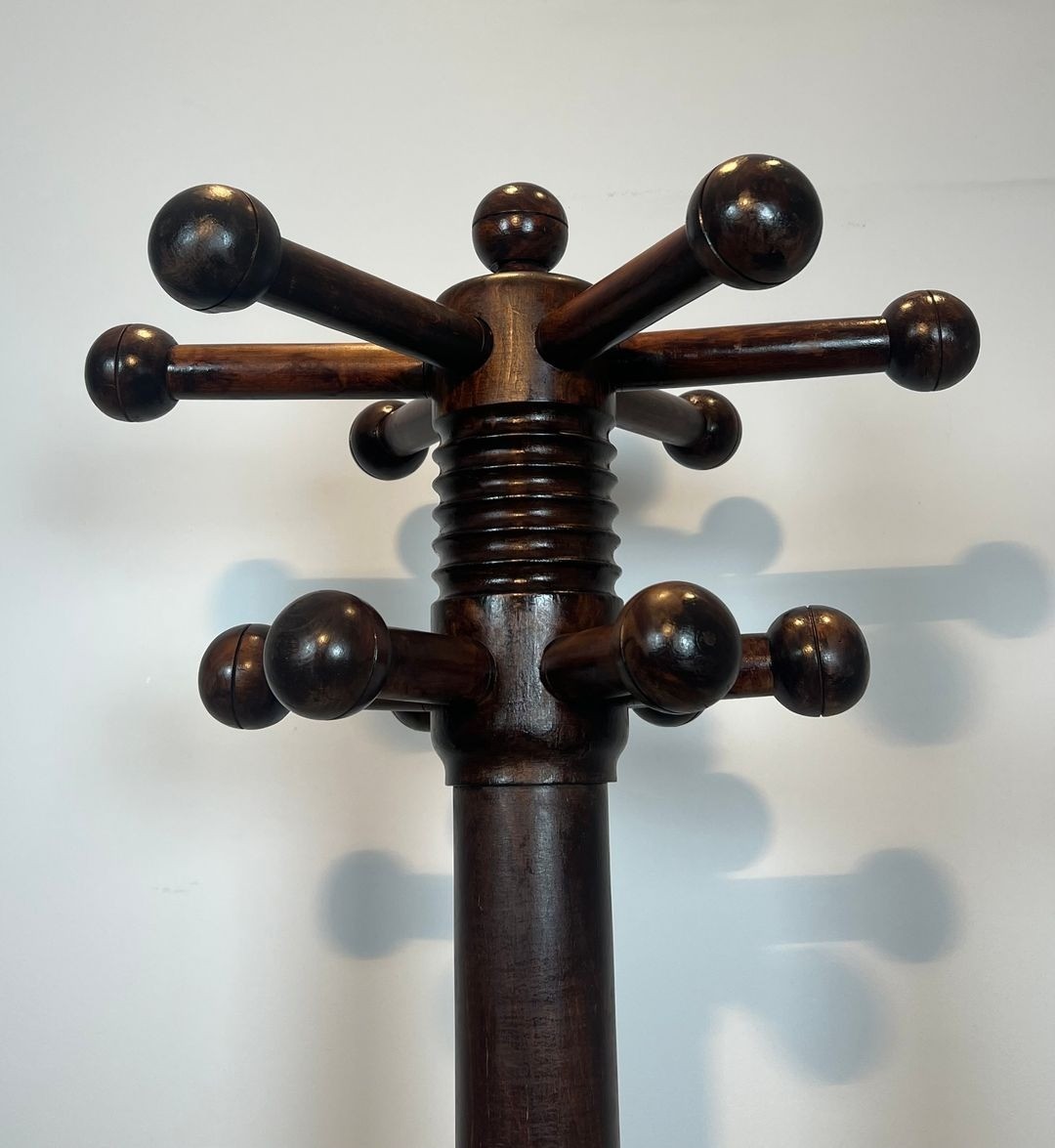
This coat rack — a standing piece with a square base of 70 × 70 cm rising to a height of 176.5 cm — embodies the characteristic Dudouyt approach: oak used not merely as material but as subject, the carving expressing the grain, density and age of the wood rather than applying ornament to its surface. The hooks and structural elements emerge from the mass of the piece as if hewn from within, giving the object a sculptural presence that occupies and commands any space in which it is placed. Monumental in scale yet unified in spirit, it is one of the most imposing forms in the Dudouyt repertoire.
Coat racks by Dudouyt are particularly prized among collectors as vertical monumental pieces — works in which the full sculptural power of his approach is concentrated into an object of daily use. A piece of this height, depth and carving quality is exceptional: it demands a room of appropriate scale, rewarding that generosity with the kind of presence that separates furniture from art. For collectors of French decorative arts, this is an acquisition of the first order.