The wrought iron craft — la ferronnerie — occupies a singular place in the history of French decorative arts. At once the most ancient and the most technically demanding of the metalworking disciplines, it reached its first great apogee in the monumental grilles and balusters of the seventeenth and eighteenth centuries, when French smiths produced the gilded iron gates of Versailles and the celebrated grilles of the Cathedral of Nancy. After a long recession during the Industrial Revolution, when cast iron displaced the hand-forged material, wrought iron underwent a decisive revival in the early twentieth century through the work of masters such as Edgar Brandt and Raymond Subes, who restored it to the status of a fine art.
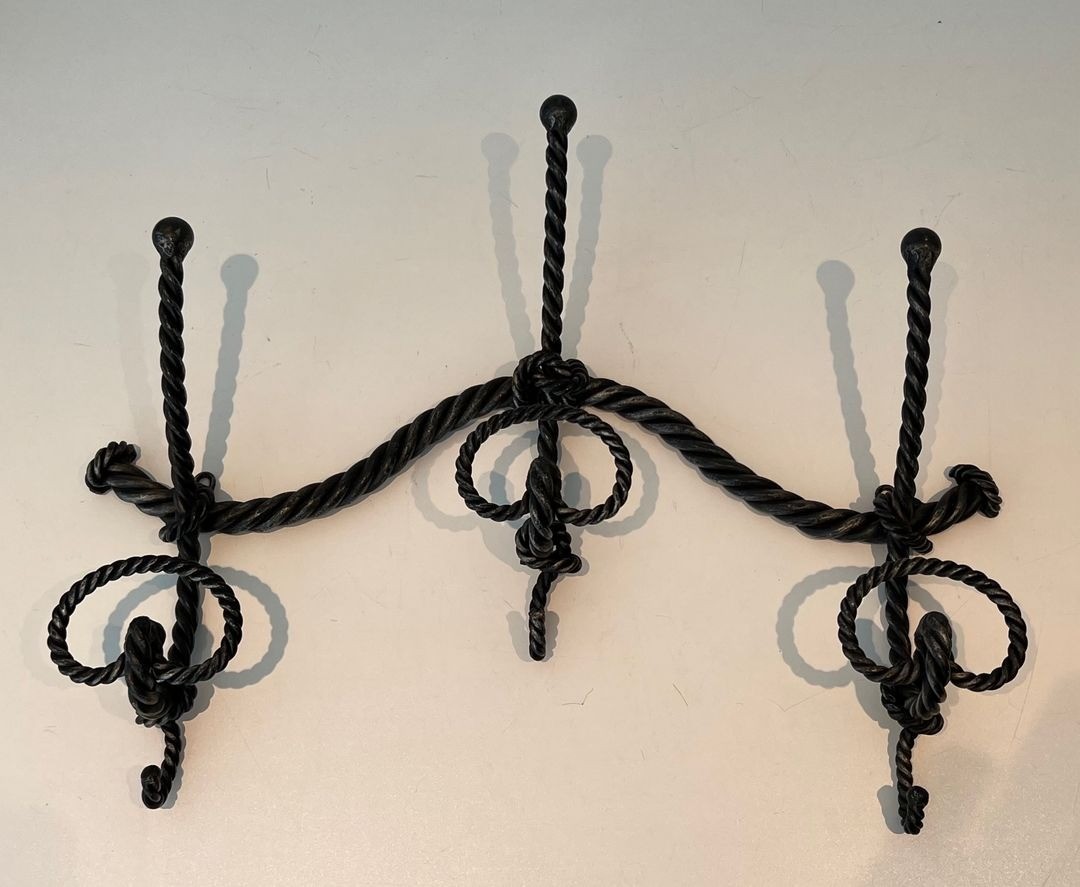
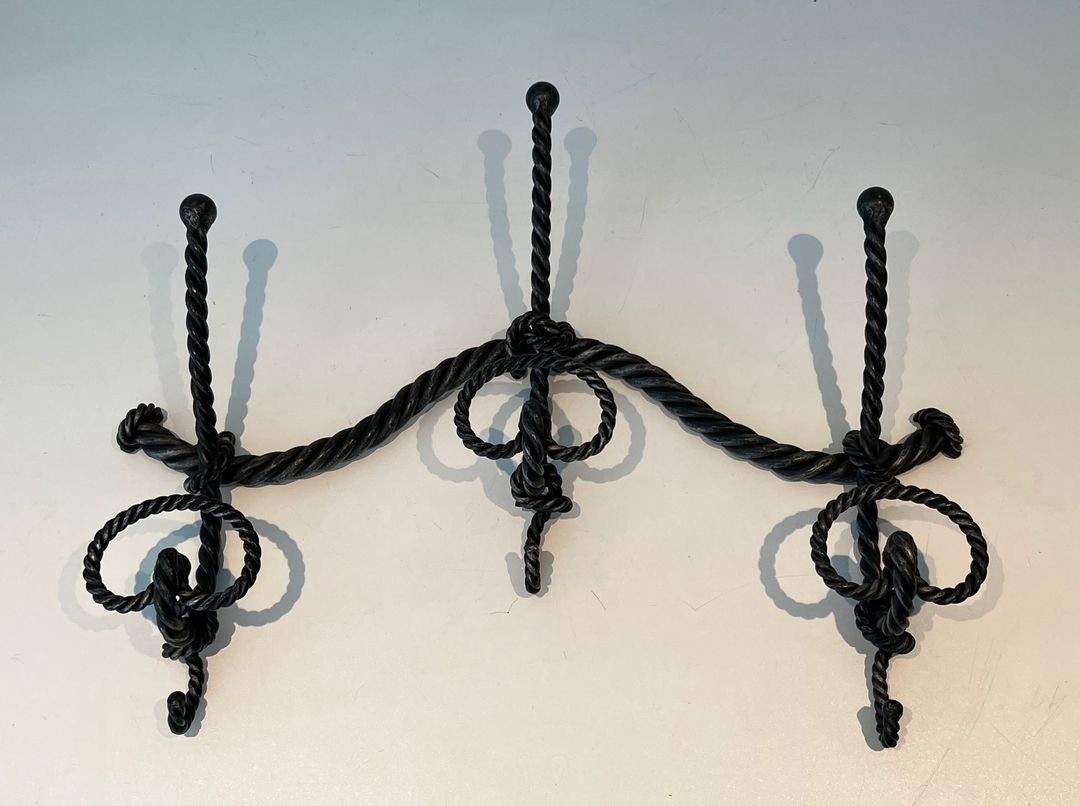
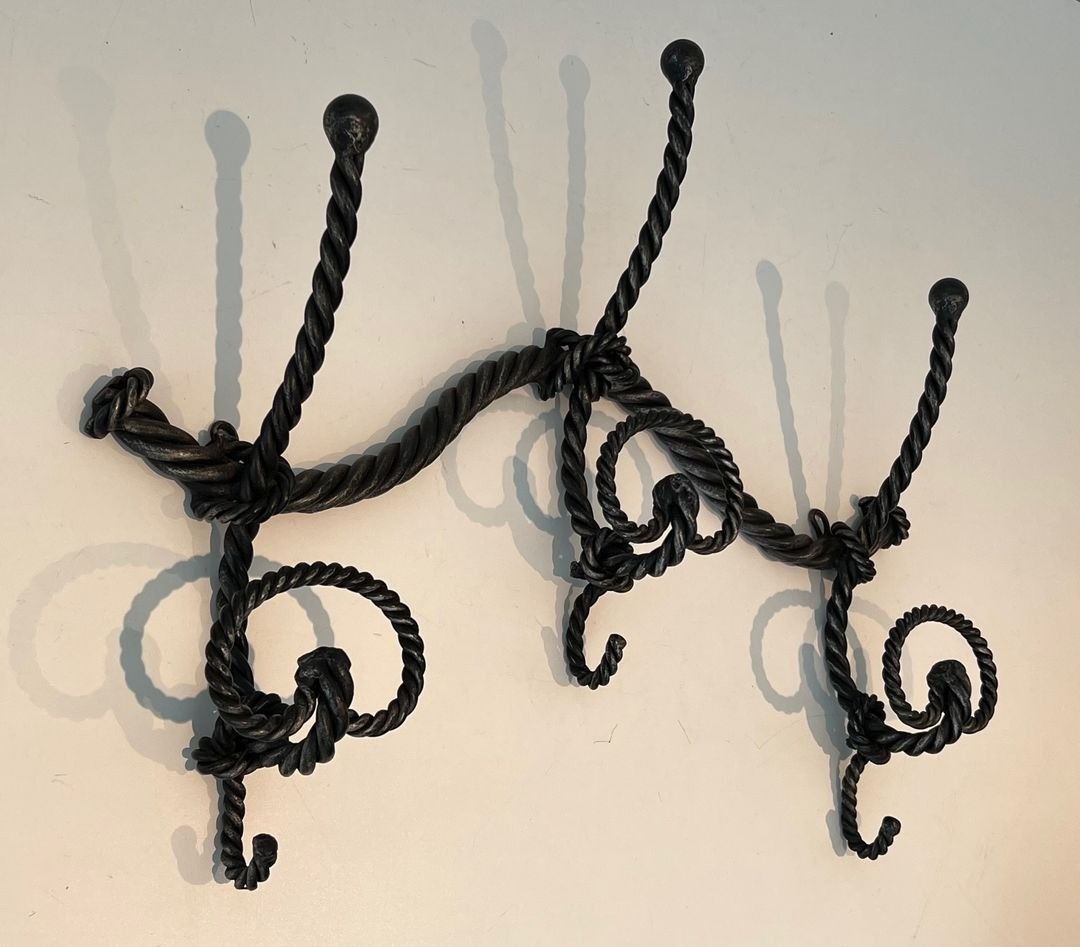
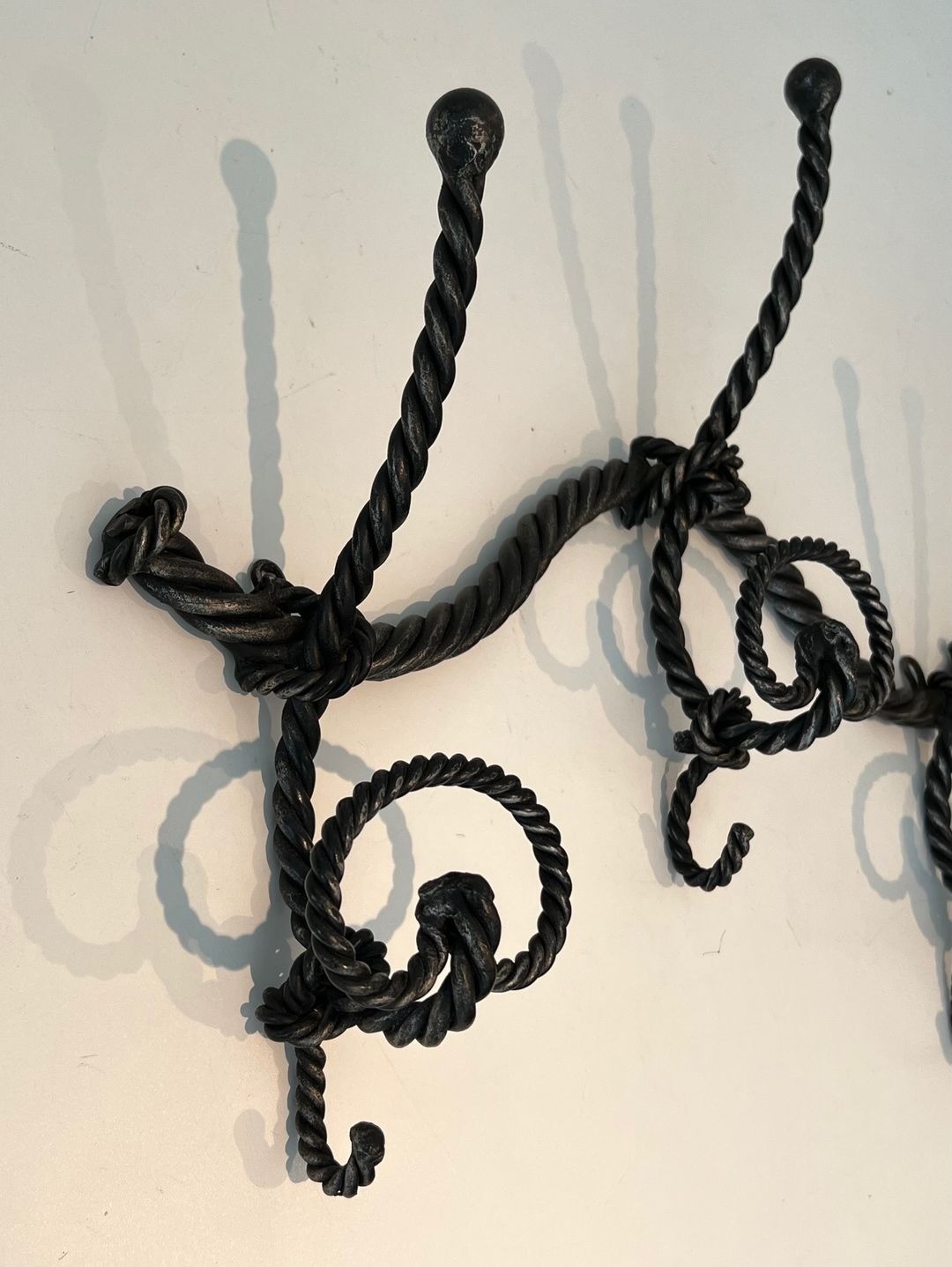
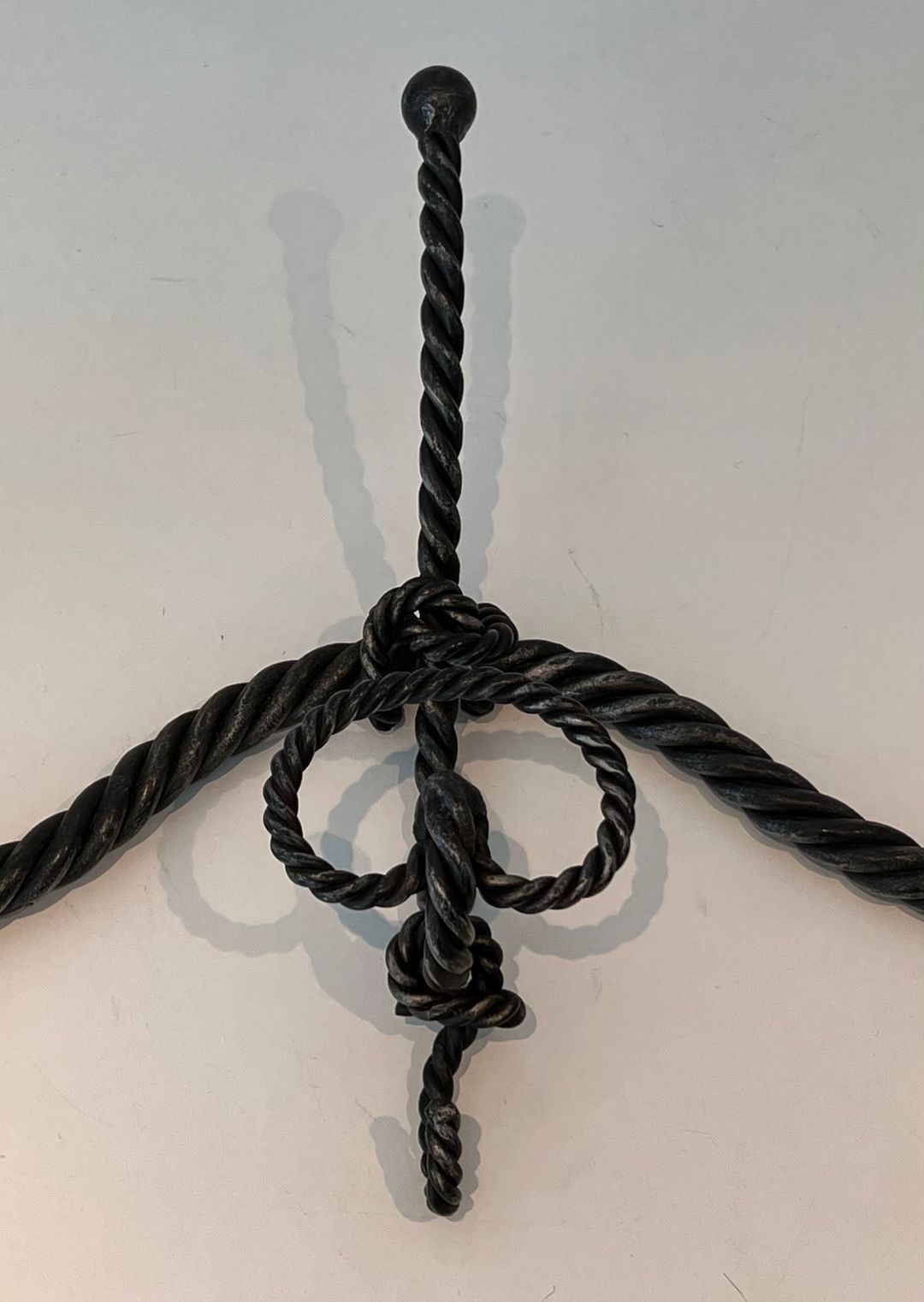
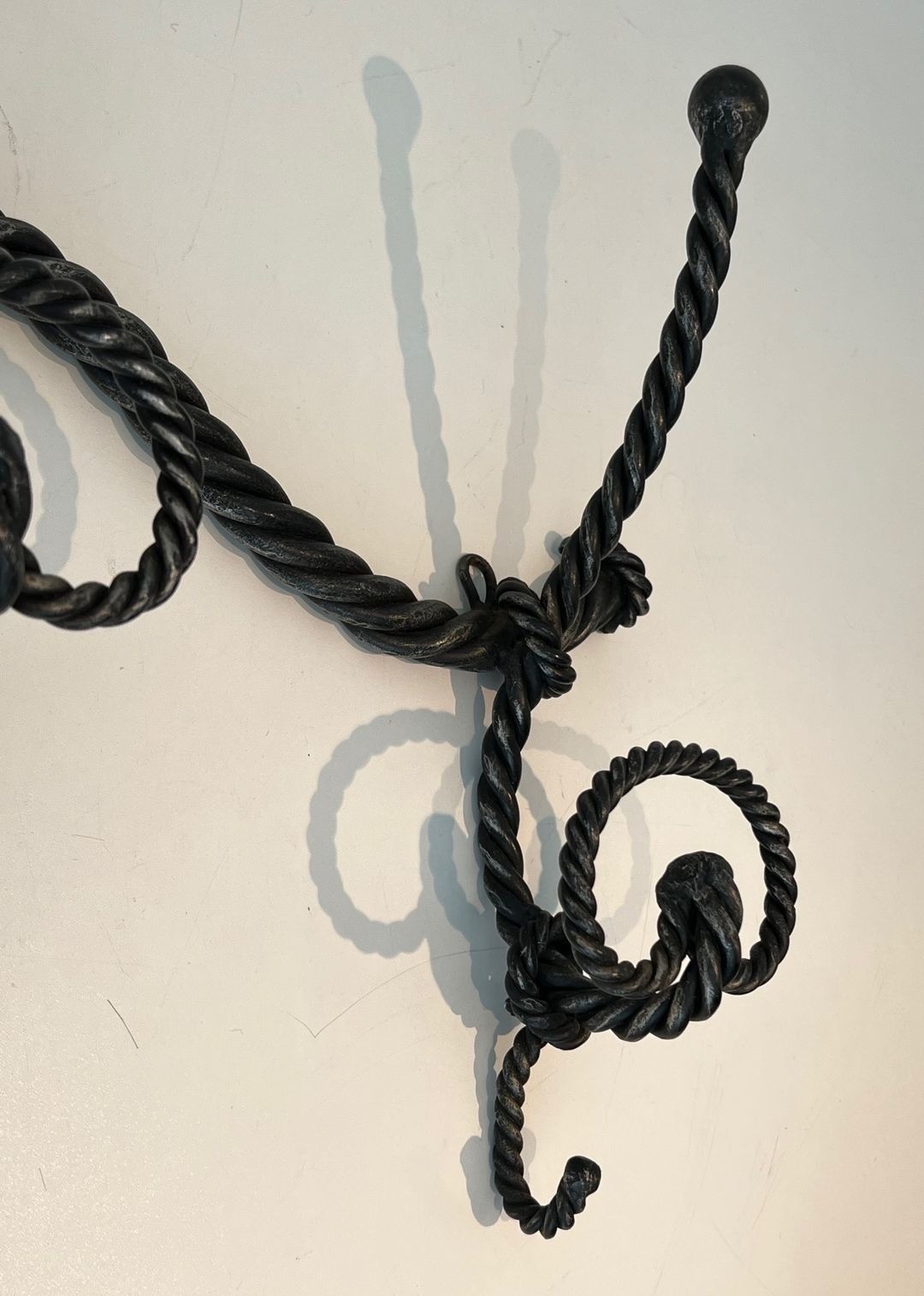
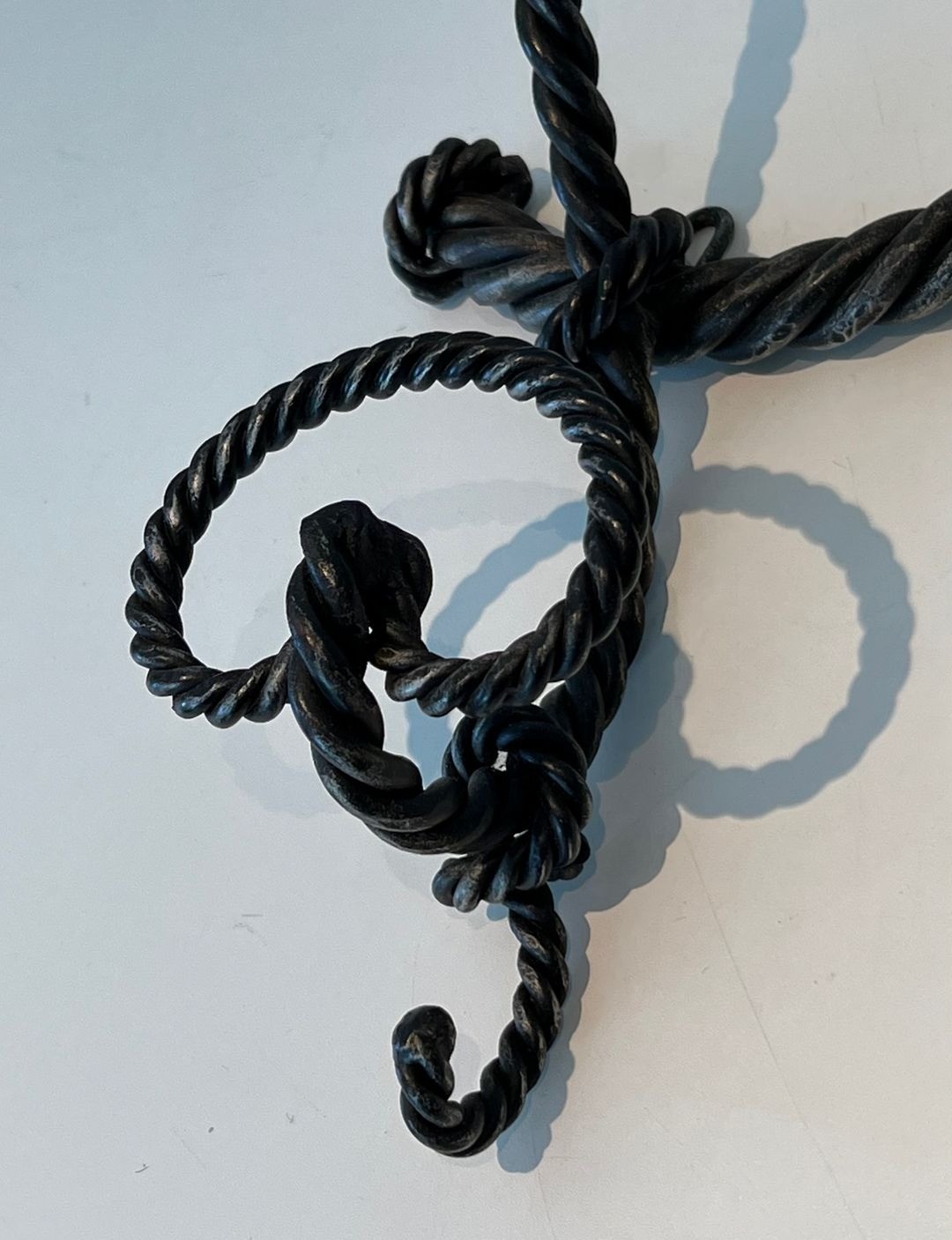
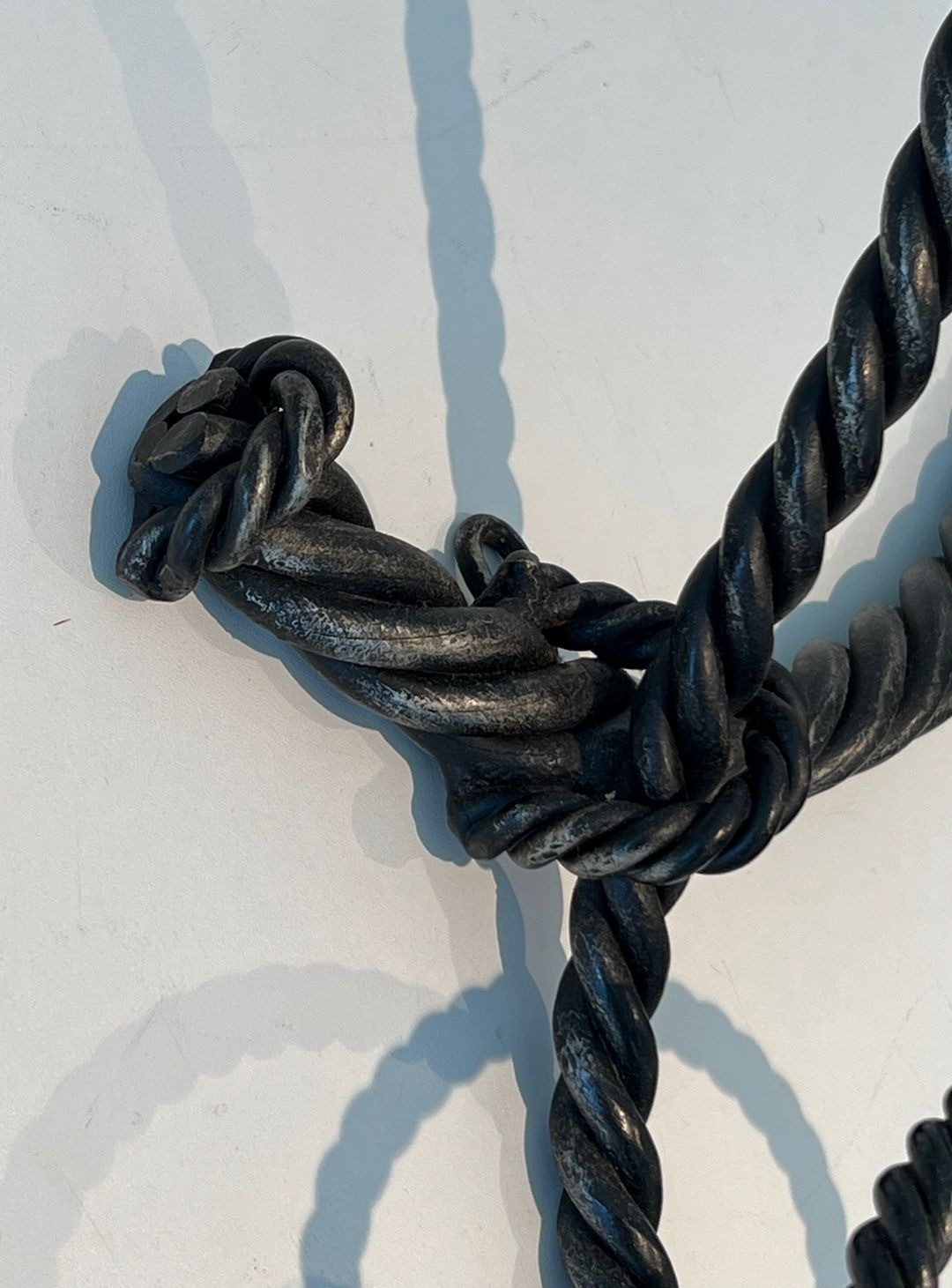
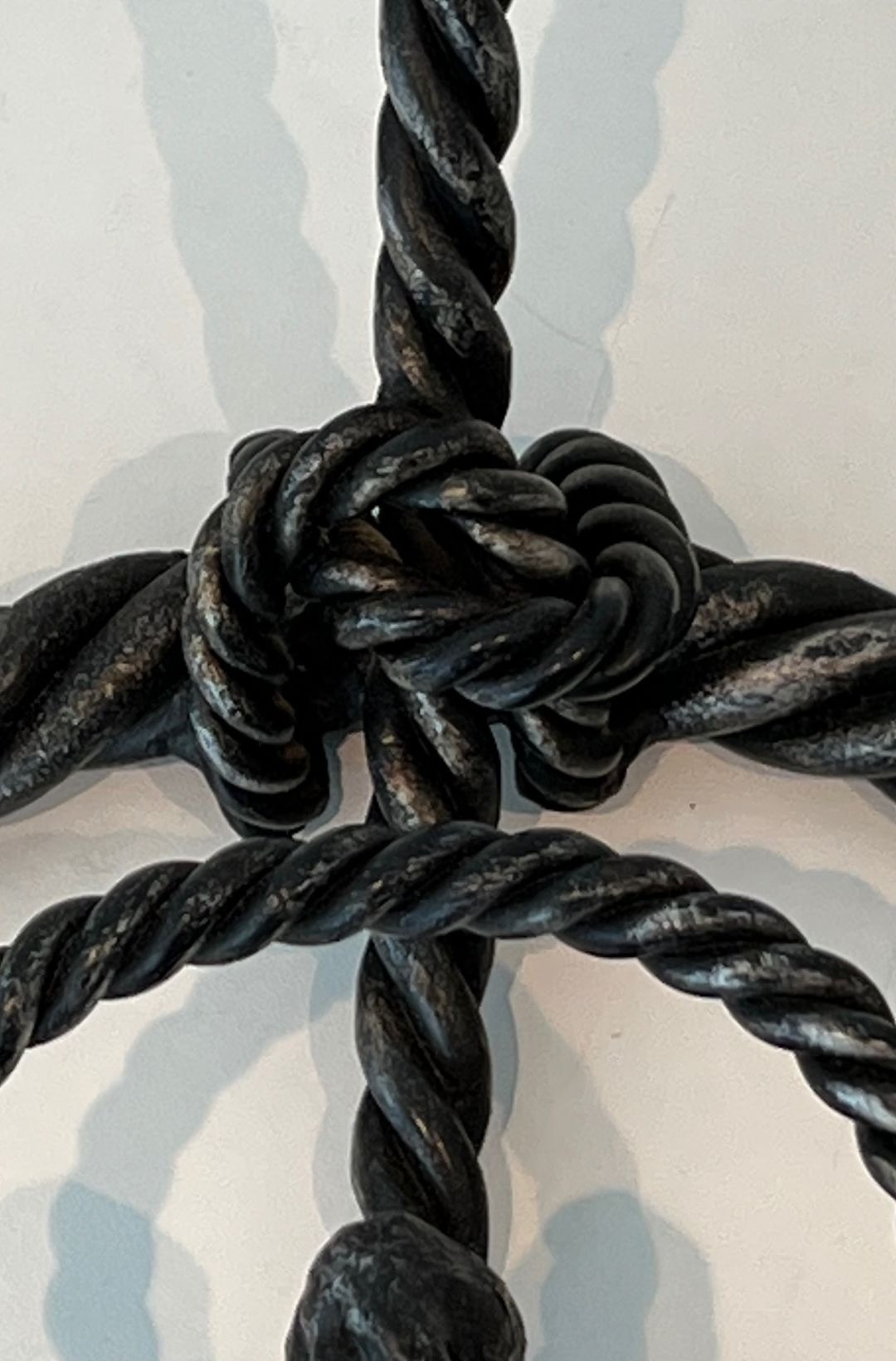
This wall coat rack, in twisted wrought iron, belongs to the artisanal tradition that emerged in the wake of that revival. The torsade — the twisted rod — is one of the oldest and most demanding demonstrations of the ironsmith’s command of his material: the twist must be uniform and regular, controlled entirely by the smith’s handling of the hot metal, and no two lengths of twisted iron are ever quite identical. Its presence here, applied to the structural members of a functional piece, is an implicit assertion of craft lineage: this is work in the tradition of the ferronnier d’art, not of the industrial fabricant.
Dating to circa 1940, this rack was made in a period when French artisan ironwork had established a mature identity distinct from both the industrial and the avant-garde. Modest in scale — 61.5 centimetres wide, compact enough for a corridor or entrance — it carries in its materials and technique the accumulated weight of a tradition stretching back centuries. For the collector who values craft over spectacle, it represents an entry point into one of France’s least recognised but most continuously distinguished making traditions.