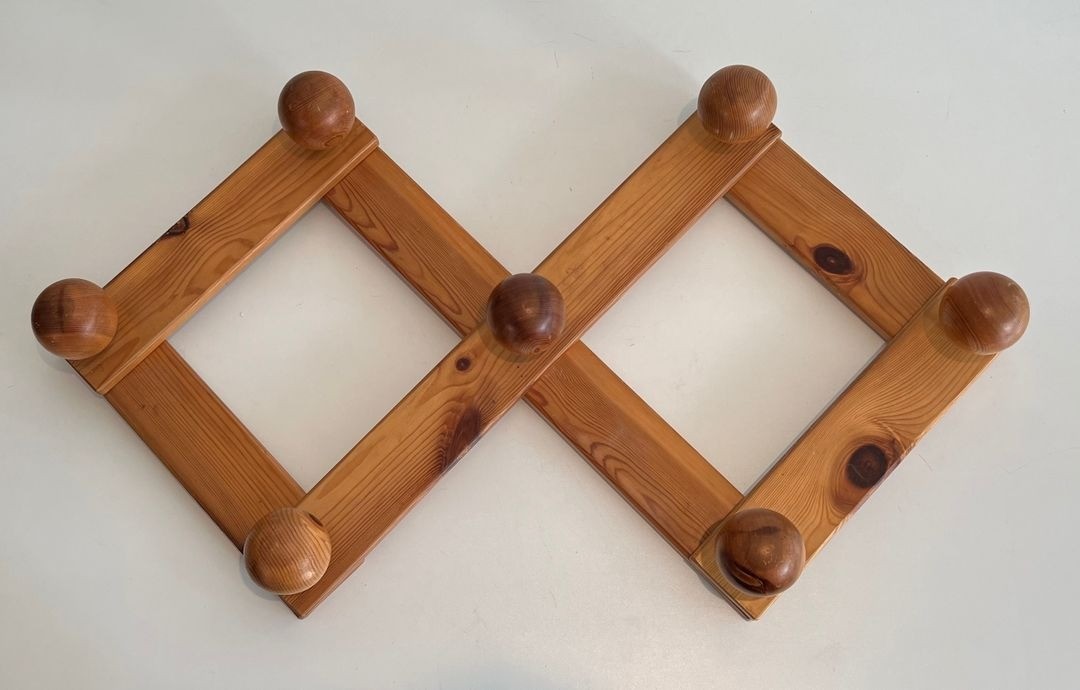
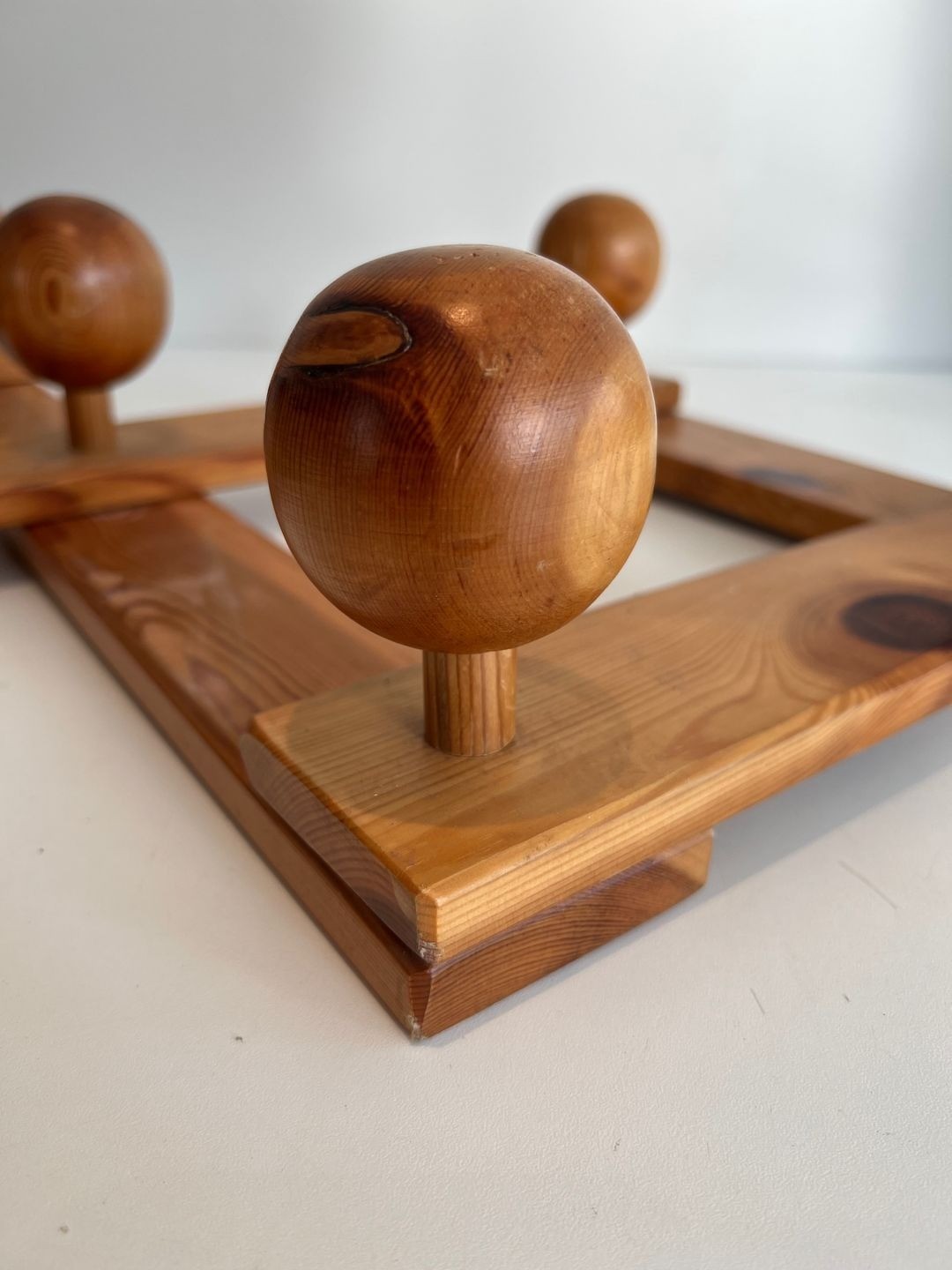
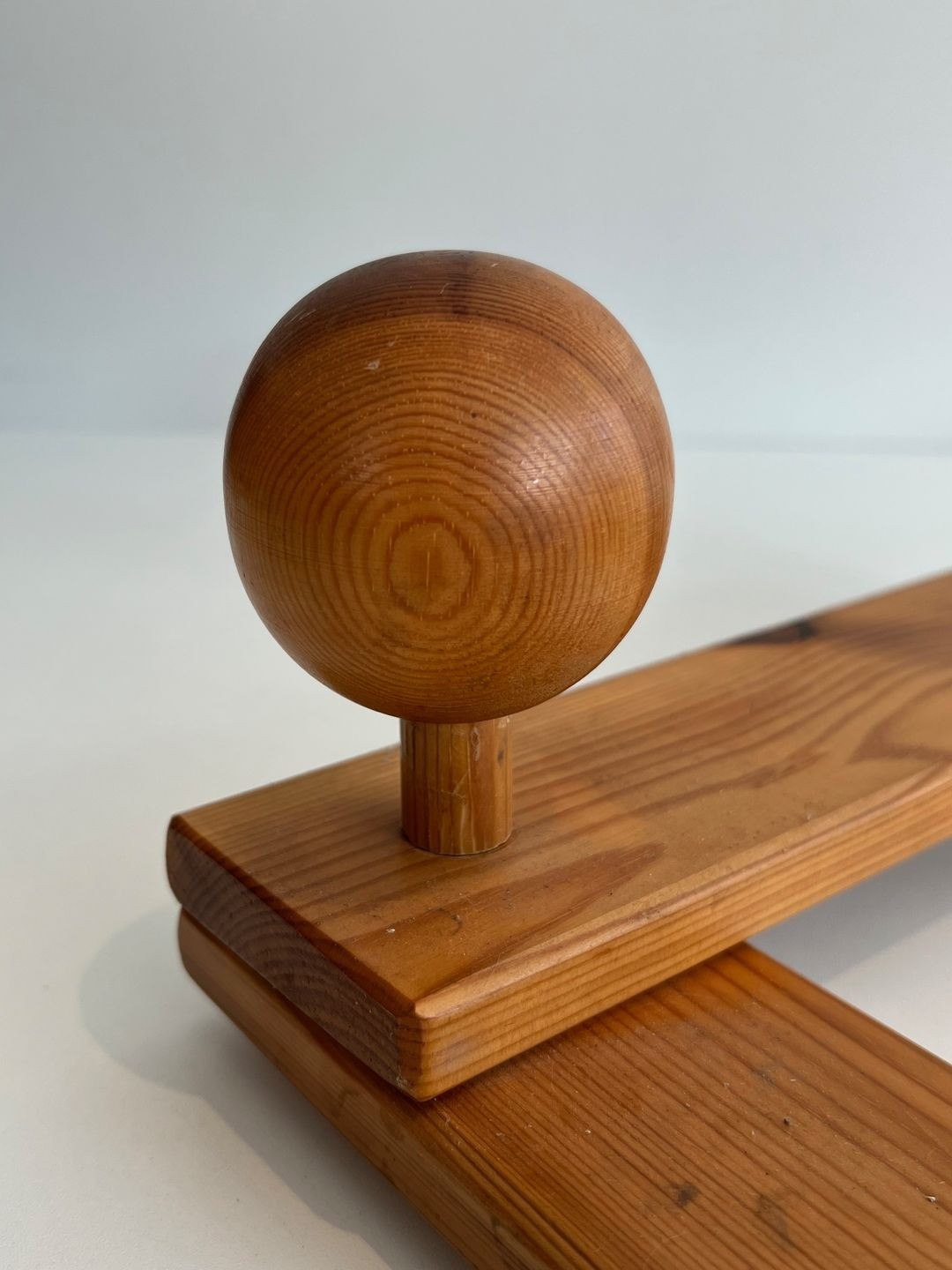
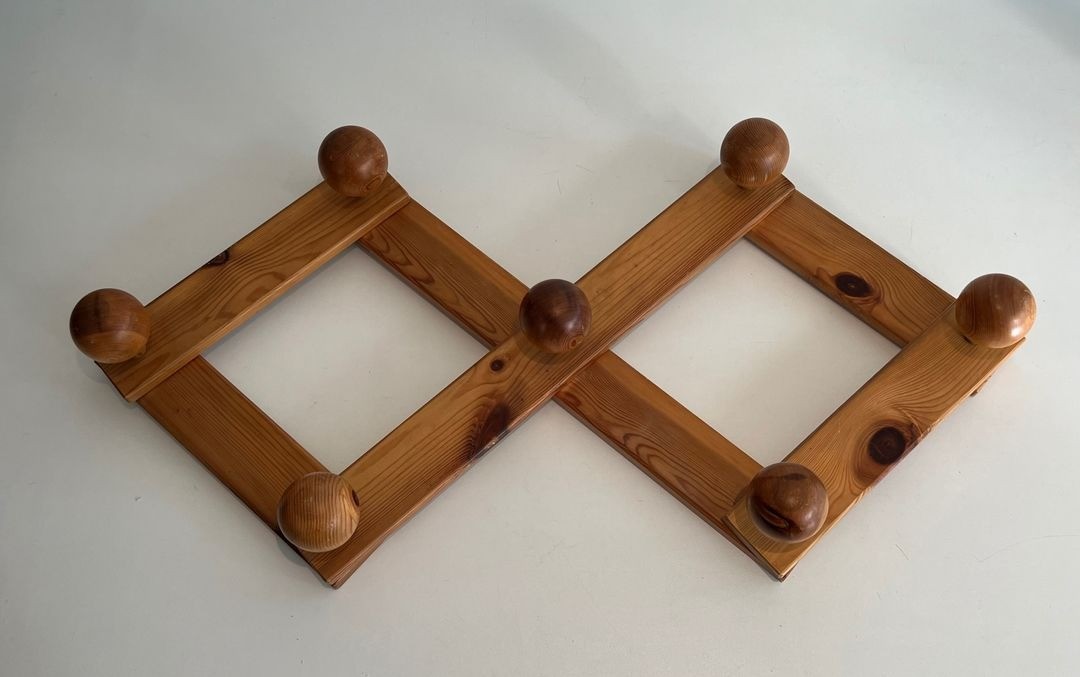
Charlotte Perriand (1903–1999) stands among the most influential figures of twentieth-century French design: a pioneer who, alongside Le Corbusier and Pierre Jeanneret in the late 1920s and subsequently with Jean Prouvé, developed a grammar of modernist furniture grounded in function, industrial method and material honesty. From the 1930s she turned increasingly toward the vernacular traditions of the French Alps, finding in rough pine and simple joinery a means of translating modernist principles into democratic, widely accessible forms. This pine wall accordion coat hanger, made in France circa 1950, belongs to that lineage.
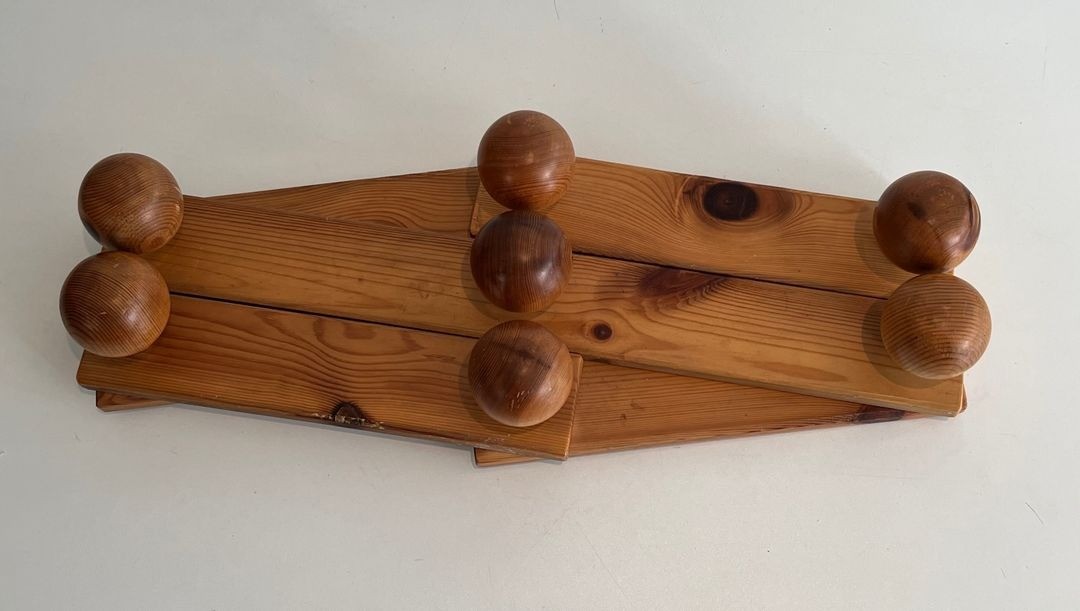
The accordion mechanism is a small lesson in compressed functionality. Deployed, the piece extends to 105 cm; folded, it projects only 12.5 cm from the wall — a compression ratio that speaks directly to the spatial economy of the post-war French interior. The visual logic of the linked pegs, opening and closing in a regular rhythm, is also characteristic of the Perriand circle’s interest in kinetic, transformable domestic objects: furniture that works as hard in its compact state as in its active one.
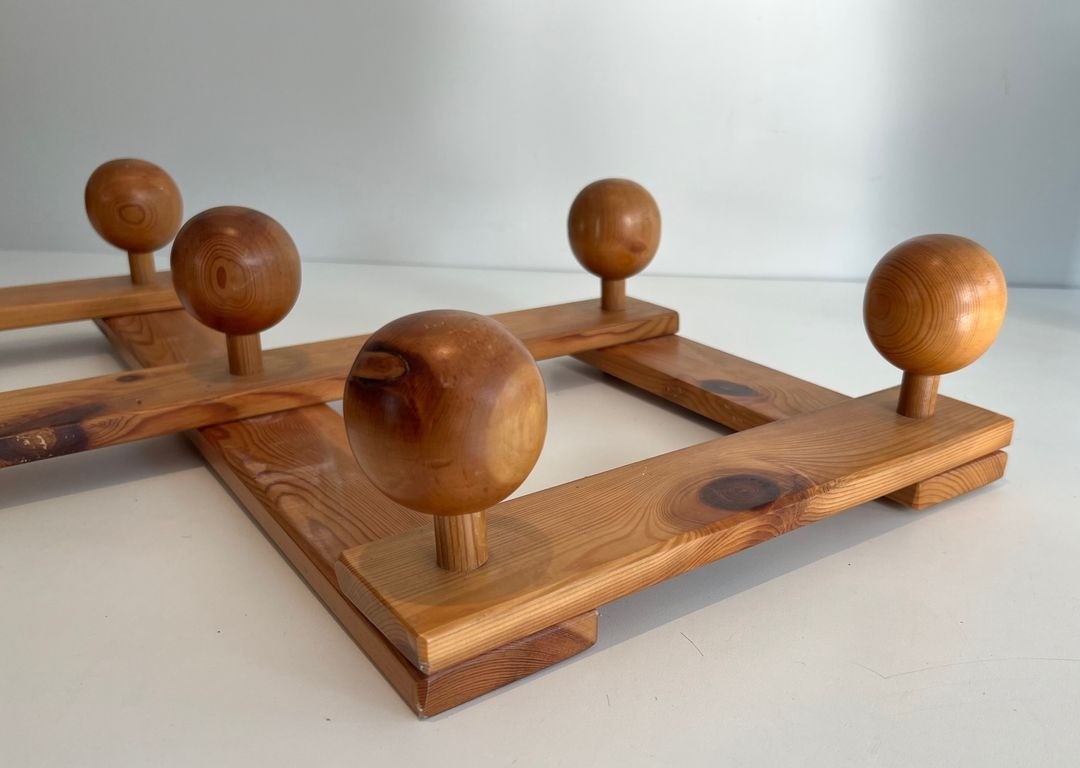
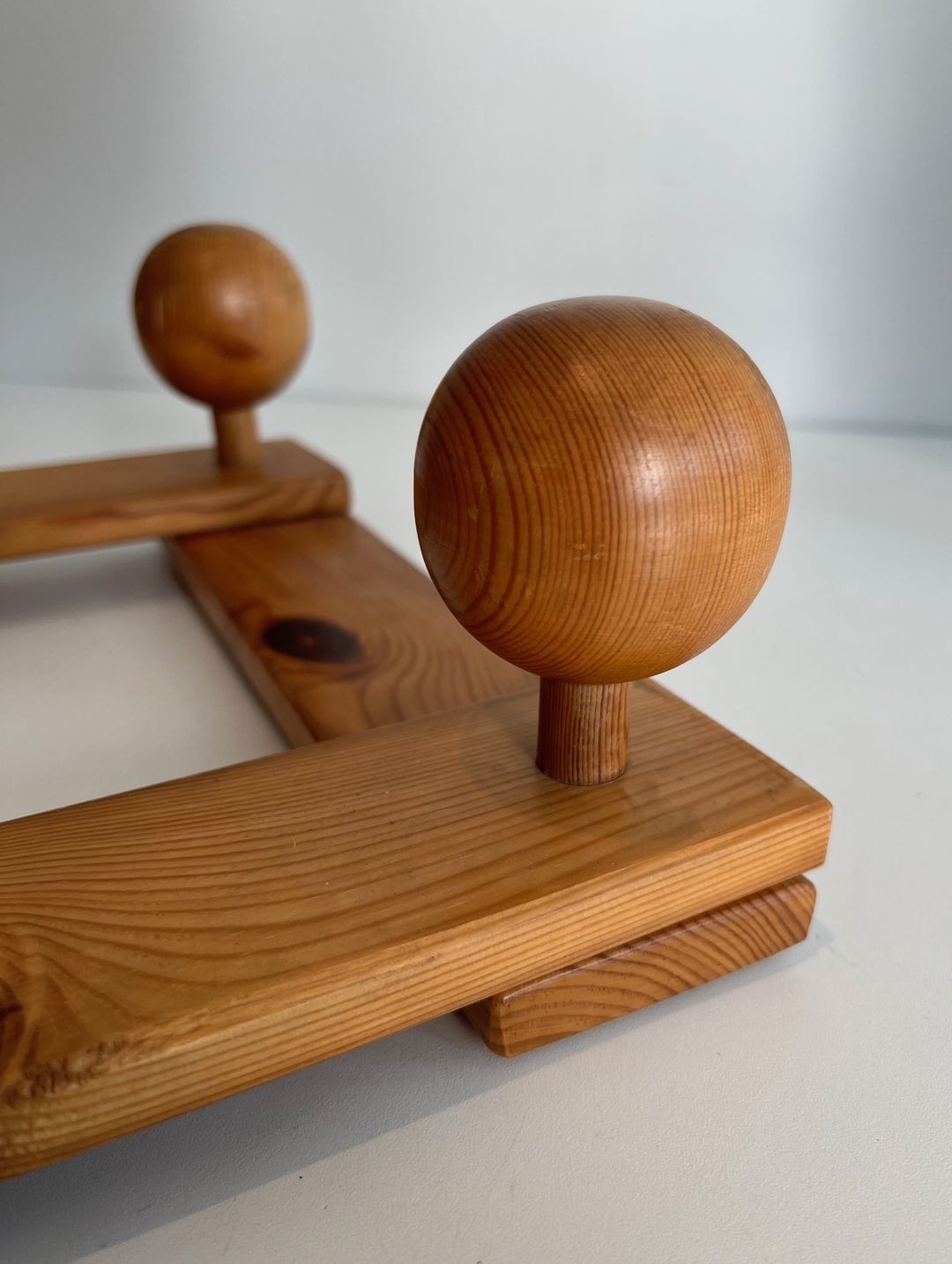
Pine — a material Perriand employed throughout her career as a deliberate aesthetic and political choice — brings a warmth and directness to the piece that more industrialised materials could not provide. Its grain, visible even after decades of use, is part of the design vocabulary rather than incidental. This hanger, unassuming in scale but precise in its resolution, exemplifies the democratic modernism that Perriand and her collaborators pursued: rigorous design available to any wall, any household.