Ice Bucket in Rope, Leather and Chrome — In the Style of Jacques Adnet, Circa 1950
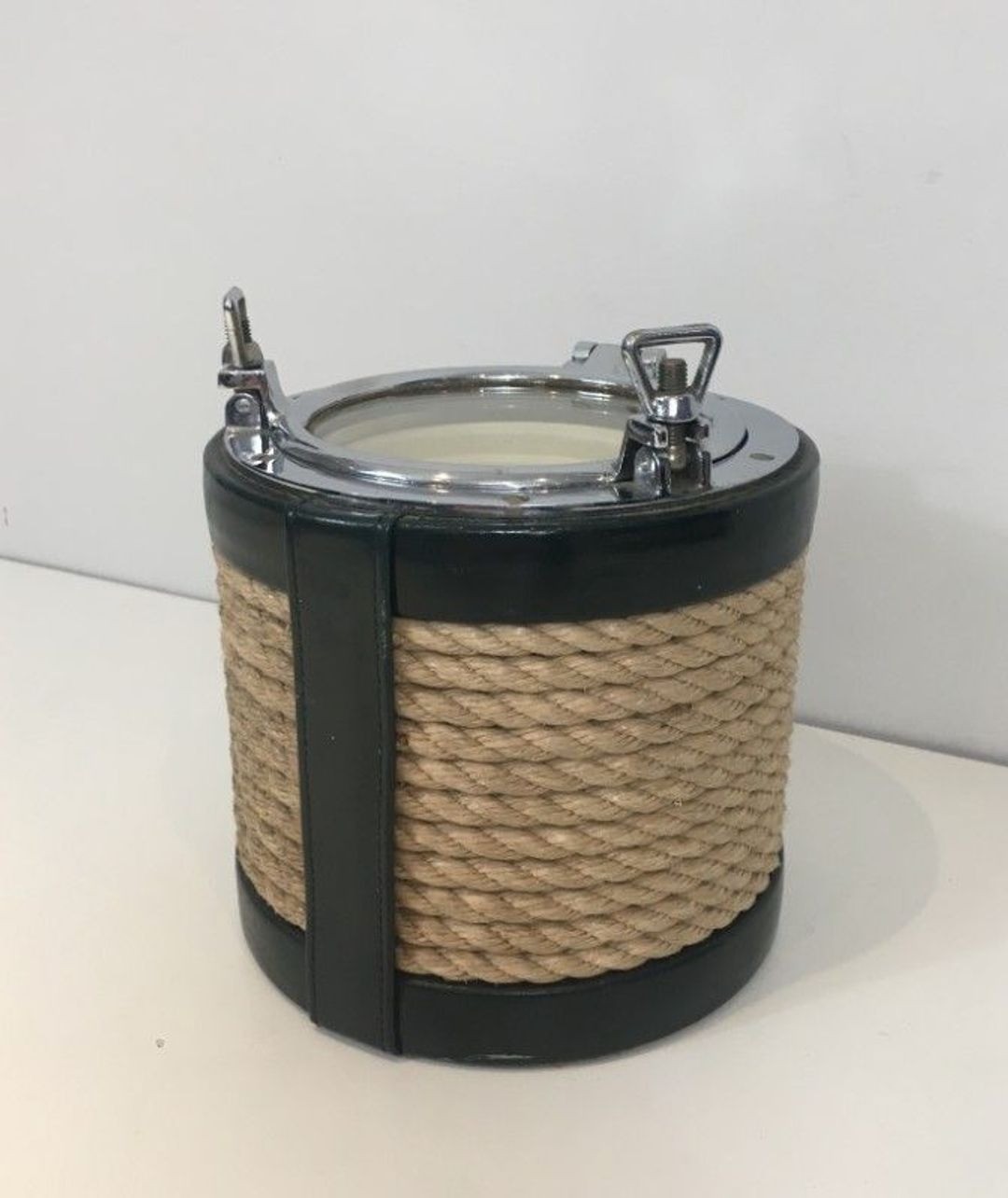
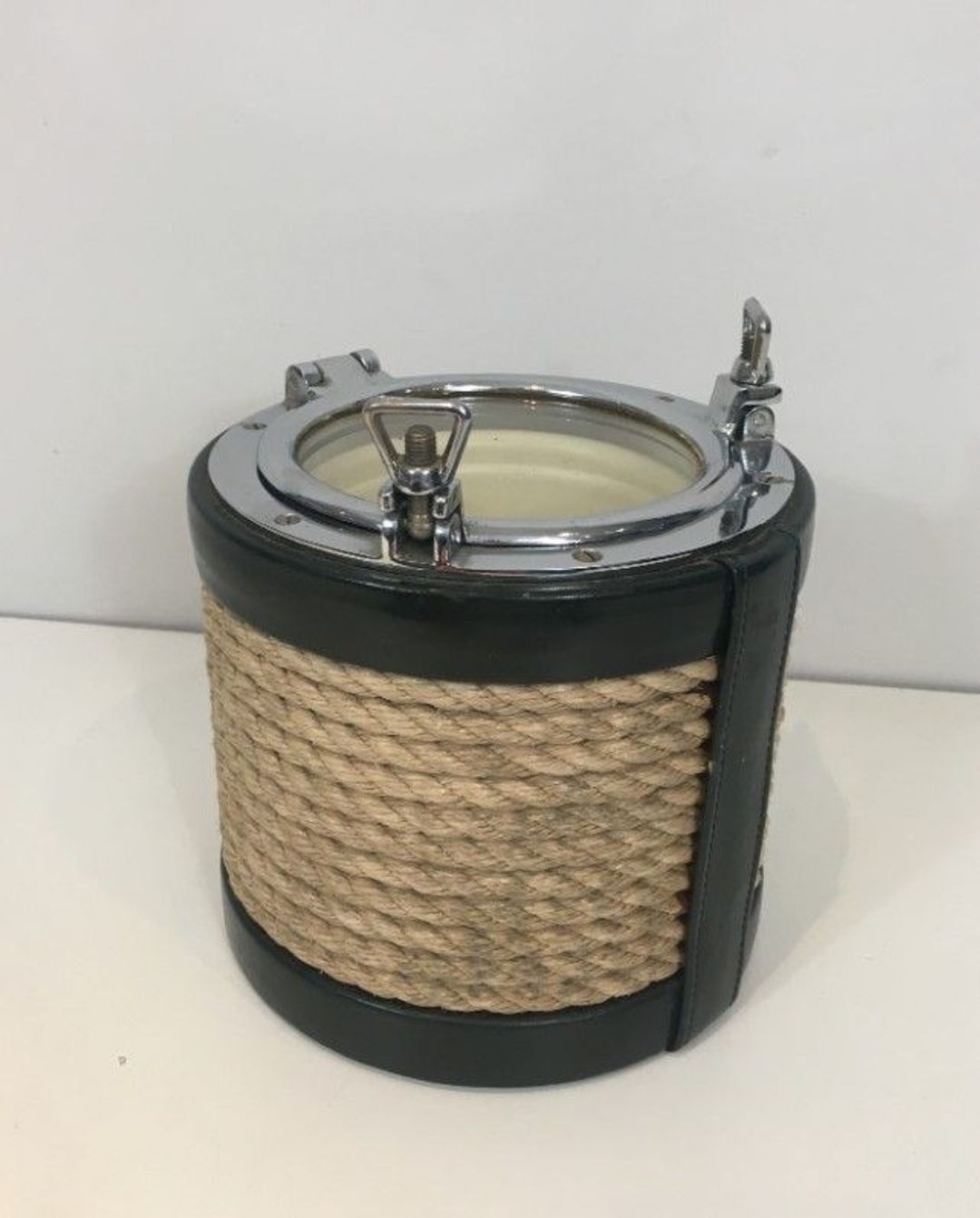
A cylindrical ice bucket with a body tightly wrapped in natural rope, black leather banding at the top and base, and a chrome porthole-style lid secured by two clip clasps. French work in the style of Jacques Adnet, circa 1950. Dimensions: 20 × 19.5 × 22 cm.
This ice bucket presents a composition of materials and forms that is immediately recognisable as belonging to the refined tradition of French mid-century domestic accessories. The cylindrical body is wrapped in tightly coiled natural rope — sisal or hemp — creating a warm, tactile surface that contrasts deliberately with the black leather banding at the upper and lower edges. The lid is a tour de force of the chrome metalsmith's art: a circular plate fitted with a raised ring handle and secured by two elegant clip clasps that pivot open with the precision of fine hardware. Seen from above, the piece suggests a ship's porthole, an allusion that feels entirely appropriate to an object associated with the chill of ice and the ceremony of drinks service.
The combination of black leather, natural cordage, and polished chrome is characteristic of the aesthetic developed by Jacques Adnet, the influential French designer who served as artistic director of the Compagnie des Arts Français from 1928 and who made the marriage of leather with metal hardware one of the defining signatures of his work. Adnet's approach — disciplined, elegant, and rooted in the finest craft traditions — inspired a generation of French workshops that produced pieces sharing his sensibility without bearing his name.
At 20 centimetres wide and 22 centimetres tall, this ice bucket is well proportioned for table use, comfortably accommodating a standard champagne or wine bottle surrounded by ice. It functions equally well as a standalone decorative object on a bar trolley or sideboard, where its unusual material combination — rope, leather, chrome — guarantees that it commands attention.
A handsome example of French decorative craft from the mid-twentieth century, this piece captures the spirit of a design culture that understood luxury not as excess but as the precise application of the best materials to objects worthy of them.