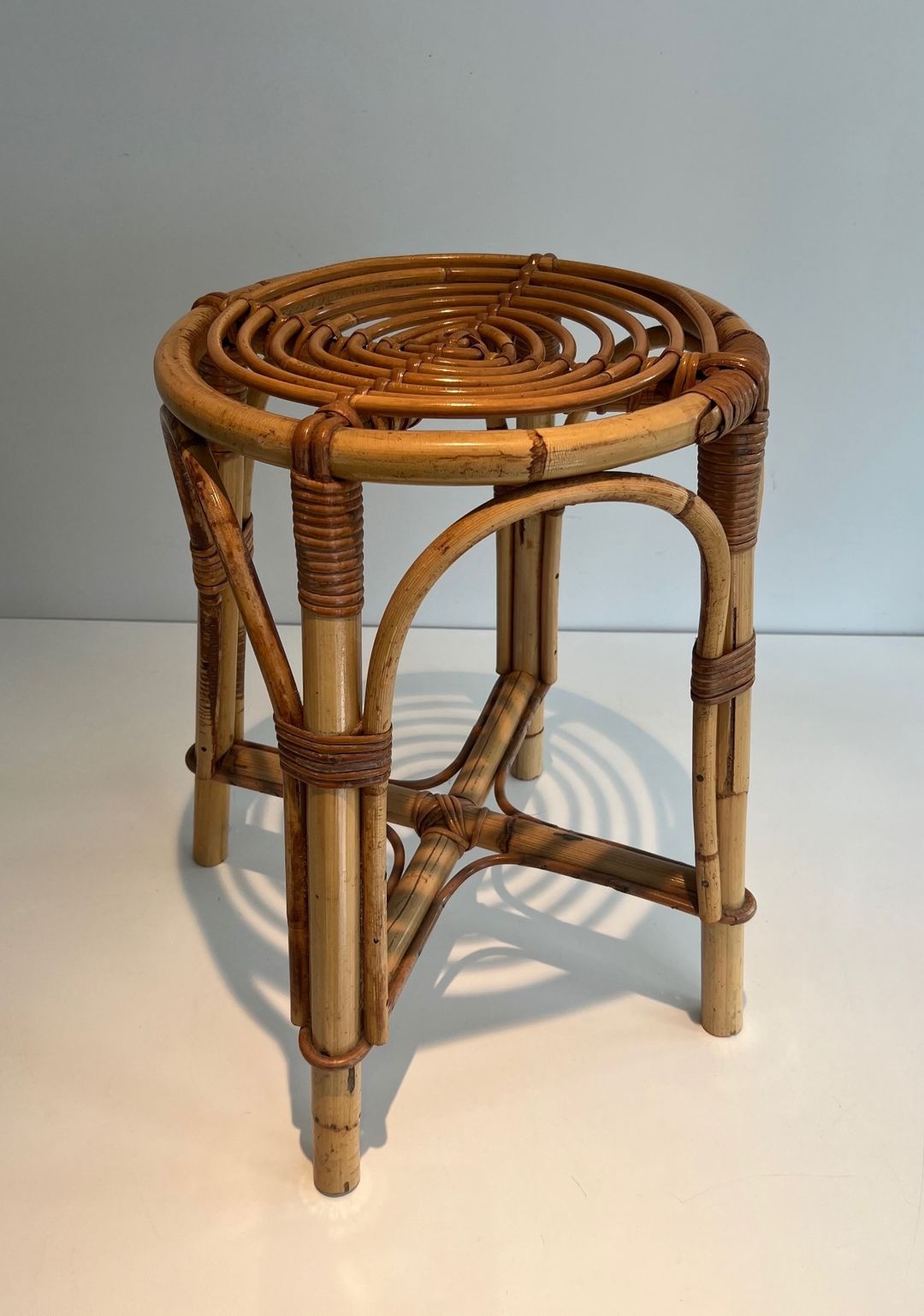
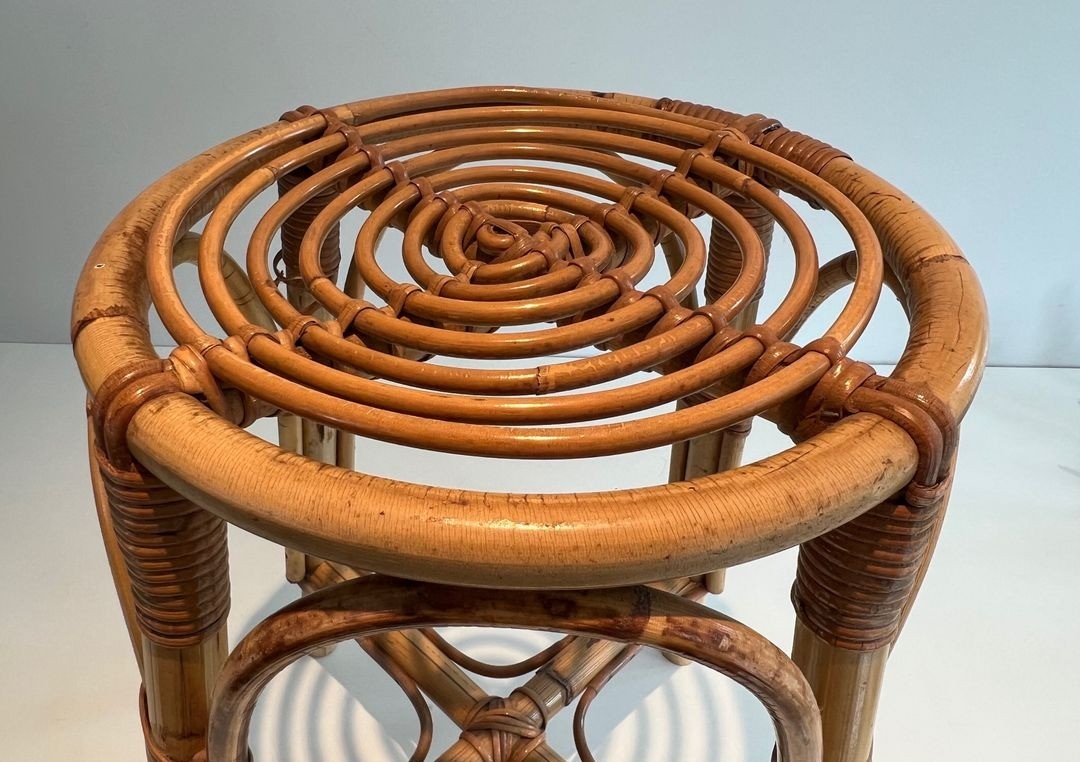
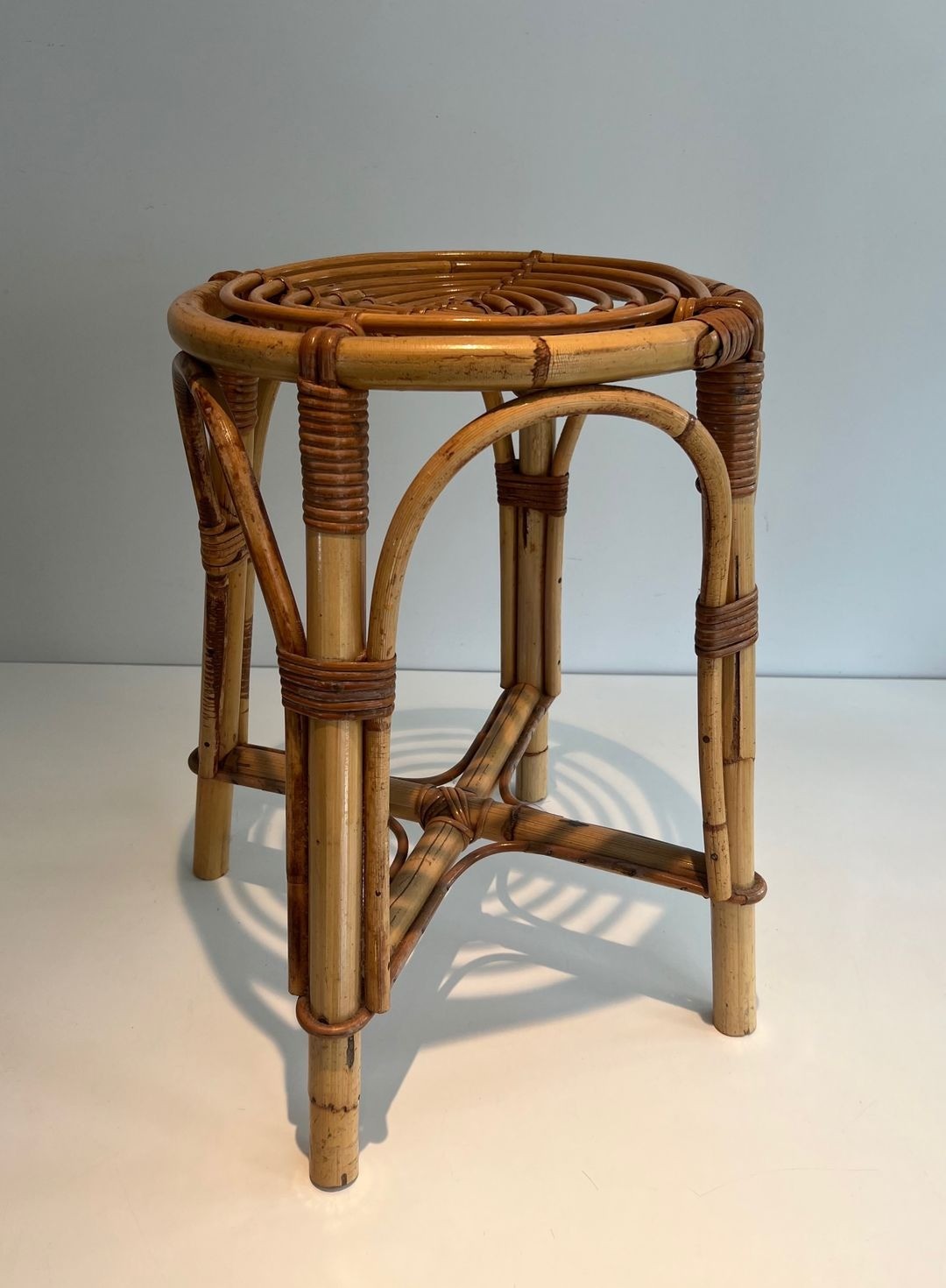
The drum stool occupies a singular position in the taxonomy of seating: it is the most elemental form possible. No legs to raise it, no back to define a direction, no armrests to constrain the occupant — only a cylinder of woven rattan at sitting height. This object demonstrates, with geometric simplicity, that seating requires exactly two things: a horizontal surface and sufficient structural integrity to bear a human body. Everything else that chairs and sofas add to these requirements — the back, the arms, the feet, the upholstery — is supplementary. The drum stool is furniture stripped to its irreducible minimum.
The proportions of this particular example are close to those of a cube: 48.5 cm in diameter, 51 cm in height. The near-equality of width and height produces an object with no strong vertical or horizontal bias, no dominant axis. This volumetric neutrality is the source of the drum stool’s famous versatility: it does not insist on being sat upon. In practice it serves equally well as a side table — the flat woven surface at exactly the right height for a cup, a book, or a lamp — as a footrest beside an armchair, as an occasional table beside a bed, or as a platform for a plant. It is one of the rare pieces of furniture whose identity is genuinely plural.
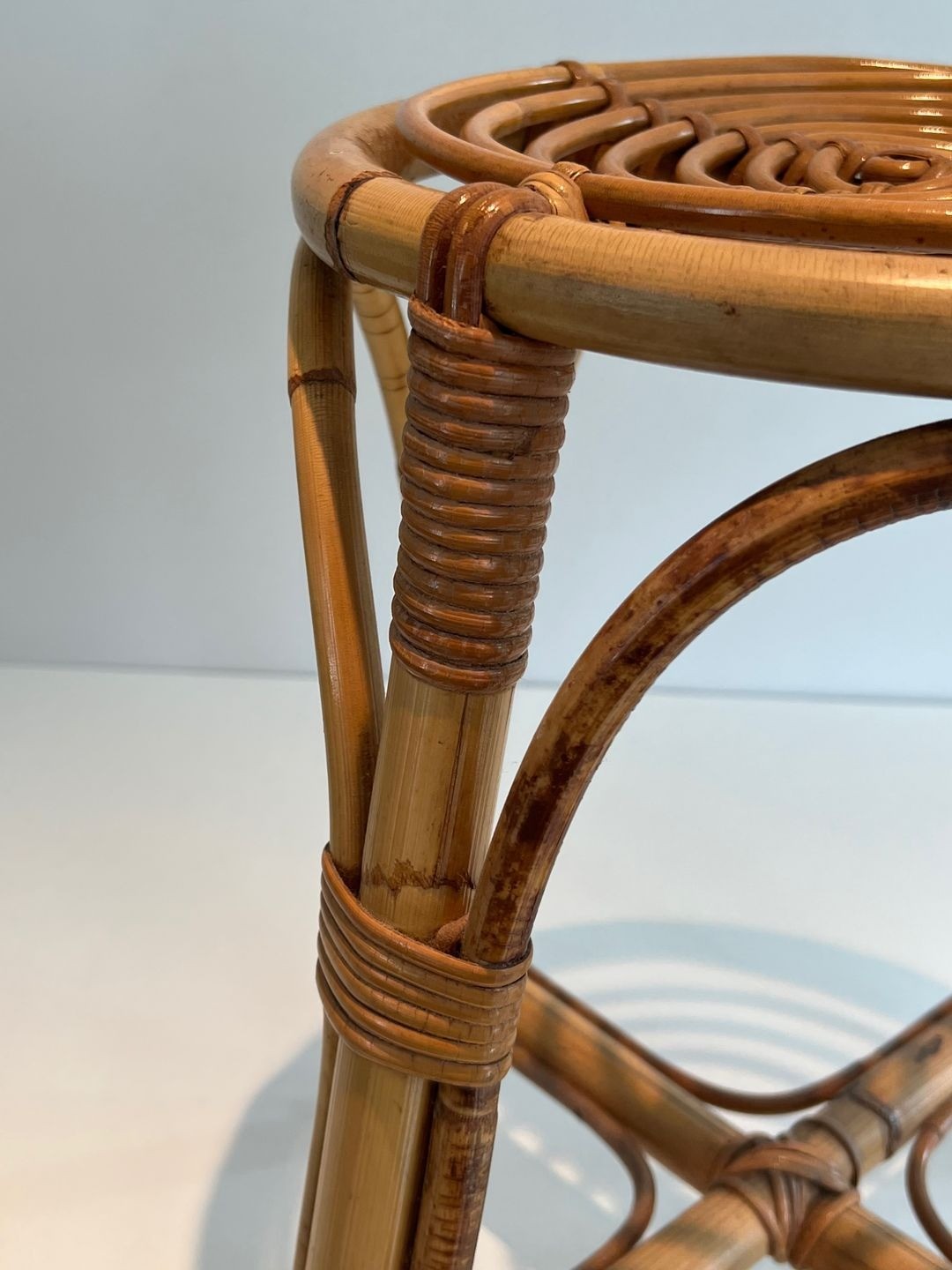
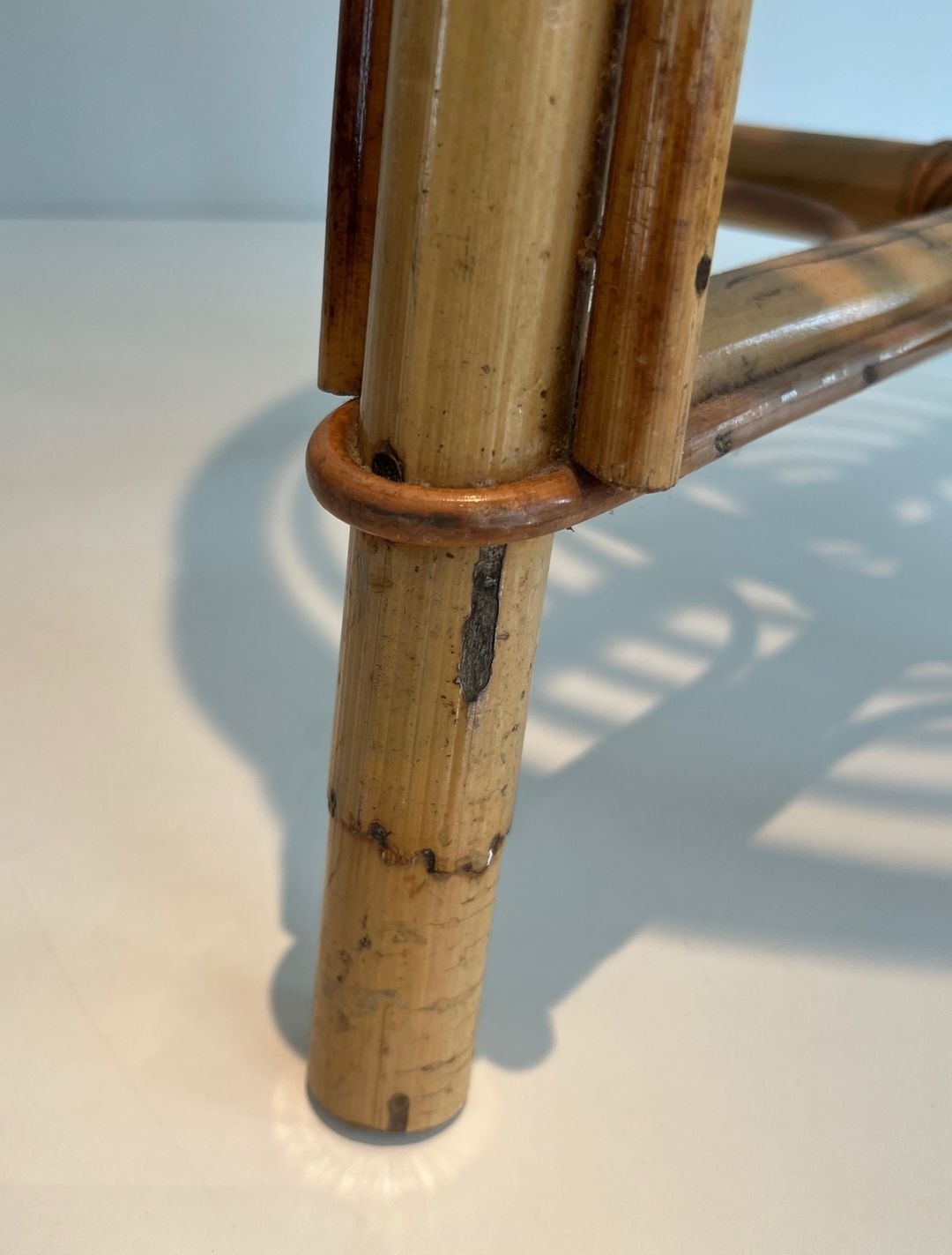
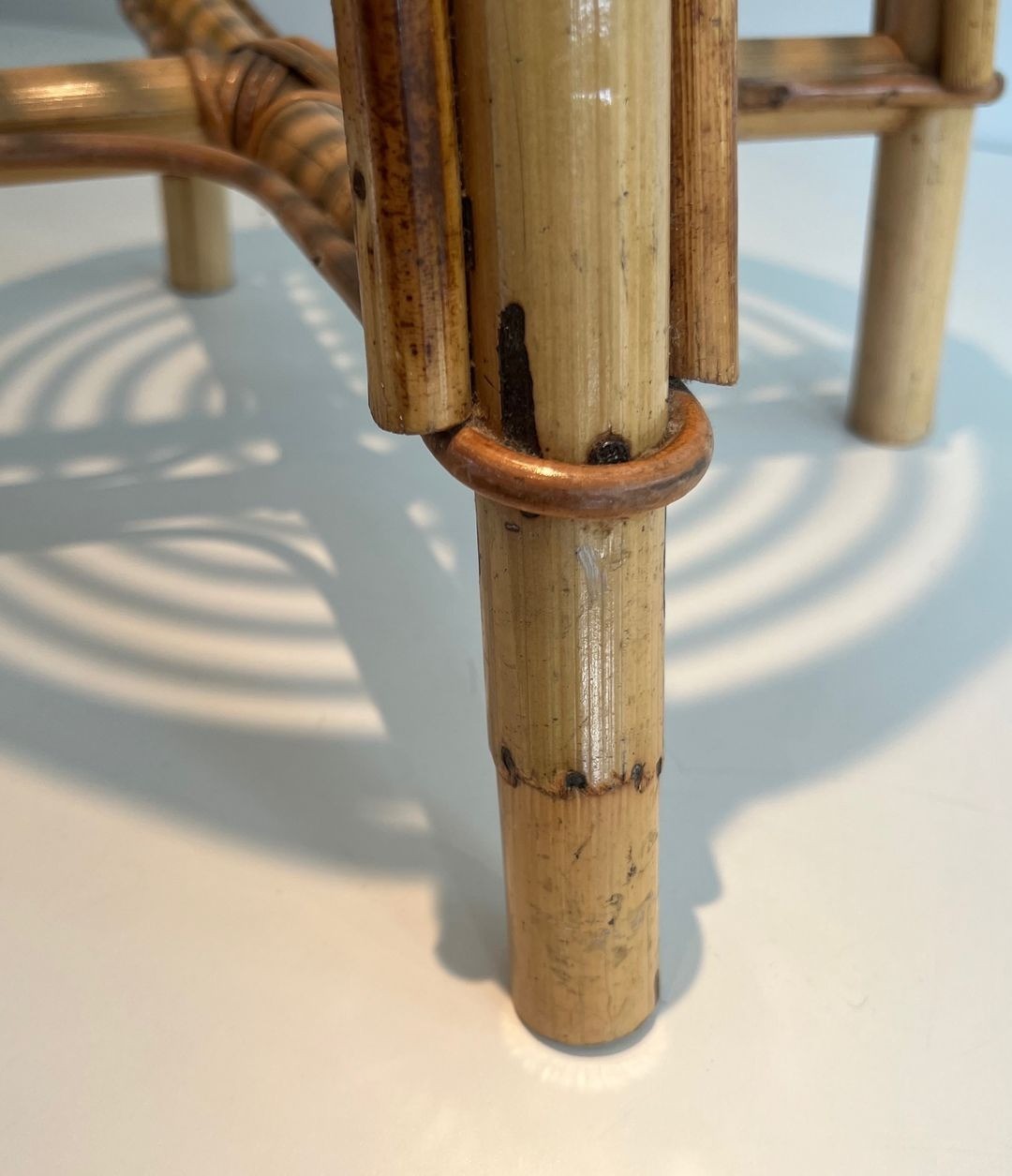
French rattan work of the 1940s and 1950s elevated the drum stool from a simple wicker form to a considered object of domestic design. The tight, even weave of this example — wound and structured to maintain the cylinder under load without deformation — reflects the expertise of the postwar period, when French ateliers specializing in rattan developed construction techniques that combined structural rigour with the lightness and warmth of the natural material. After more than seven decades, this drum stool retains both its form and its function, a testimony to the discipline of its making.