Jean Royère (1902–1981) built his reputation on the unexpected — on furniture that looked as though it had grown rather than been made: the Ours Polaire sofa, the Boule lamp, biomorphic tables and chairs whose organic forms owed more to the shapes of living things than to the carpenter’s geometry. Yet within his vast and varied output, Royère also deployed natural materials with a luxurious simplicity that demonstrates the other register of his talent: not the fantastical, but the quietly opulent. Rattan, for Royère, was not a rustic expedient but a material whose warmth, texture, and organic grain placed it naturally among the luxury furnishings he supplied to royal palaces, grand hôtels, and the residences of an international clientele.
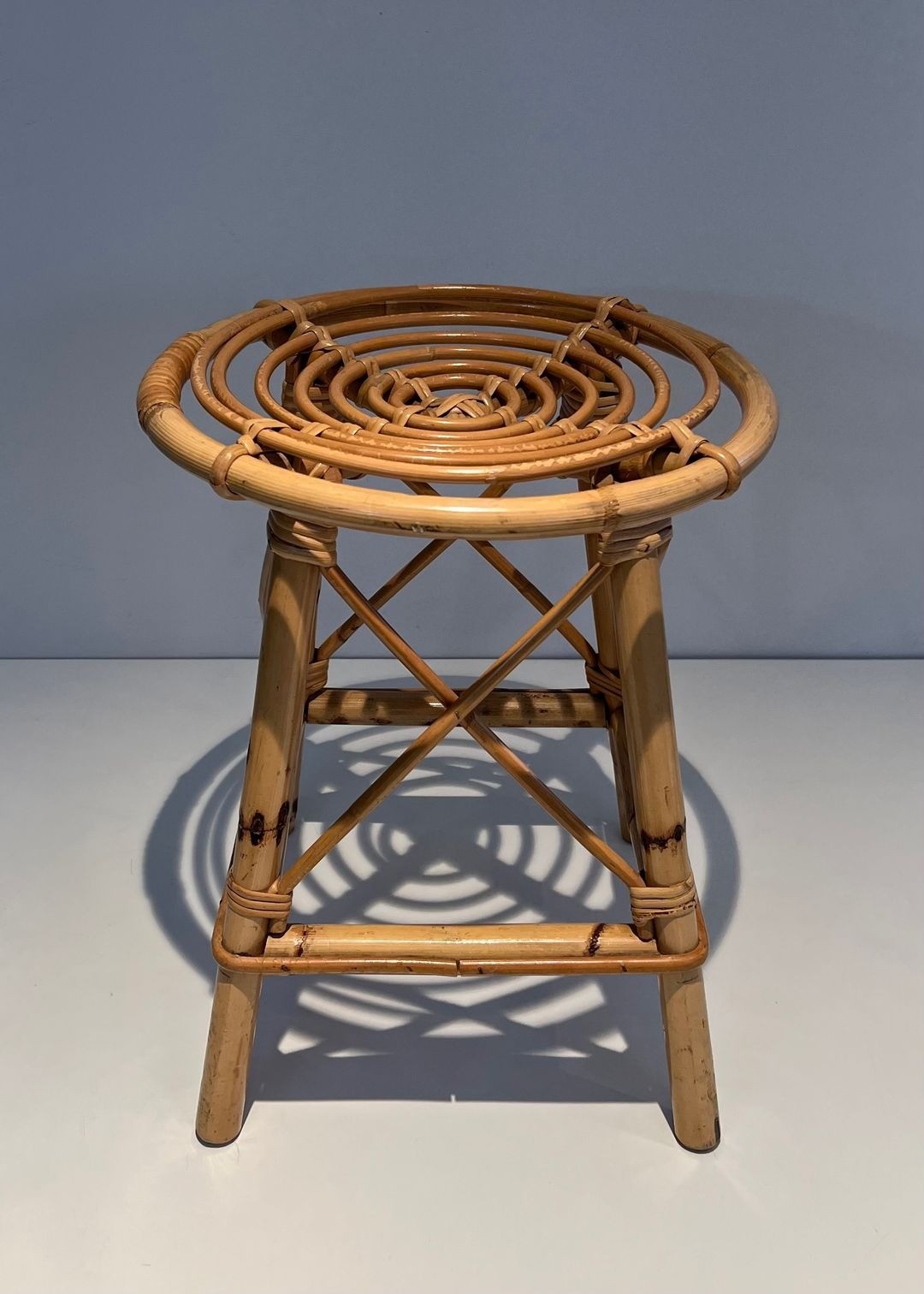
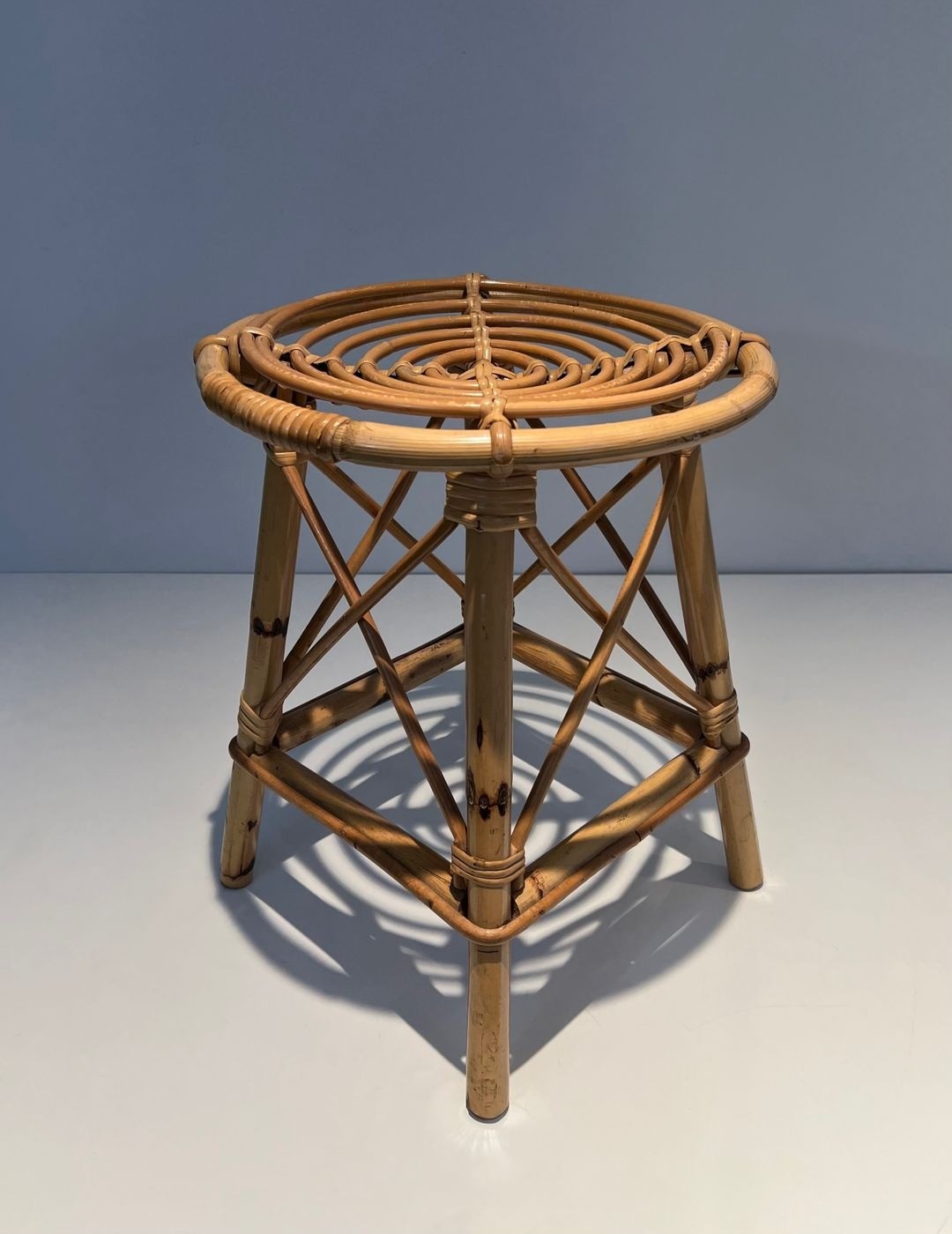
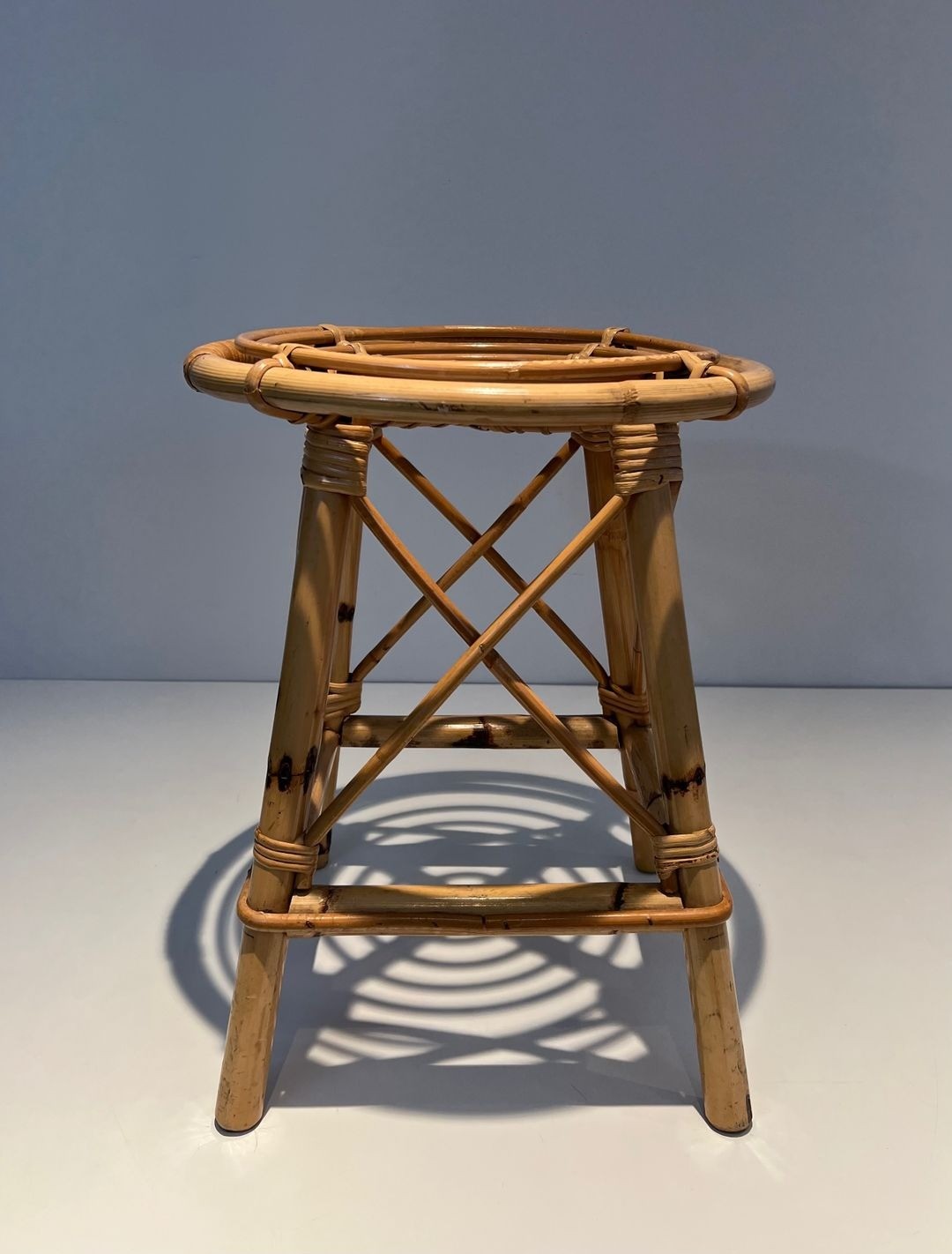
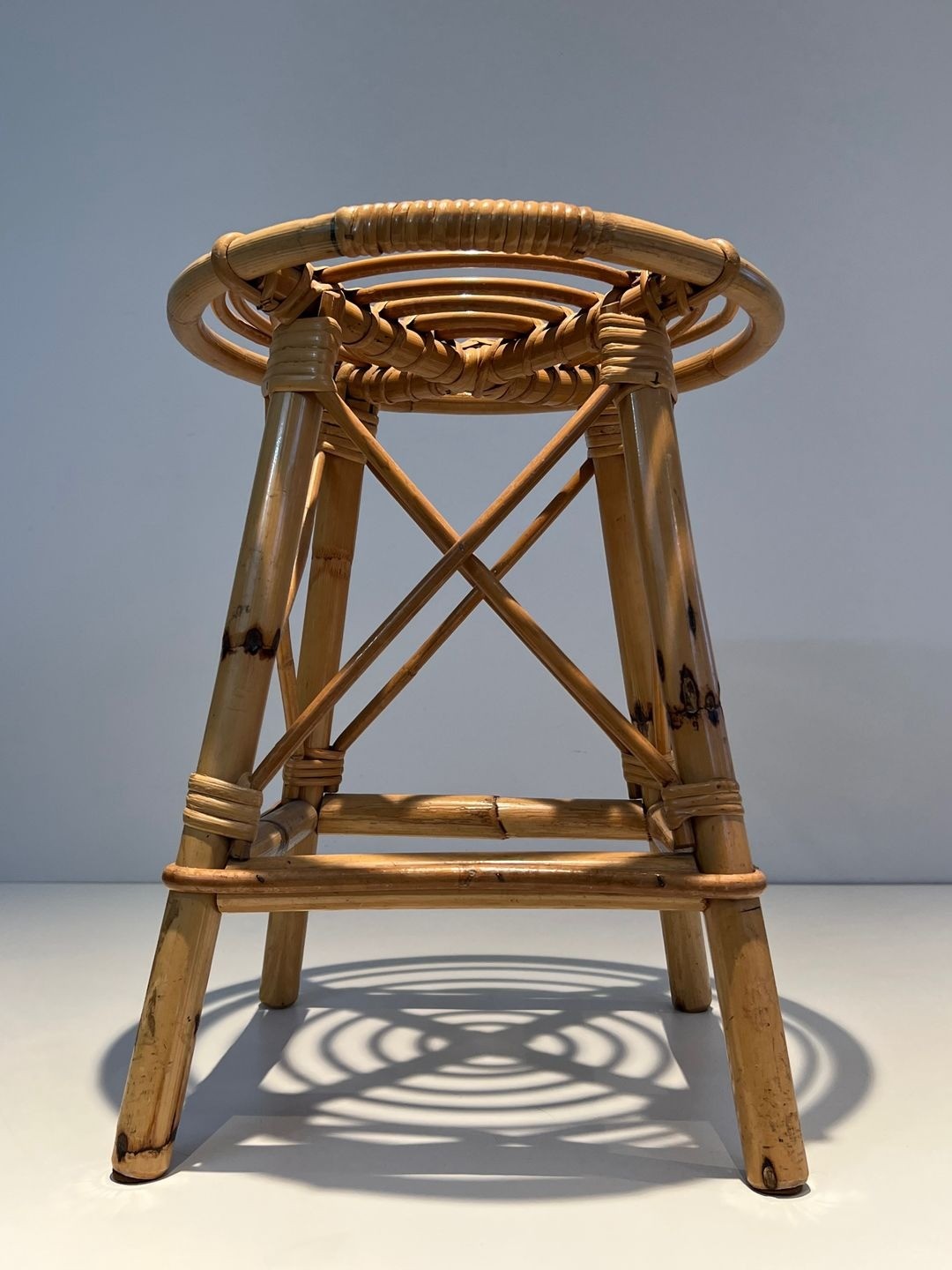
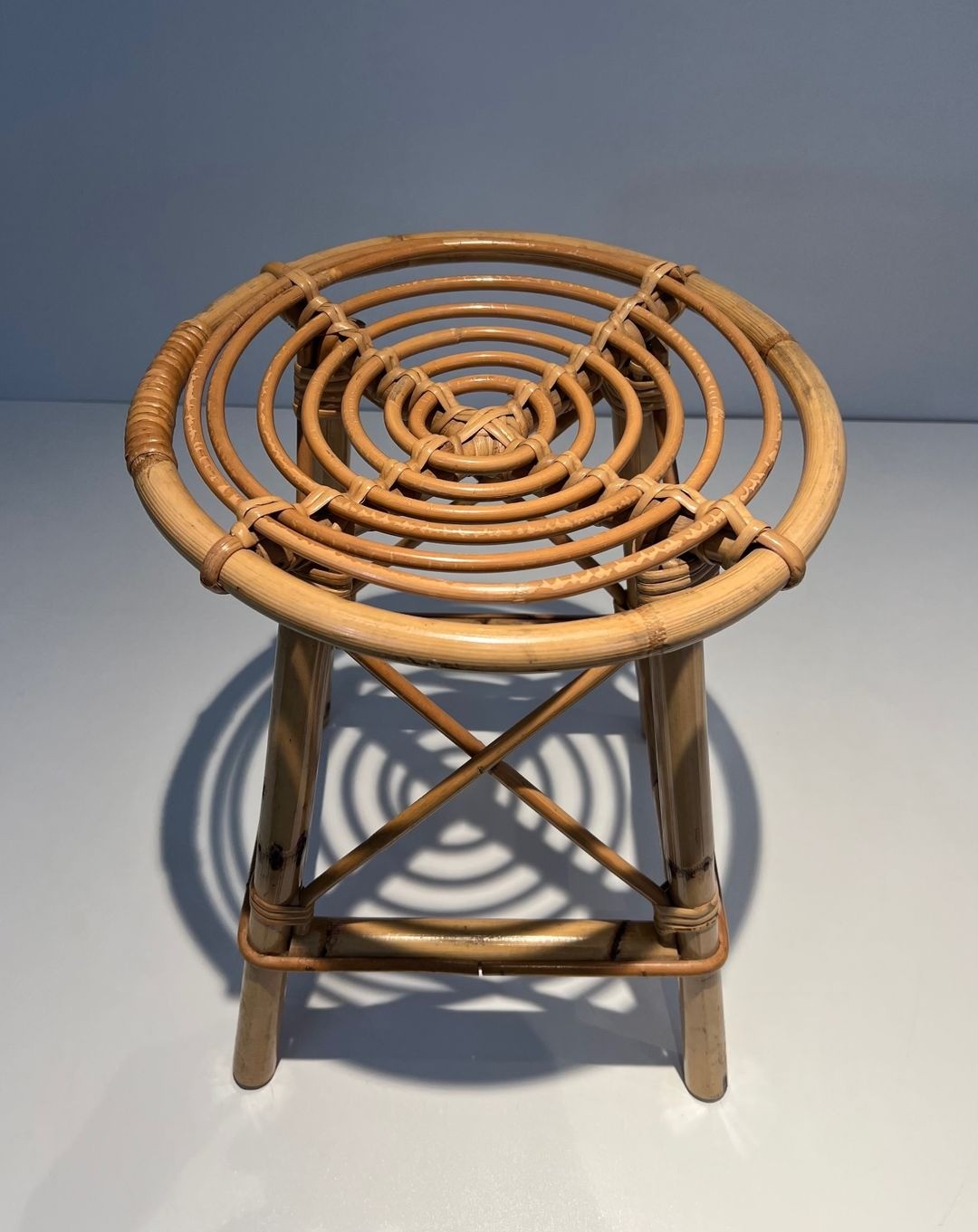
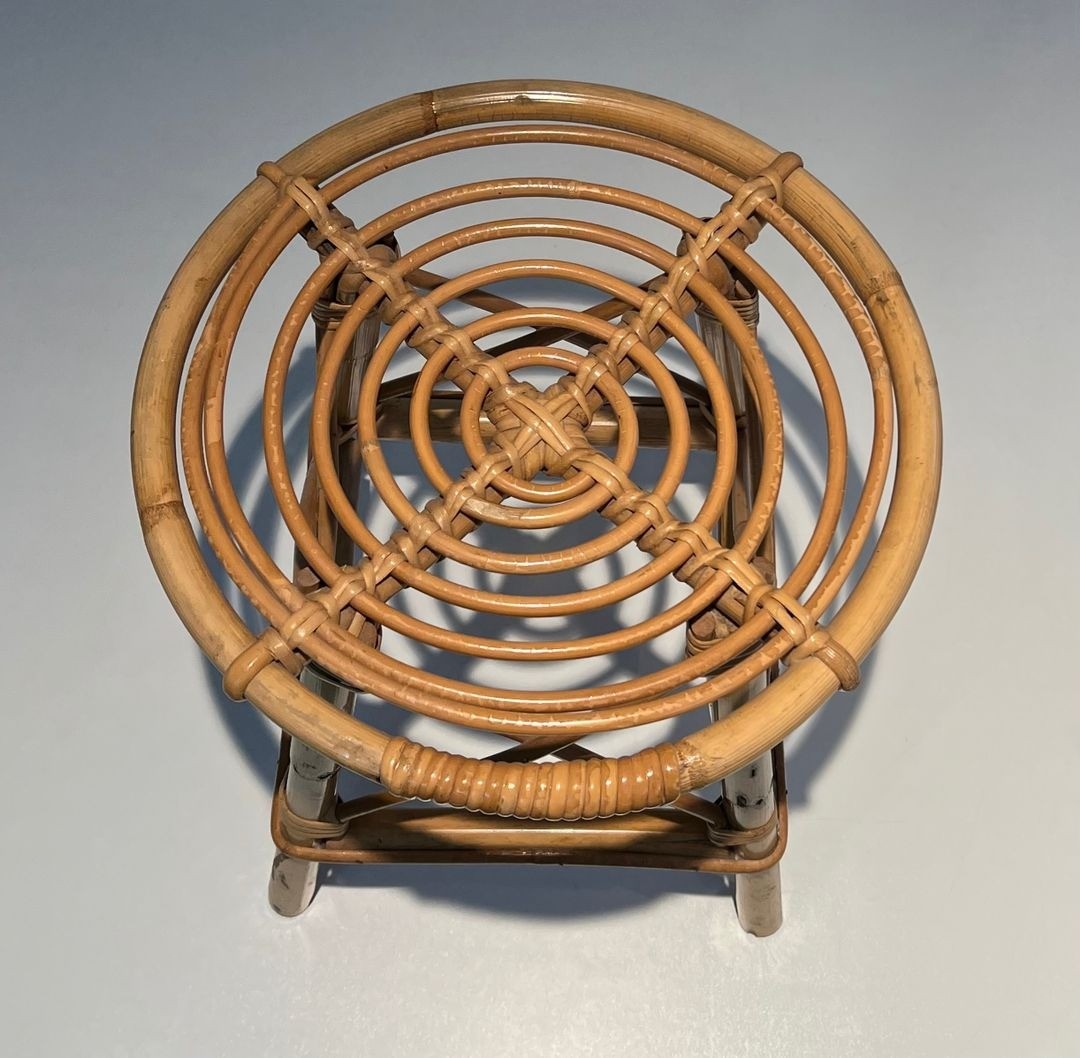
This drum stool, made in his idiom, presents a formal paradox: it is very nearly a perfect cube. At 44.5 cm square and 45.5 cm high, it differs from geometric perfection by a single millimetre in height. To achieve this degree of dimensional exactitude in a woven natural material — a material that breathes, settles, and resists precise calibration — requires a level of craft control that is itself a form of luxury. The cube is the most spatially stable of Platonic solids, the form that claims space with the greatest economy of means. In rattan, at the scale of human occupation, it becomes an object of considerable presence: not elaborate, not decorated, but exact.
Royère left Paris for Cairo in 1964, continuing to work from Egypt until his death in 1981. His oeuvre, long underestimated in France, has been rediscovered since the 1990s and now commands exceptional prices at auction, with major pieces achieving record sums at Christie’s and Sotheby’s. A stool in his style participates in that rediscovery — carrying the material warmth and formal intelligence that characterized his approach to furnishing the most elevated domestic interiors of the mid-twentieth century.