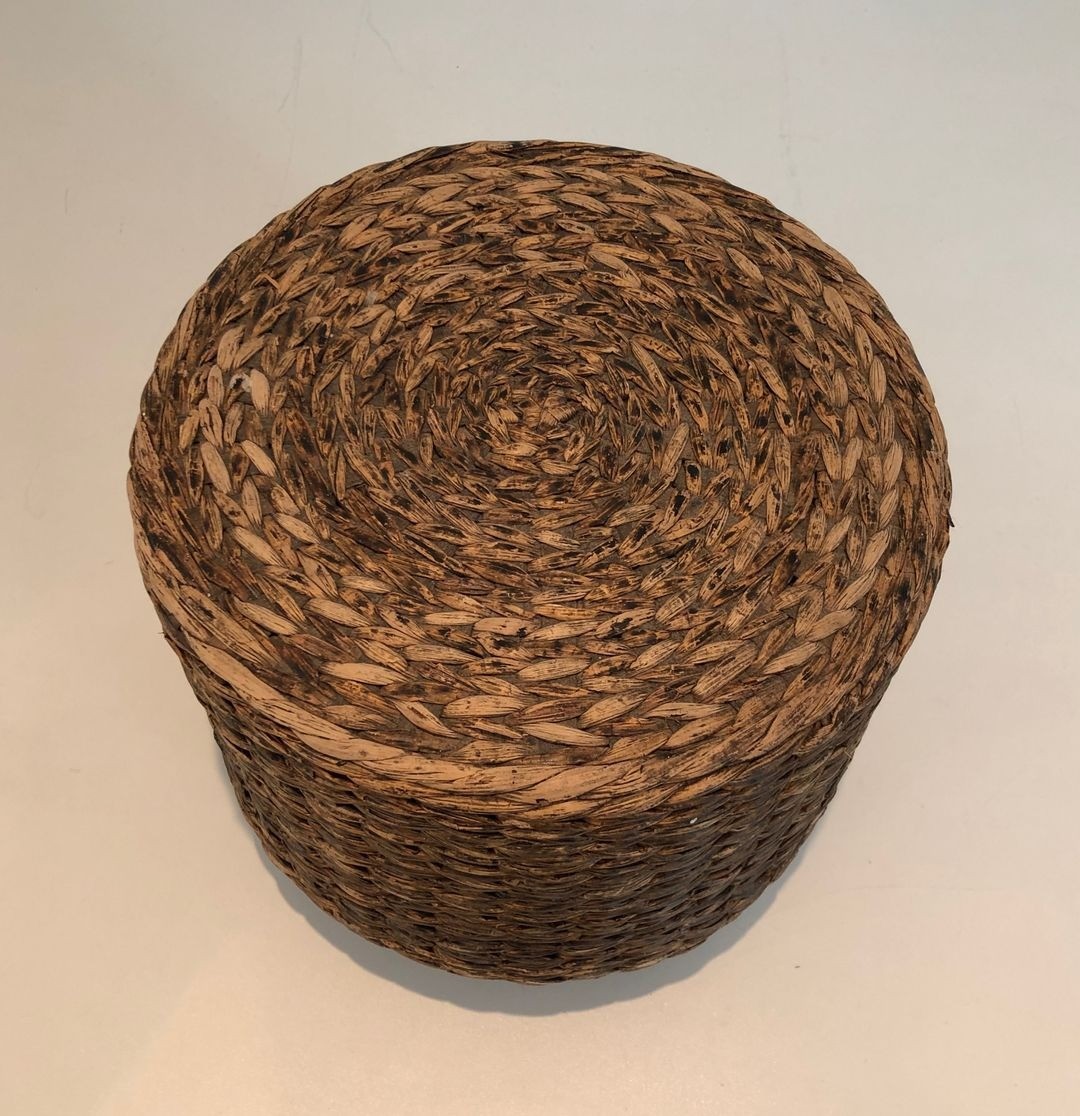
Adrien Audoux and Frida Minet developed their rope furniture in the years immediately following the Second World War, working from the conviction that the materials of maritime and agricultural France — sisal, hemp, cord — were capable of furnishing the modern interior with an honesty that upholstered pieces could not achieve. Their structural vocabulary was based on winding and knotting: rope wound tightly around a rigid armature, building up load-bearing surfaces through the accumulation of tightly compressed fibre. The resulting furniture was at once rustic and precise, recalling the rigging of boats and the wrapping of tools, yet refined through the discipline of the designer’s eye.
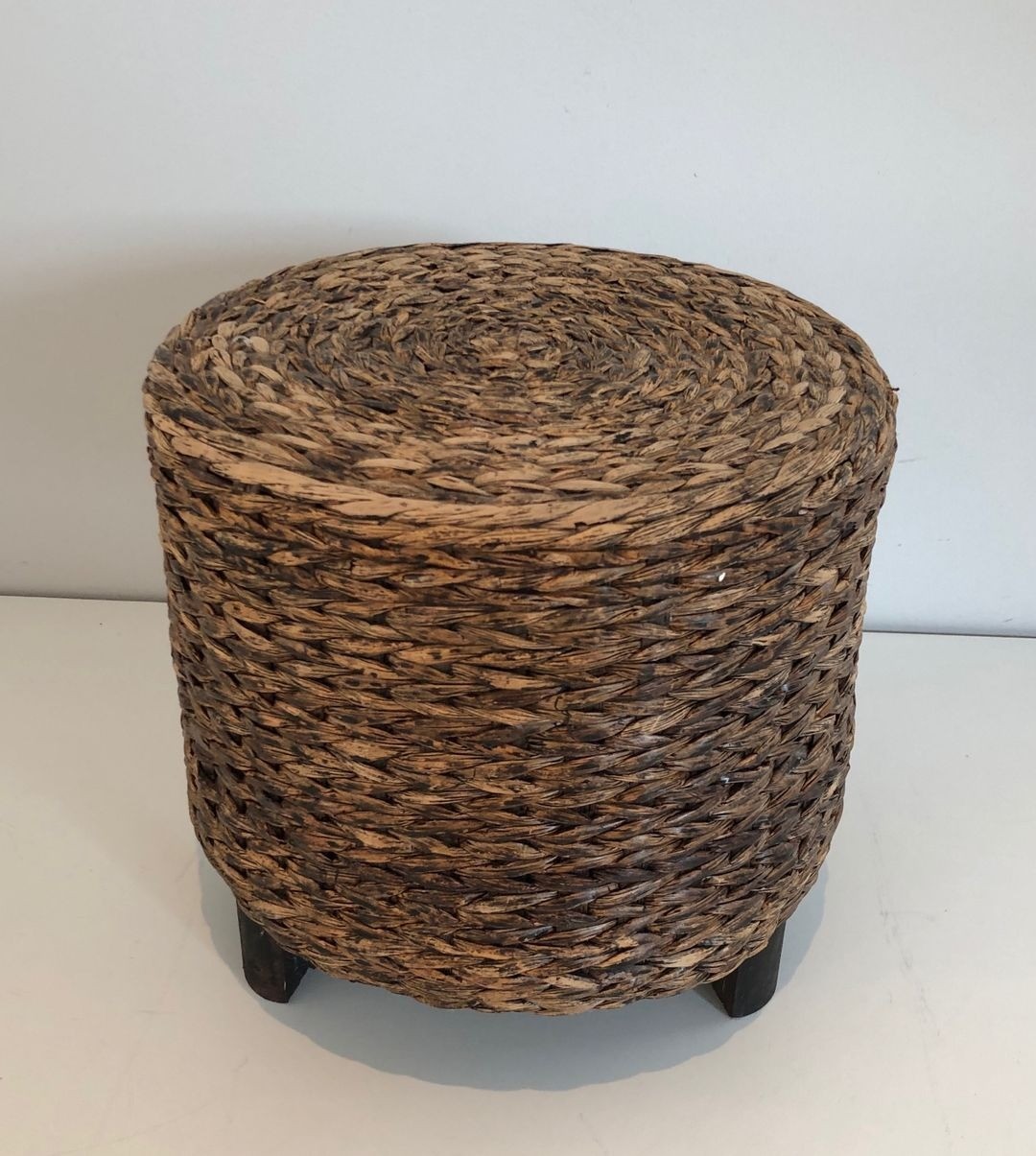
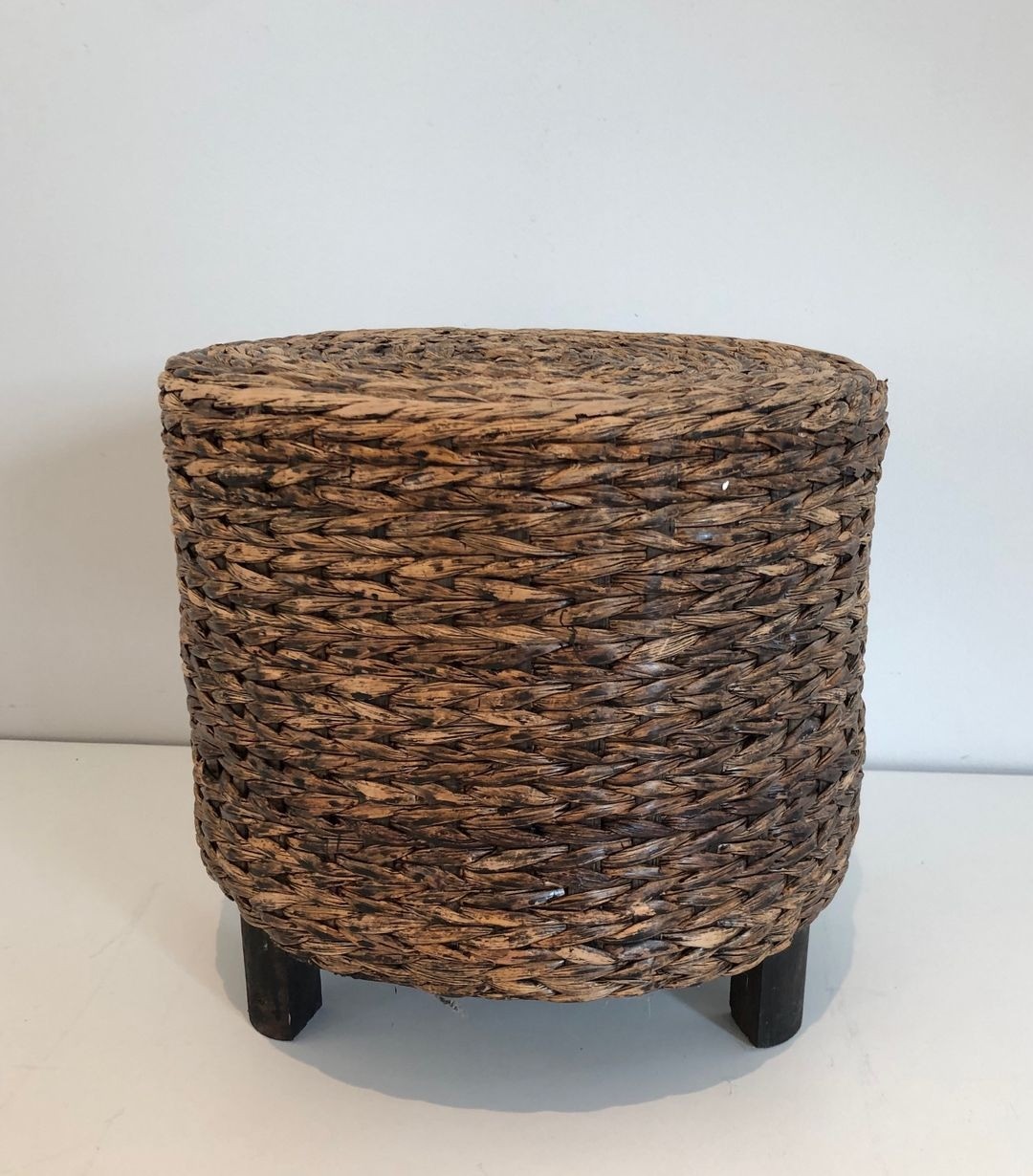
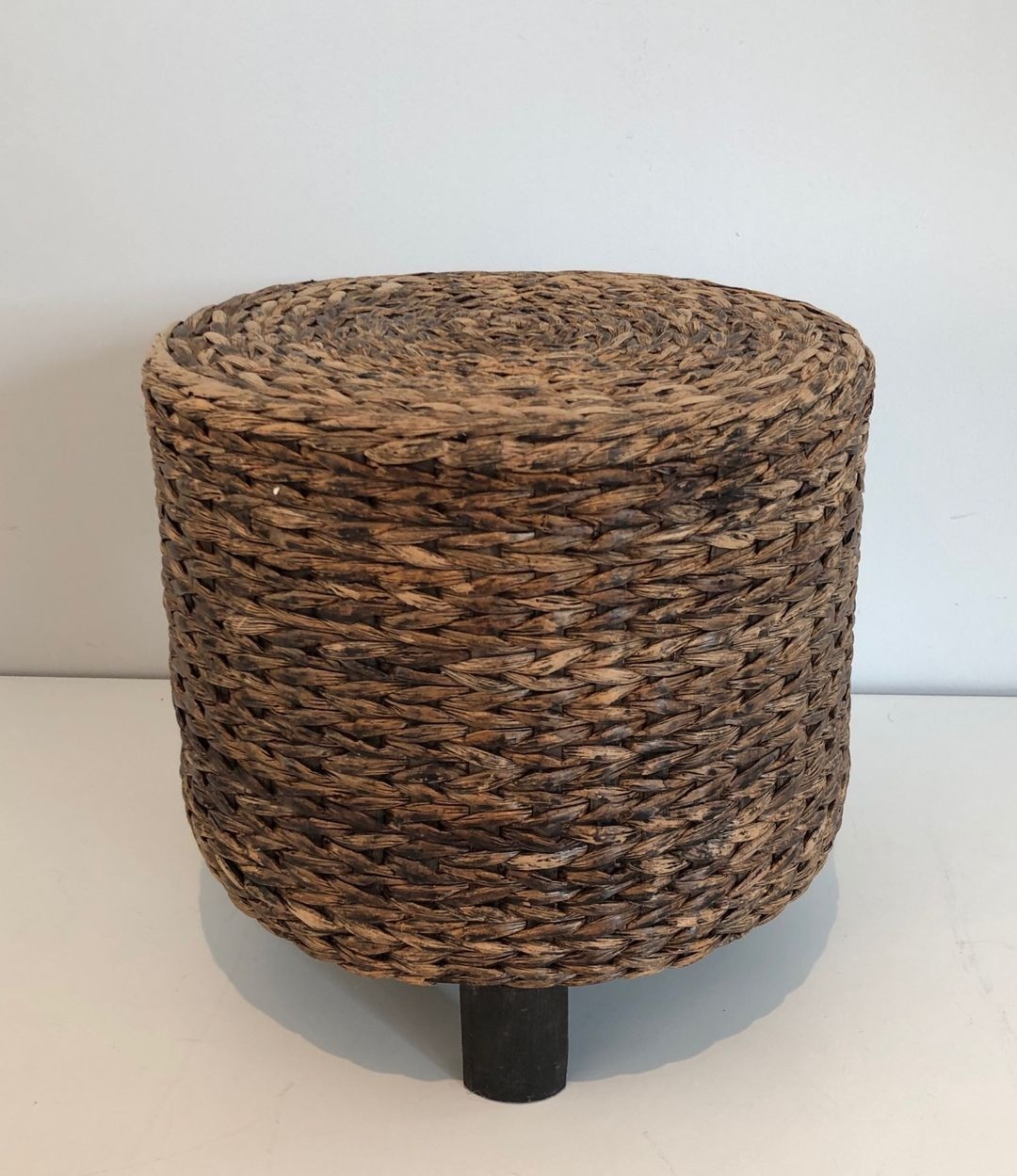
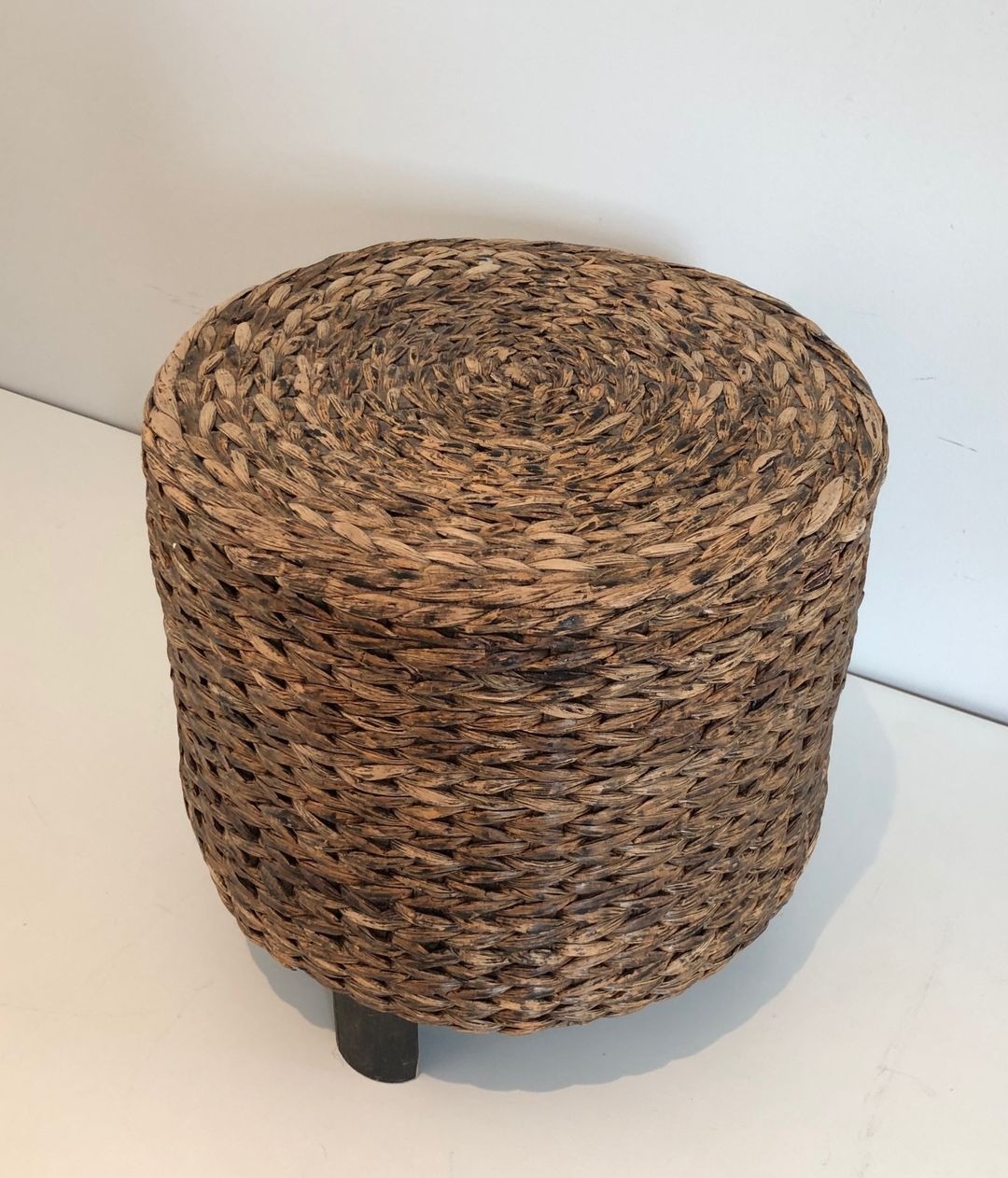
This small stool tests that vocabulary at a reduced scale. At 25.5 cm square and 24.5 cm high, it is not a standard adult seat — it sits below the conventional seating threshold and above the level of a simple footstool. This dimensional ambiguity is the key to its versatility: it functions as a child’s seat, a footrest beside a low armchair, a stepping stool in a tiled bathroom, a low side table beside a floor cushion. More importantly, it demonstrates that the Audoux-Minet structural logic is scale-independent: the rope winding that creates a load-bearing surface at full size creates an equally robust surface at miniature scale, without any diminishment of structural integrity.
Near-cubic in its proportions — 25.5 cm wide, 25.5 cm deep, 24.5 cm high — this stool approaches the Platonic volume of the cube with the same geometric neutrality that distinguishes the best pieces of postwar French naturalist design. It belongs to that current in the 1940s and 1950s that answered the austerity of the Occupation with an affirmation of material presence: objects built from honest materials, constructed with visible logic, claiming their place in the domestic interior through structural truth rather than decorative appeal.