Large Balinese Carved and Polychrome Panel, Scene from the Ramayana — Balinese Work, Circa 1920
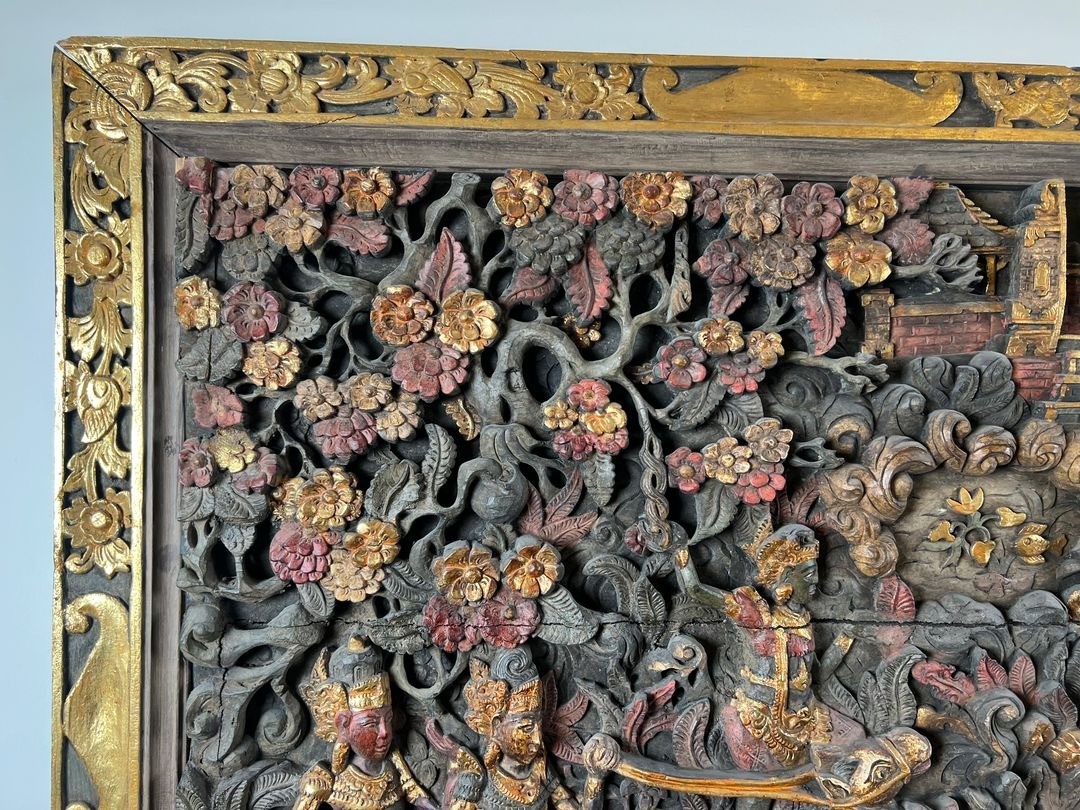
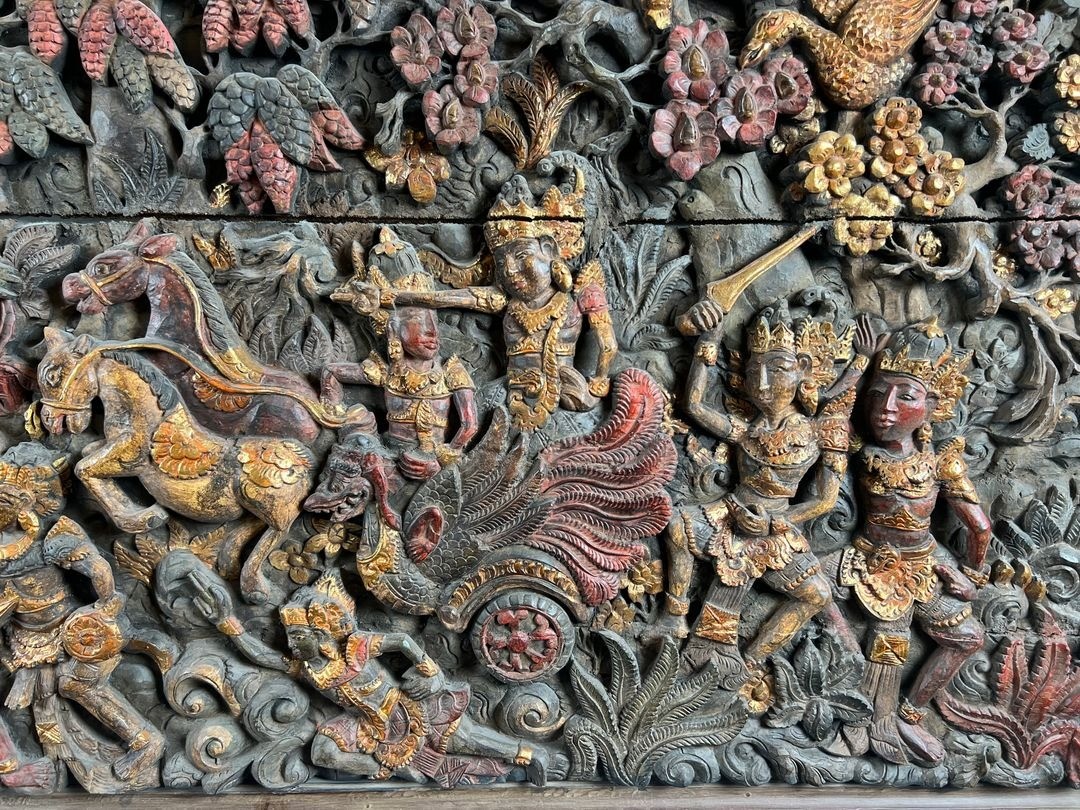
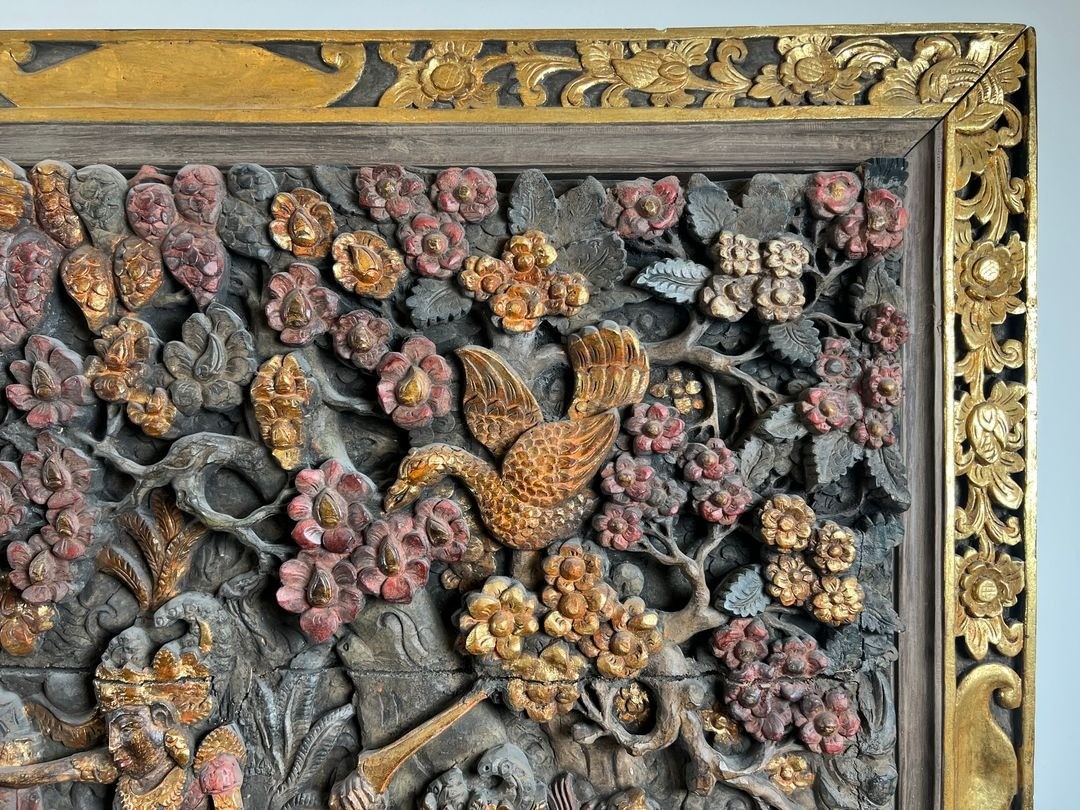
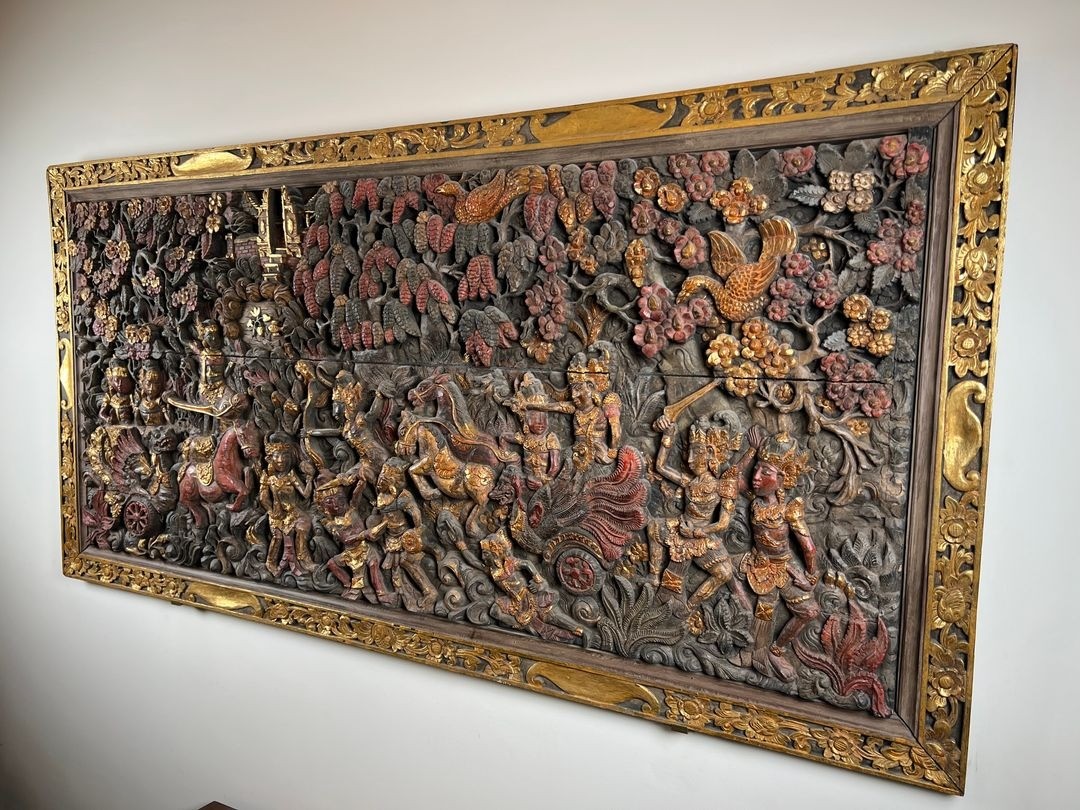
Monumental Balinese carved hardwood relief panel depicting a scene from the Ramayana — the trials of Rama and Sita — with a dense multitude of figures in high relief with traces of polychrome and gilt border.
This exceptional carved panel, monumental in both scale and ambition, represents the finest tradition of Balinese sculptural art. Measuring two hundred and twenty-one centimetres in width and one hundred and ten centimetres in height, the entire surface is alive with a densely populated scene from the Ramayana — the great Hindu epic that occupies a central place in Balinese cultural and spiritual life. Carved in hardwood to a depth of several centimetres, the relief is composed of a vast multitude of figures locked in the drama of one of the trials endured by Prince Rama and his consort Sita: warriors, celestial beings, demons, and animals fill every part of the composition in a surging, rhythmic arrangement that displays the consummate command of its carvers over both narrative and ornamental form. Traces of polychrome paint — deep crimson, ochre, and black — remain visible throughout, while a gilded border frames the upper edge of the panel.
The Ramayana, composed originally in Sanskrit by the poet Valmiki, was brought to Bali through the Hindu kingdoms that shaped the island's civilisation from the early first millennium onwards. In Balinese culture the epic became inseparable from ritual, drama, music, and the visual arts: scenes from it are performed as dance-dramas, painted in the narrative pictorial tradition of Kamasan, and carved — with extraordinary skill and devotion — into the wood and stone of temple complexes, royal palaces, and domestic shrines. The early twentieth century, when this panel was made, was a period of tremendous artistic productivity in Bali, as the island's traditional arts received new attention from both local aristocracy and the growing circle of Western collectors who began arriving in numbers from the 1920s onwards.
The panel is in fine condition commensurate with its age, the carving vivid and well-preserved throughout. A work of this scale, quality, and iconographic richness belongs not merely to the decorative arts market but to the broader history of Balinese artistic production. Equally compelling as a historical document and as an object of extraordinary decorative presence, it is a piece that would command attention in any room fortunate enough to display it.