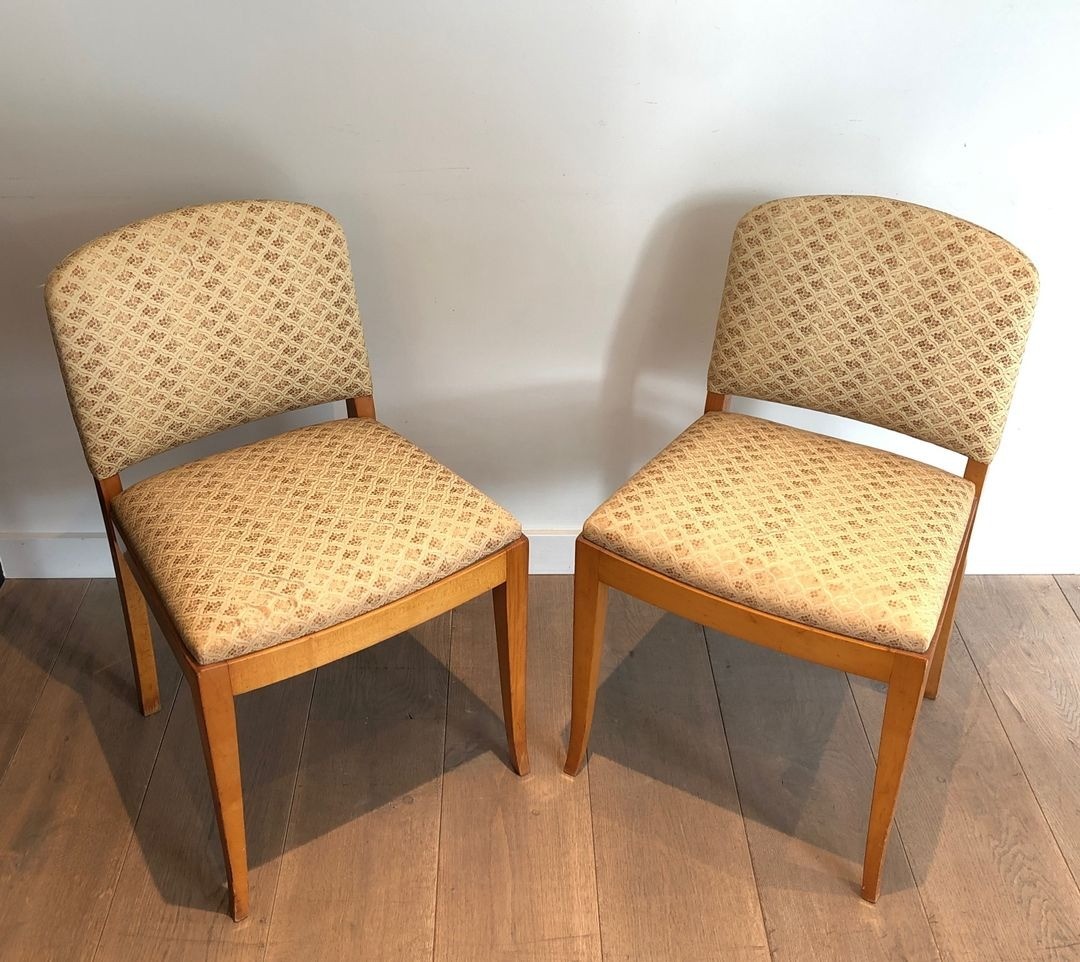
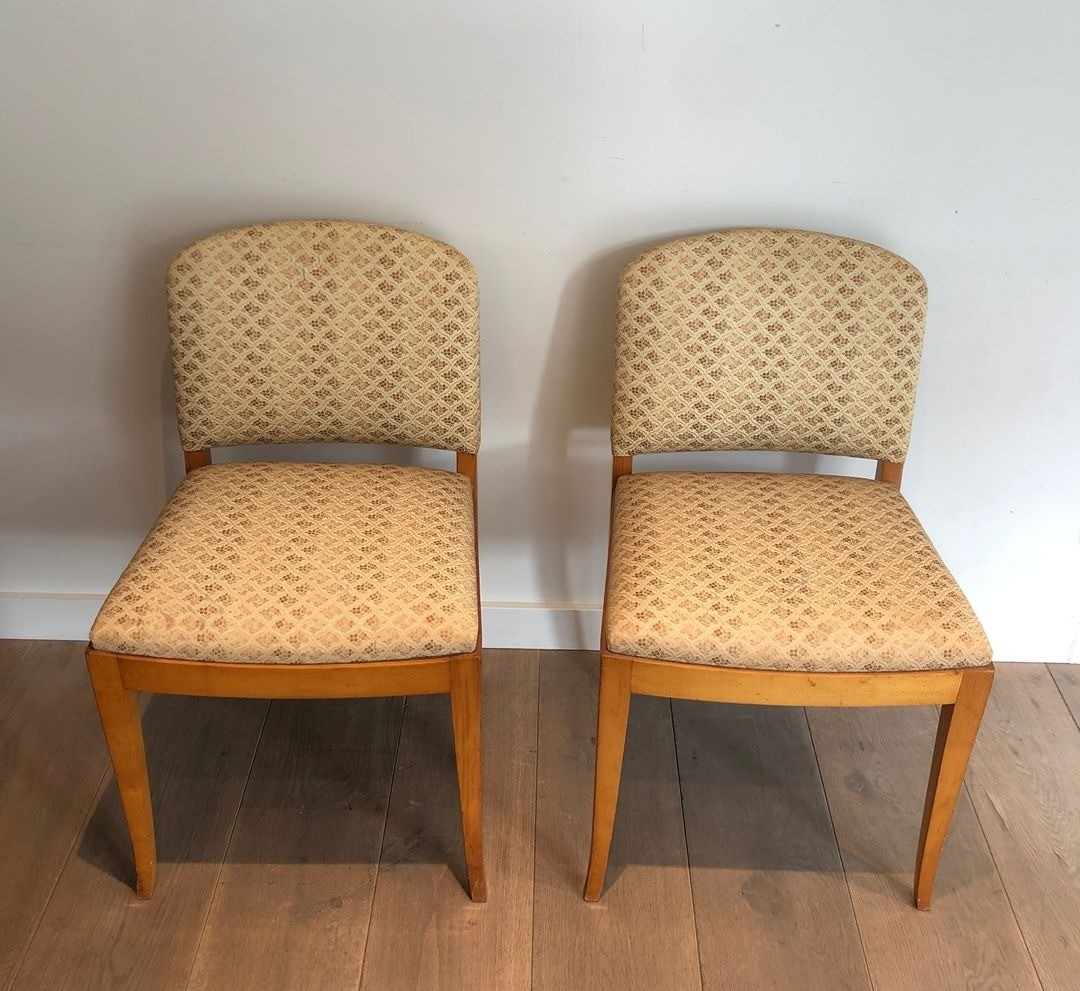
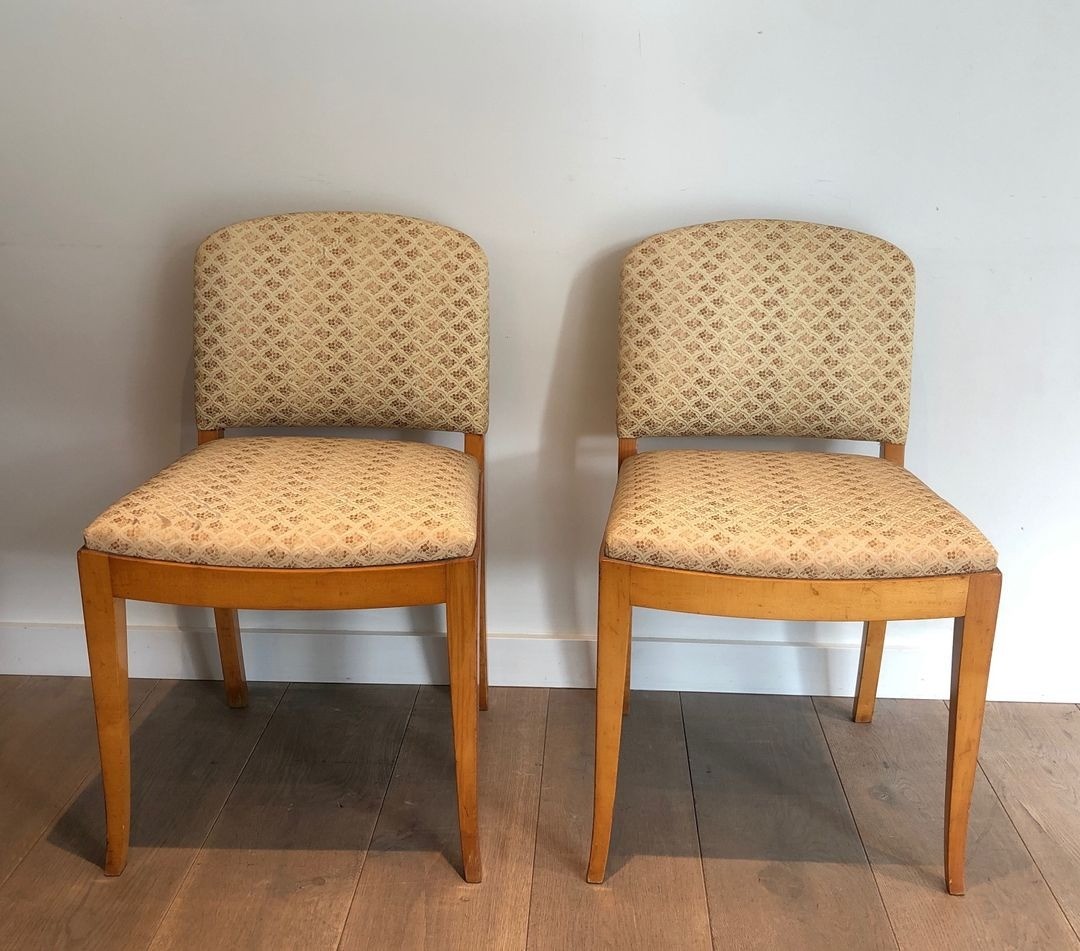
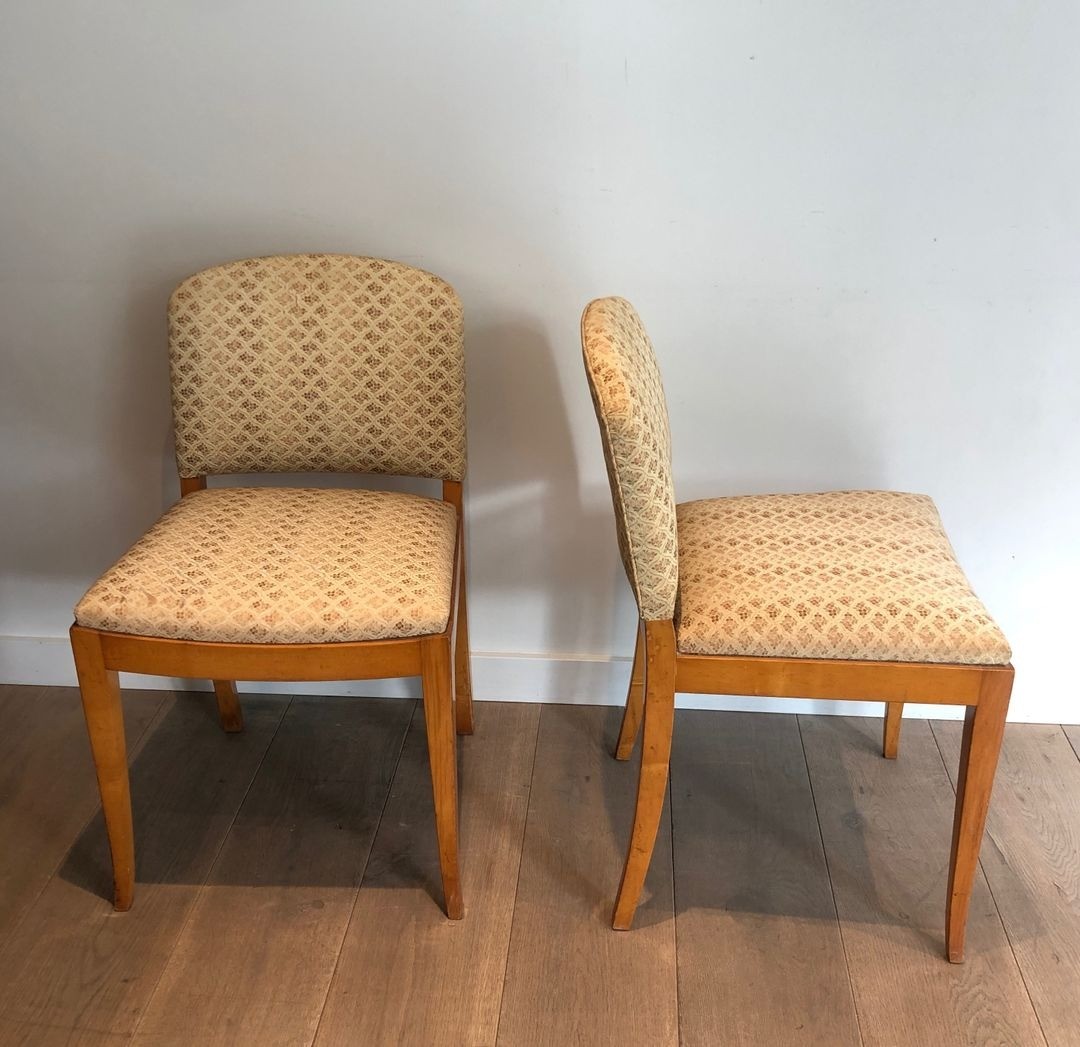
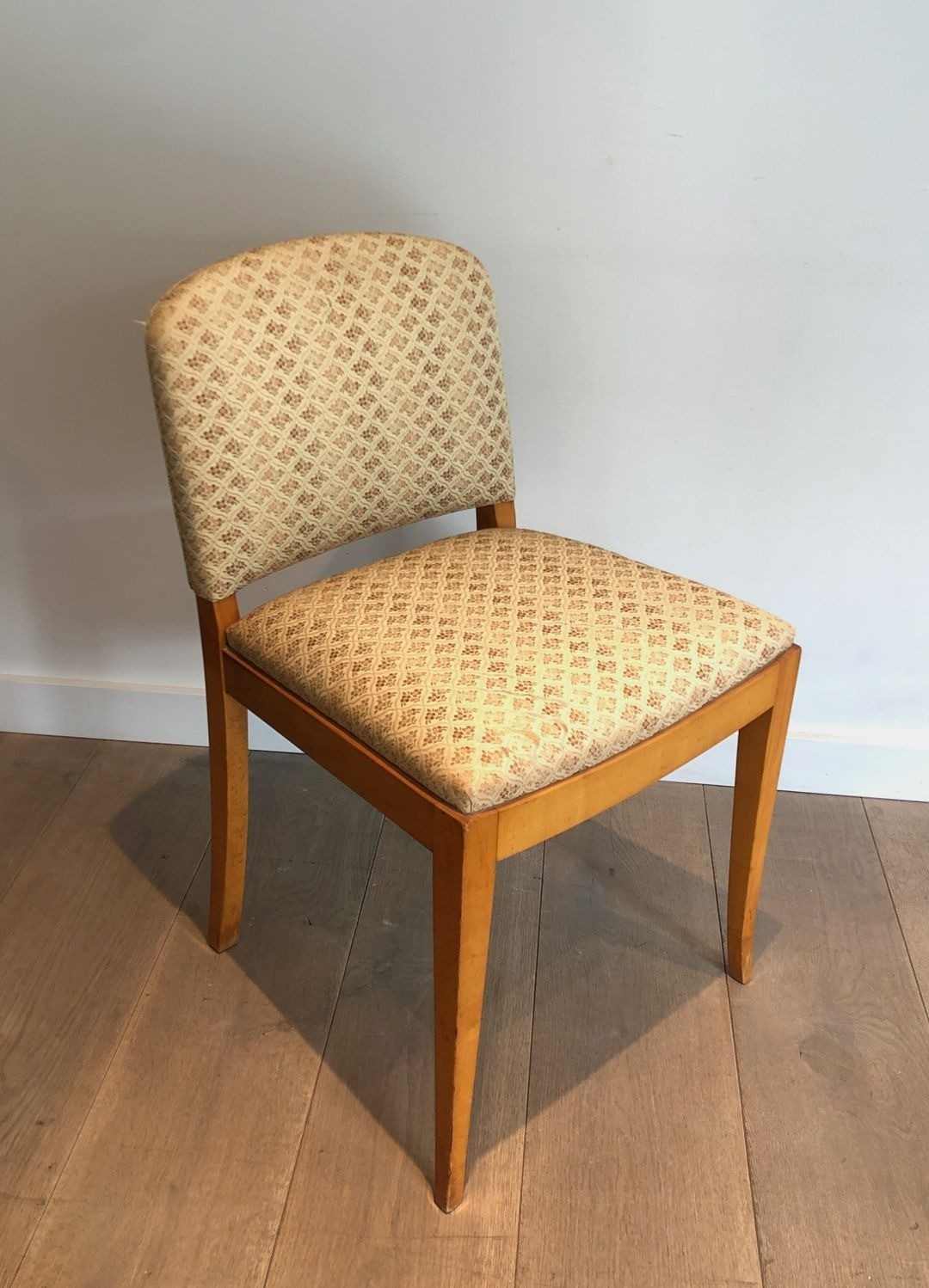
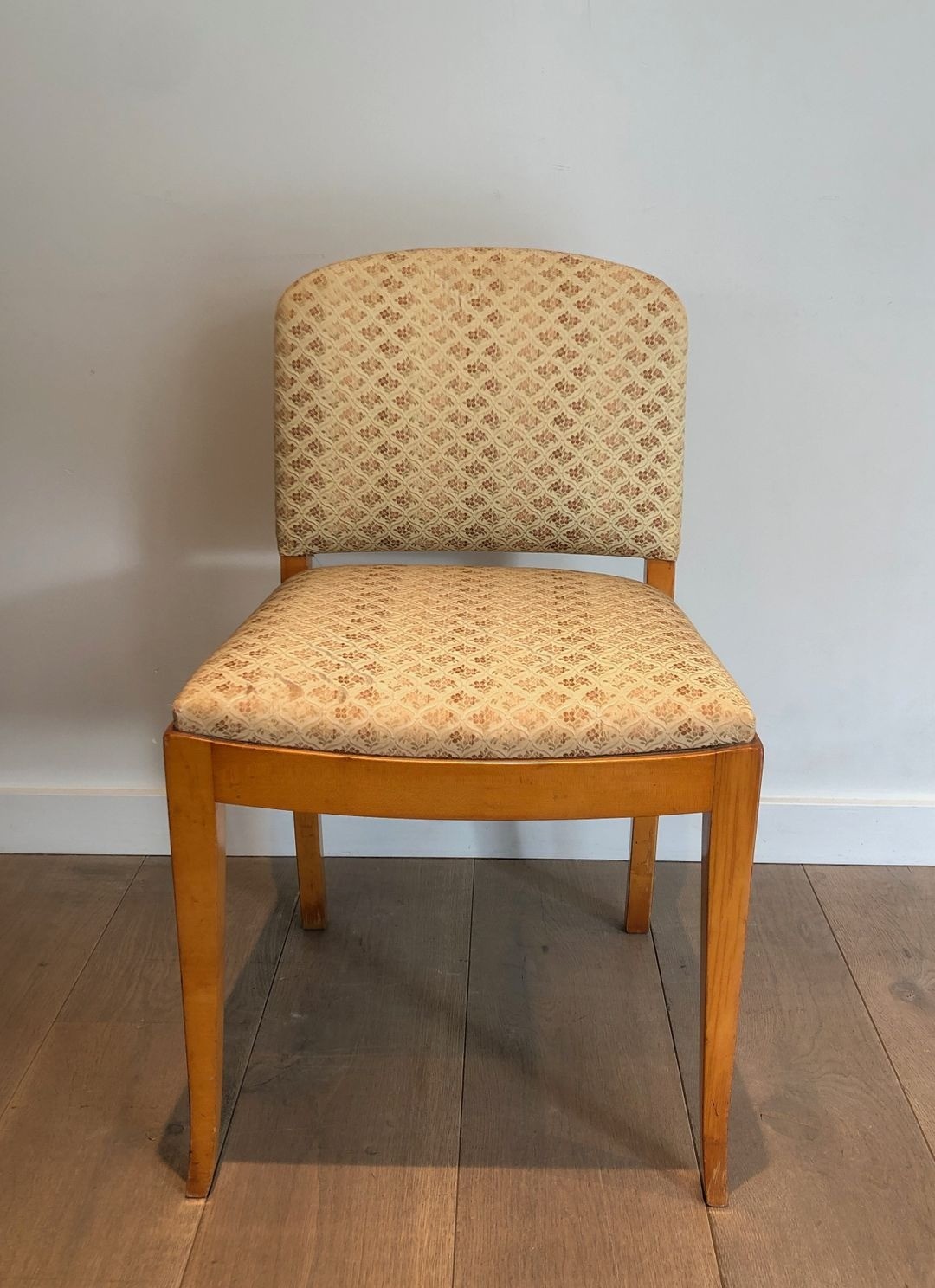
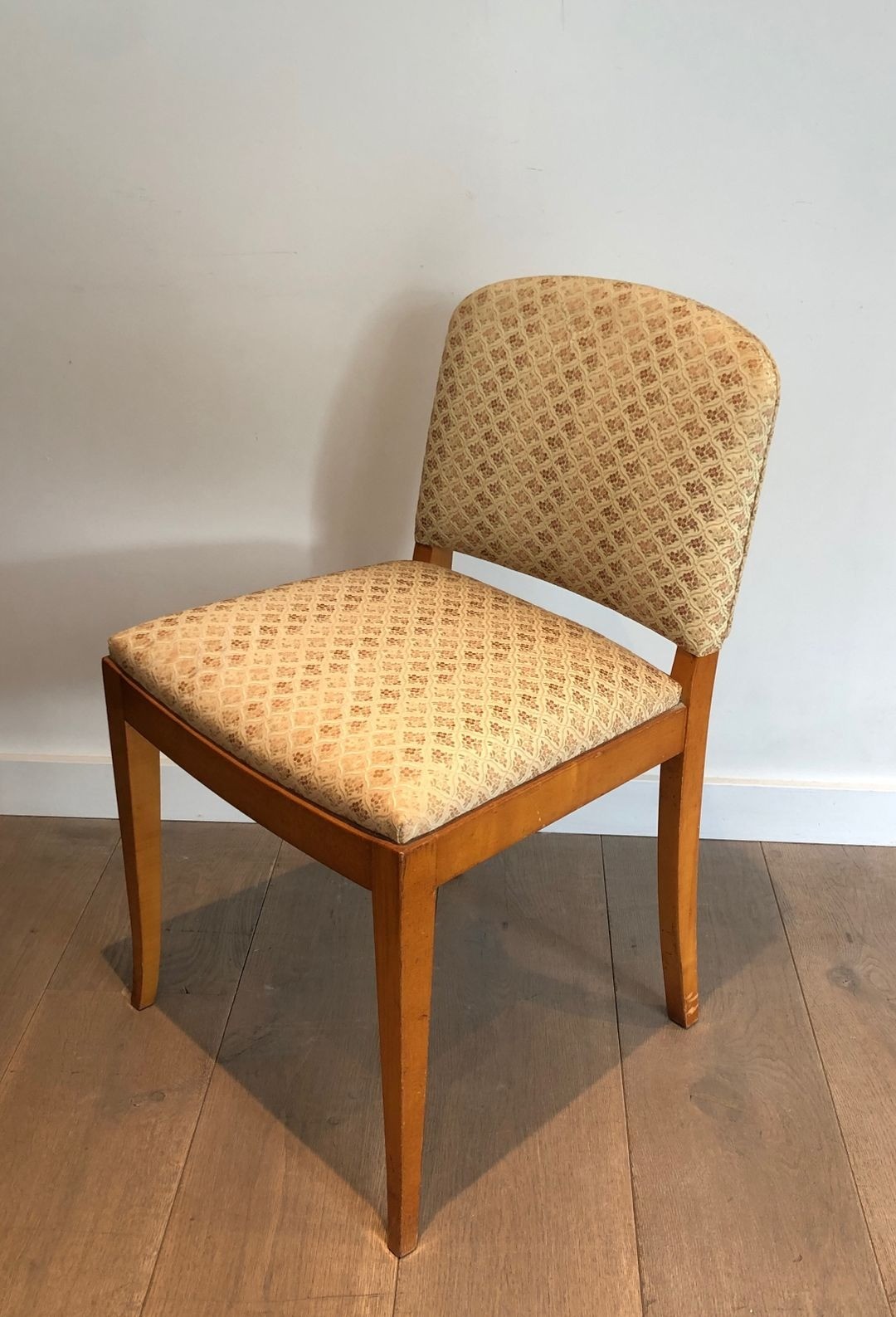
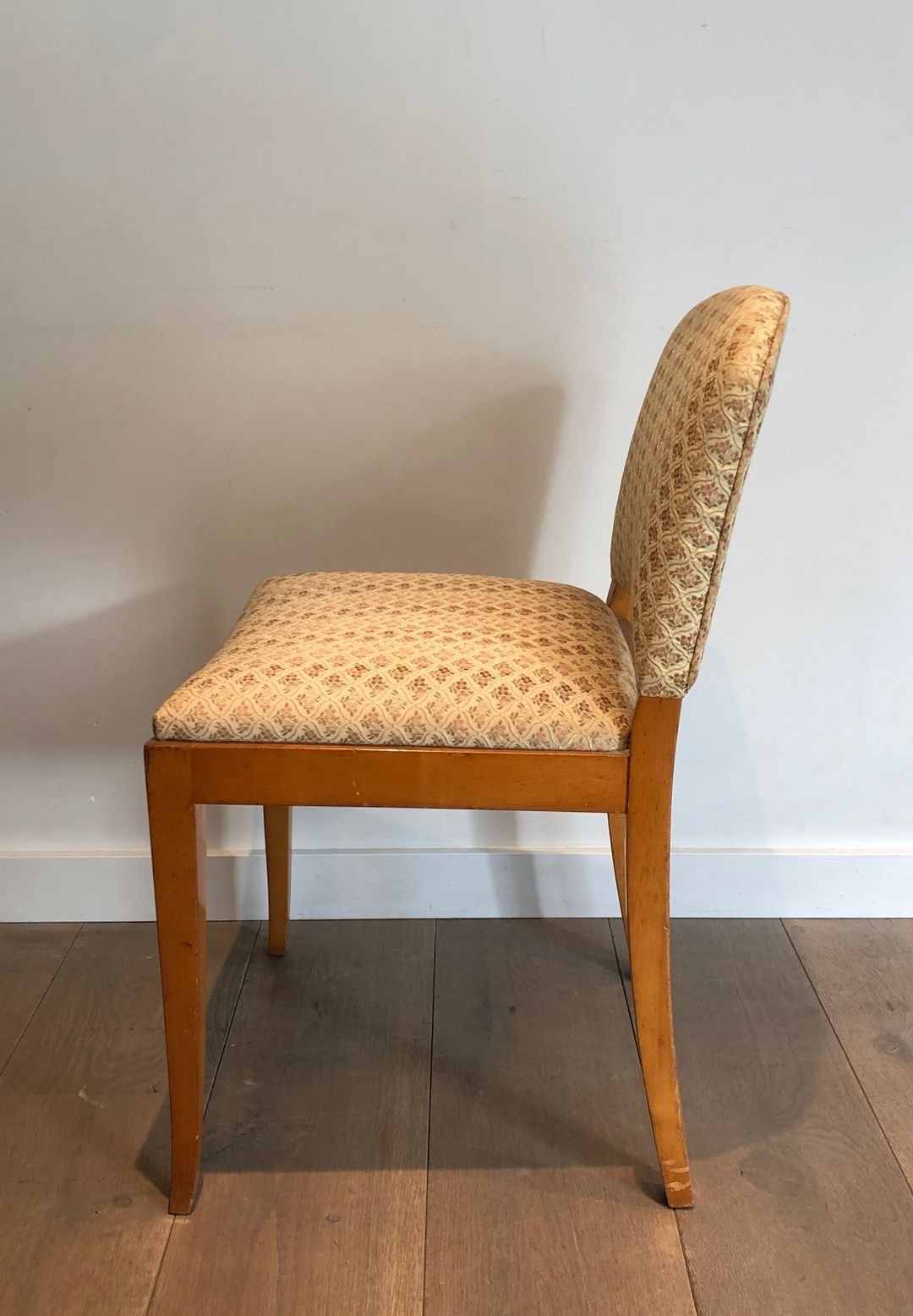
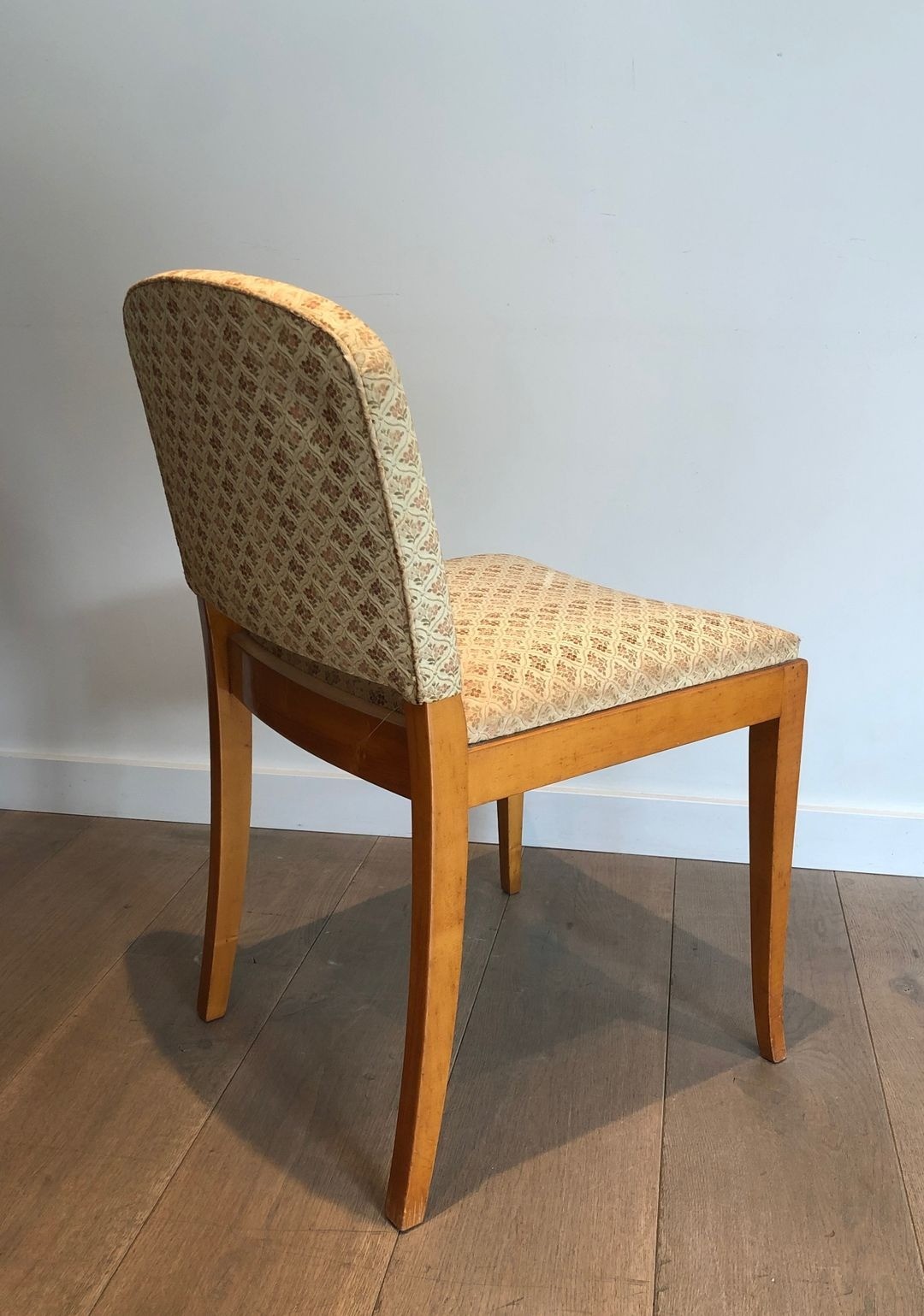
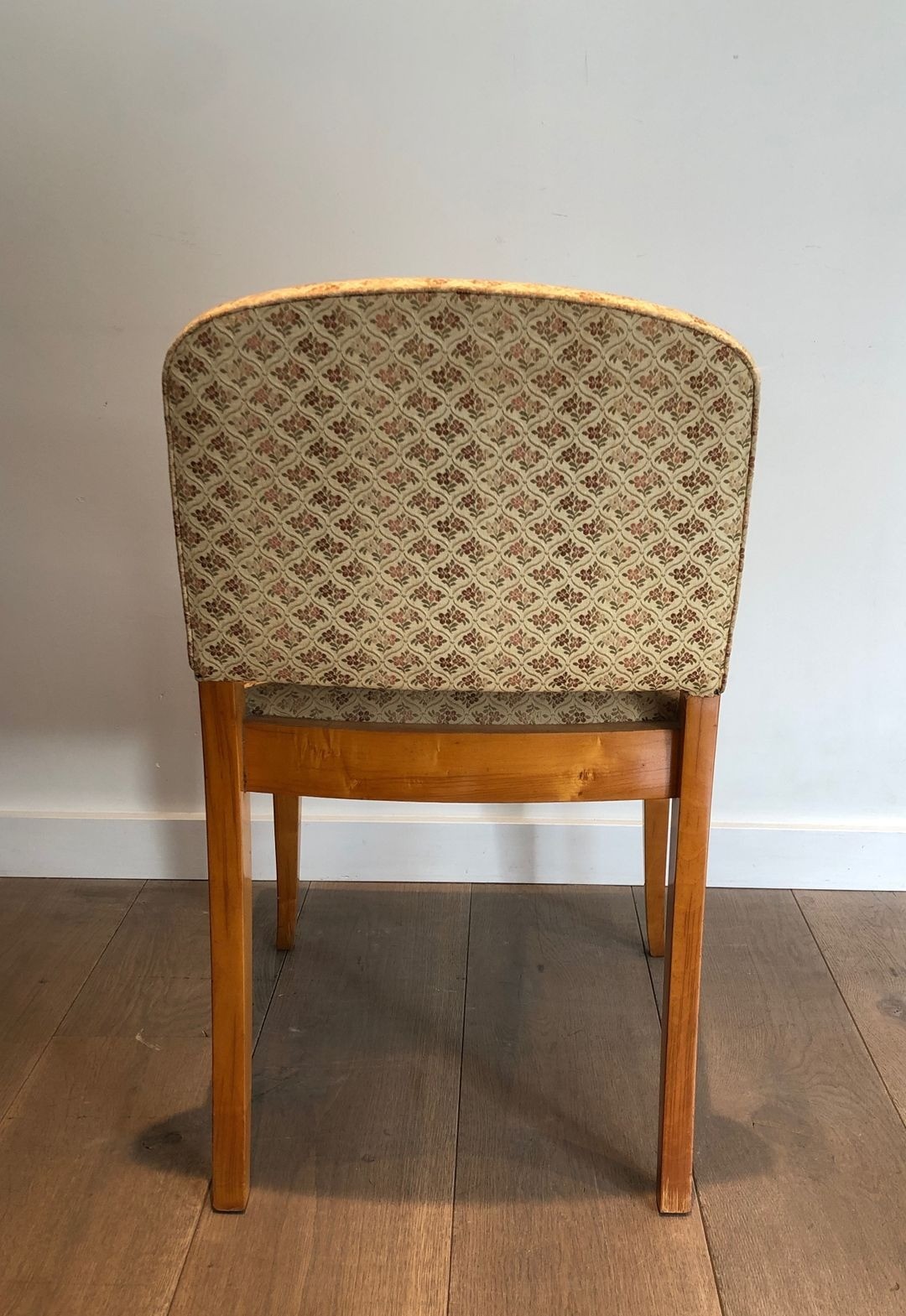
Among the pale woods that defined French Art Déco, sycamore holds a position of particular distinction. Its grain — fine, uniform, and capable of producing the rippled patterns that decorators called “figured” — offered cabinet-makers an instrument of chromatic alchemy: grey-white when freshly cut, it deepens in varnish to the warm honey tones that illuminate the interiors of the great 1925 decorators. André Groult, Jules Leleu, Louis Sué, and André Mare all turned to sycamore as the wood best suited to the decade’s aspiration toward luminous modernity. These two chairs, in their pale and even grain, belong fully to that tradition of solar French craftsmanship.
The Art Déco chair represents one of the century’s great formal achievements: the reduction of a seat form that had accumulated ornament for three centuries to its most essential geometric statement. In the hands of the French artisan of the 1920s and 1930s, every curve was deliberate, every profile considered, every junction between leg and seat rail calculated for maximum structural efficiency and visual elegance. At 46.5 × 50 × 79 cm, these chairs have the proportions of both comfort and restraint — enough depth to invite, enough height to command, and enough economy to satisfy the modernist eye.
To offer these chairs as a pair is to acknowledge the discipline their production demanded. Matching two chairs in sycamore requires selecting timber from the same plank or the same tree, ensuring that the grain unfolds across both pieces with the same rhythm and intensity. This is not a technical accident but a deliberate act of craft — the same attention that governed the matching of veneers across a writing table or a cabinet. That two chairs of this quality have survived together, their sycamore patinated to the same golden depth, is a measure both of the care taken in their making and of the good fortune that preserved them as an ensemble.