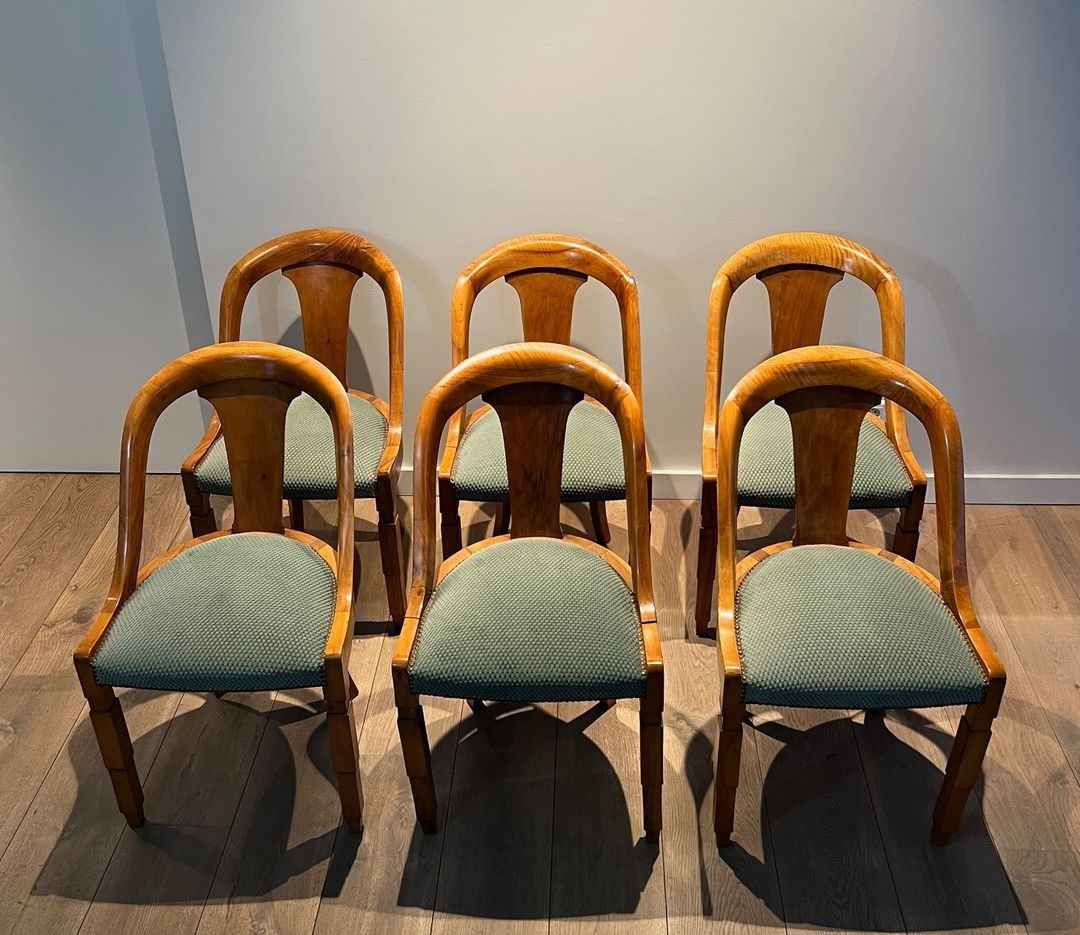
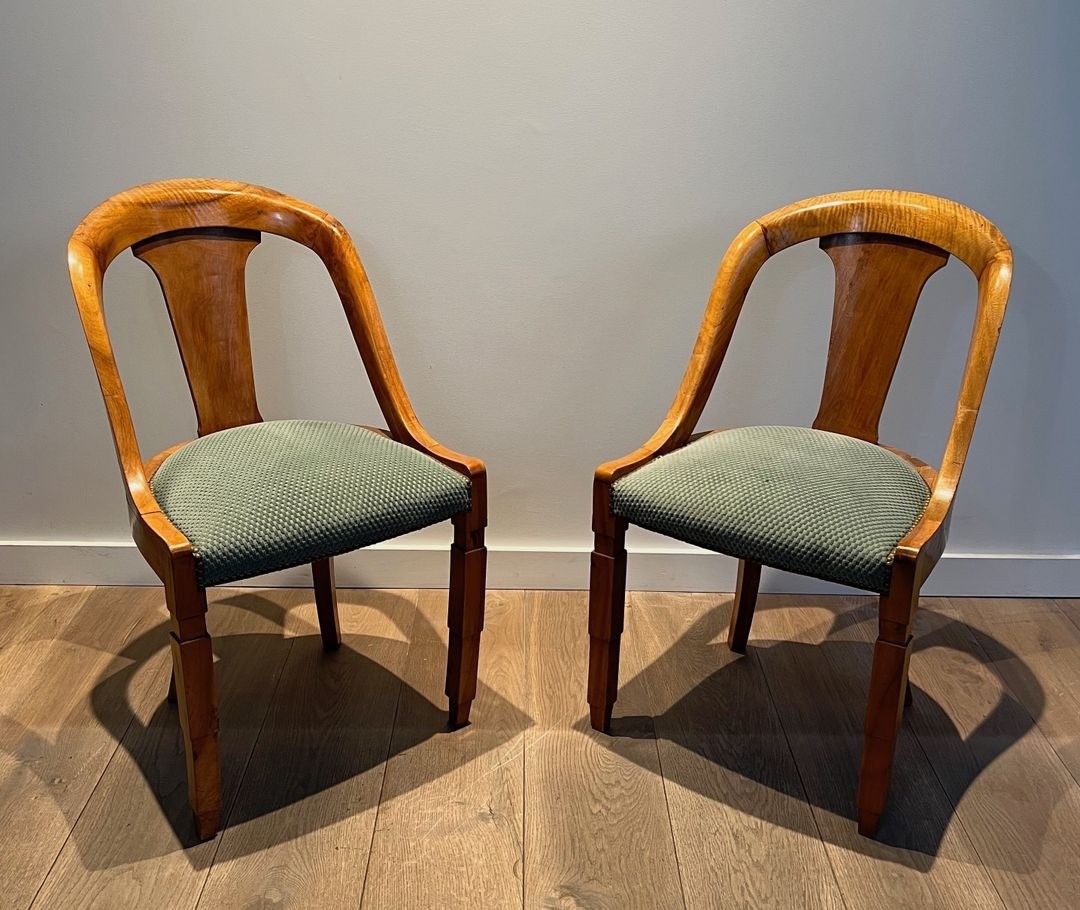
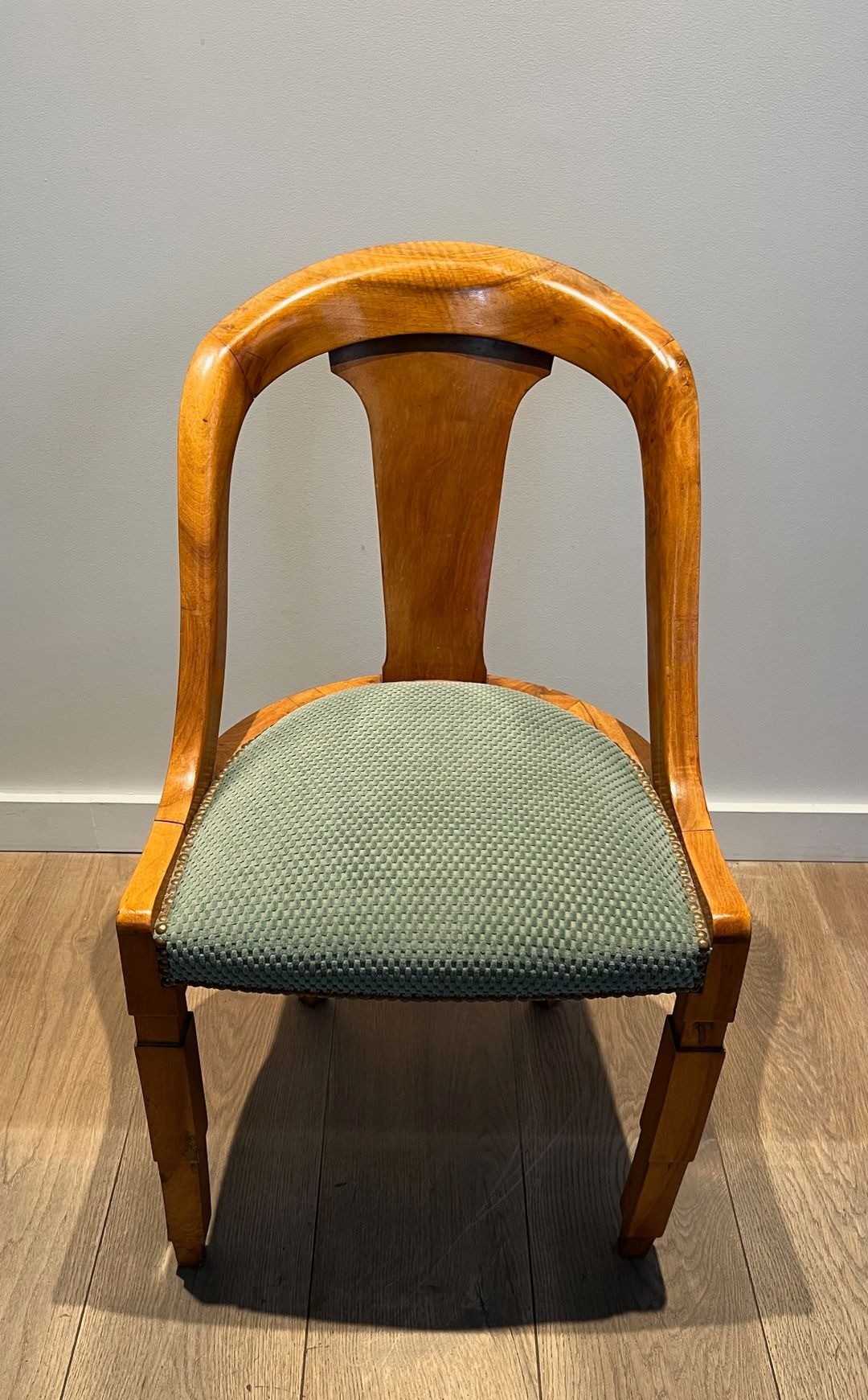
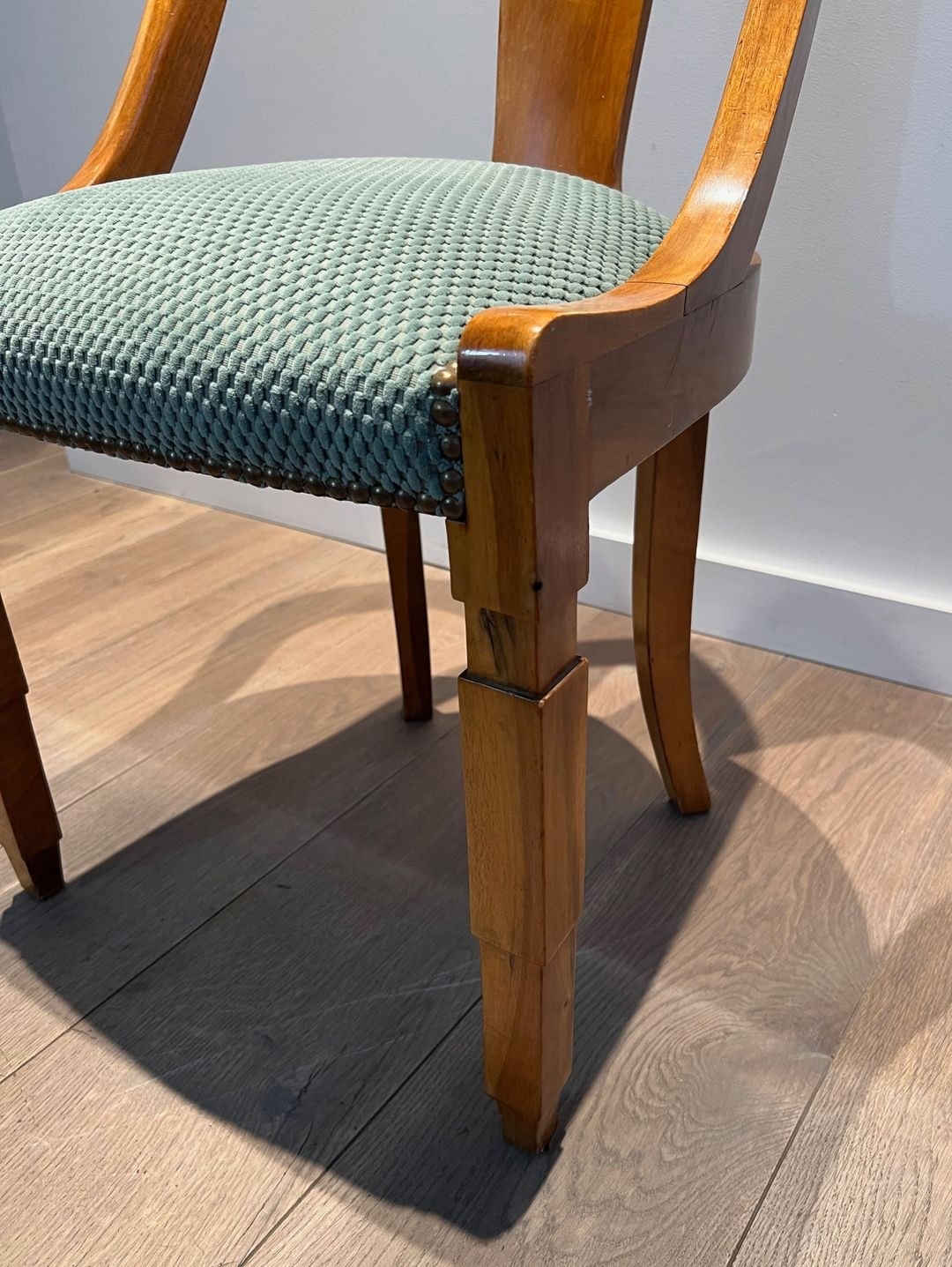
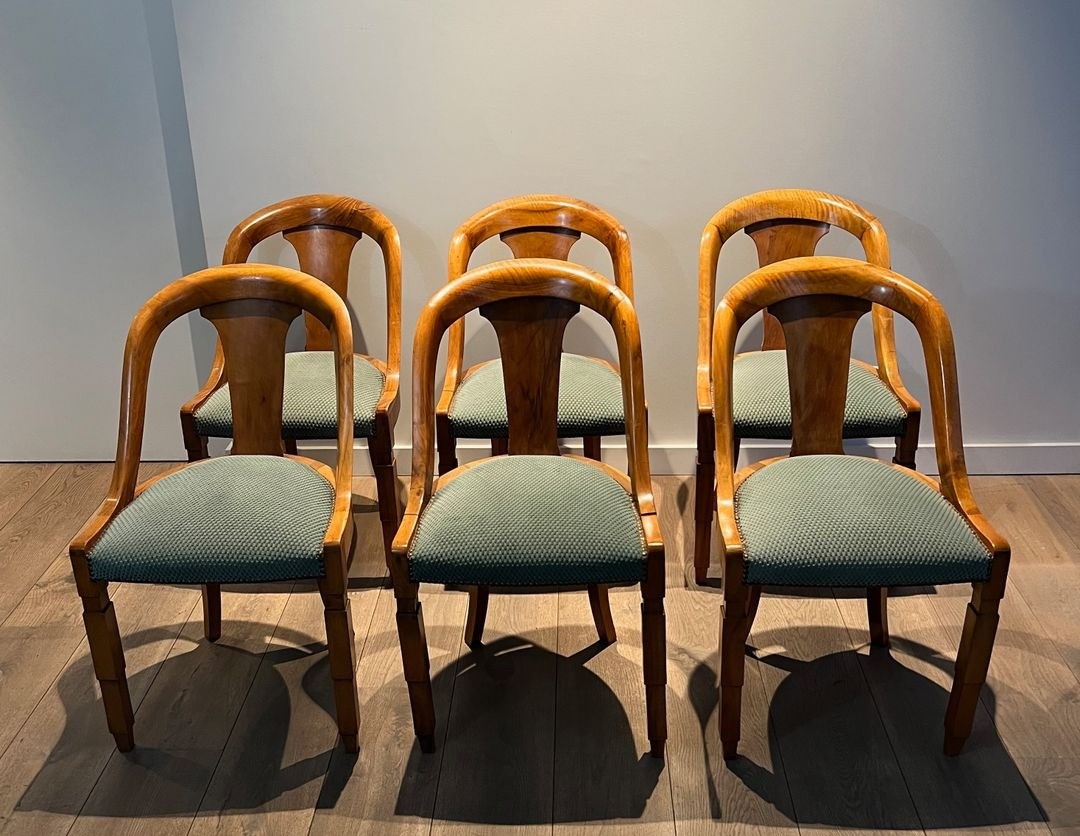
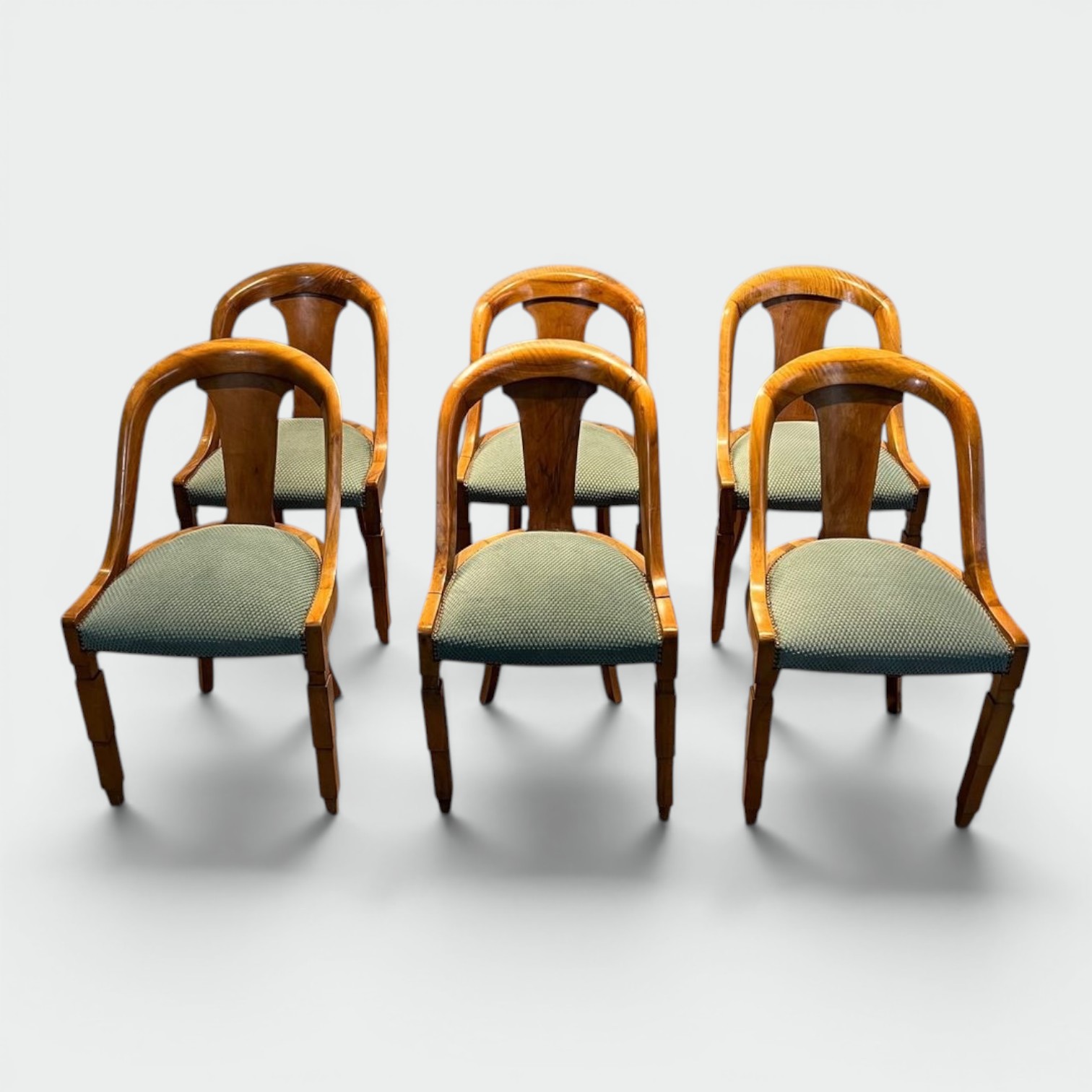
The gondola chair traces a lineage through some of the most consequential moments in modern furniture history. Its direct ancestor is the ancient Greek klismos — the curved-back side chair depicted on Attic vases, admired for its ergonomic elegance and studied obsessively by the archaeologist-decorators of the Napoleonic period. Percier and Fontaine, in their Recueil de décorations intérieures of 1801, translated the klismos into the French Empire vocabulary; their heirs of the 1920s stripped away the archaeological ornament, retaining only the essential curve, and produced the chaise gondole — a form so resolved it needed no further development.
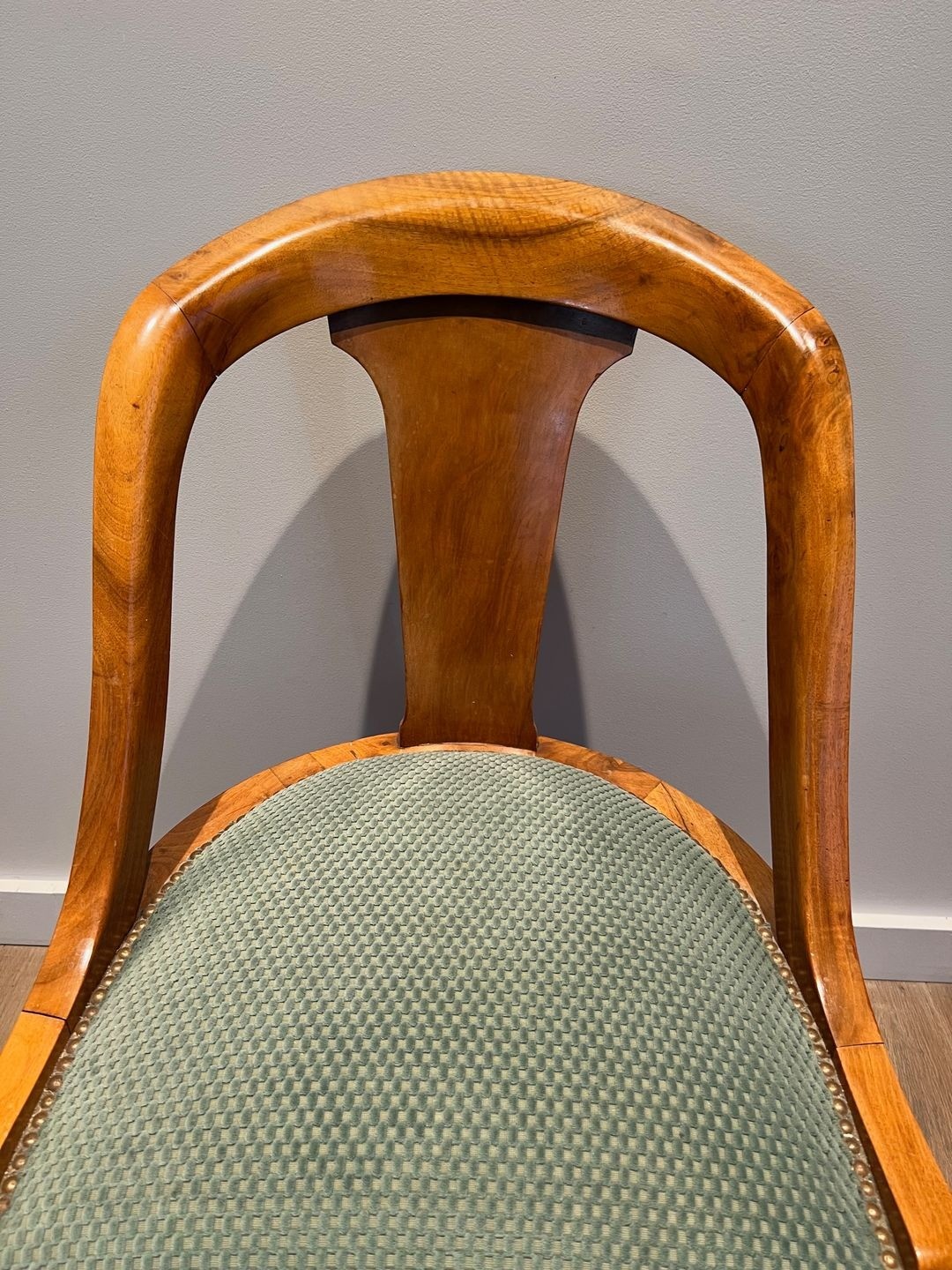
These six chairs, in walnut, embody the material preferences of the French Art Déco interior at its most characteristic. Walnut — darker and more resinous than oak, warmer and more domestic than mahogany — was the wood of the French bourgeois dining room in the 1920s and 1930s: sober enough to satisfy the period’s modernist ambitions, rich enough to honour the tradition of fine French woodworking. The gondola form, with its barrel back wrapping the sitter’s shoulders in a continuous curve, achieves in wood the same ergonomic insight the ancient Greeks expressed in painted clay: a seat that holds without restraining, that supports without imprisoning.
A set of six chairs is the arithmetic of a specific social world — the French bourgeois dining table of the interwar period, with its carefully composed seating plan, its meals that lasted hours, and its conversation conducted with a precision that the furniture itself was expected to uphold. At 50 × 56 × 86 cm, these chairs have the proportions of comfort and formality in equal measure. That all six have survived together, matched in grain and patina, testifies to the care of the households that preserved them — and to the quality of the Parisian ateliers that produced them.