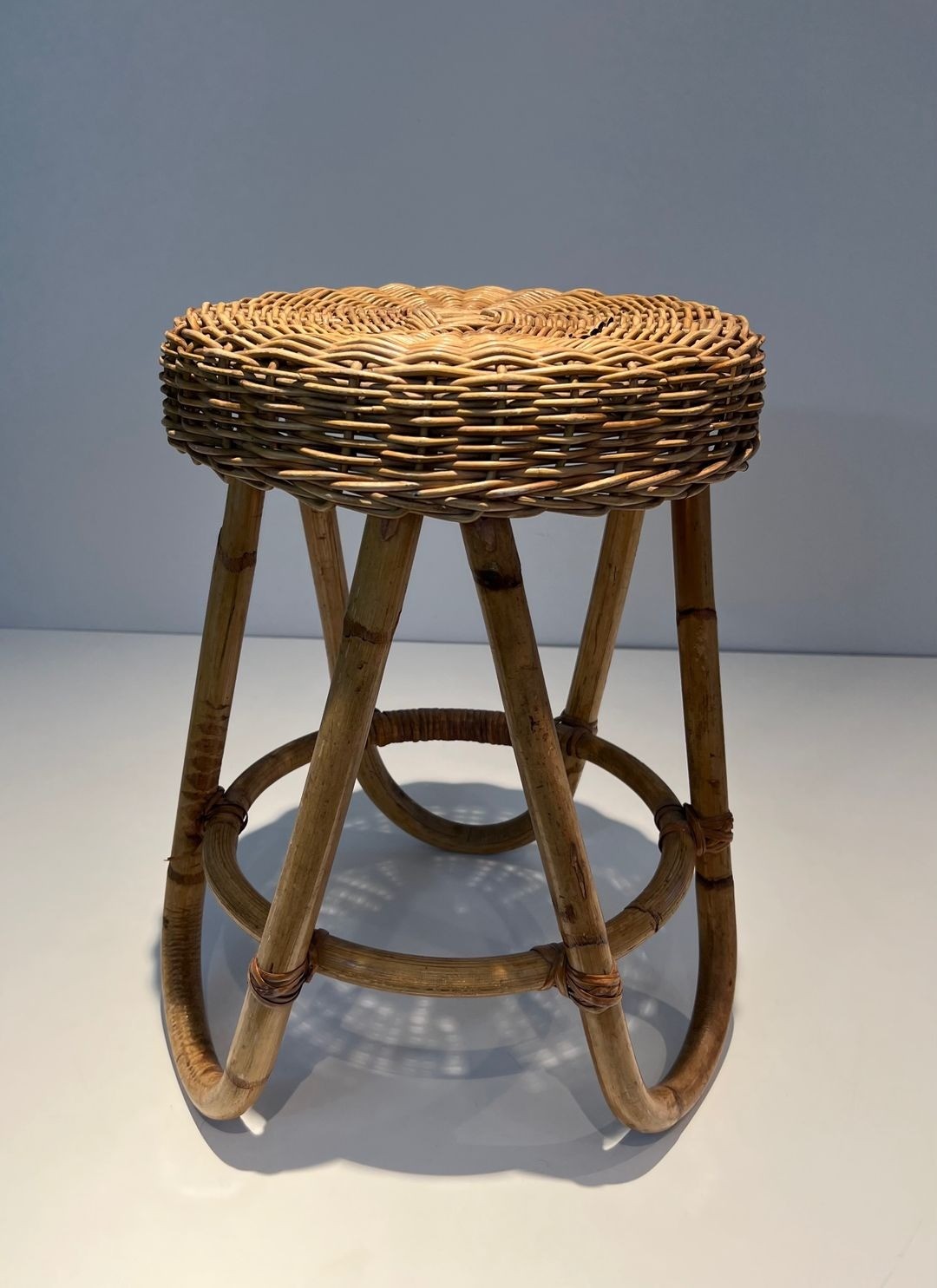
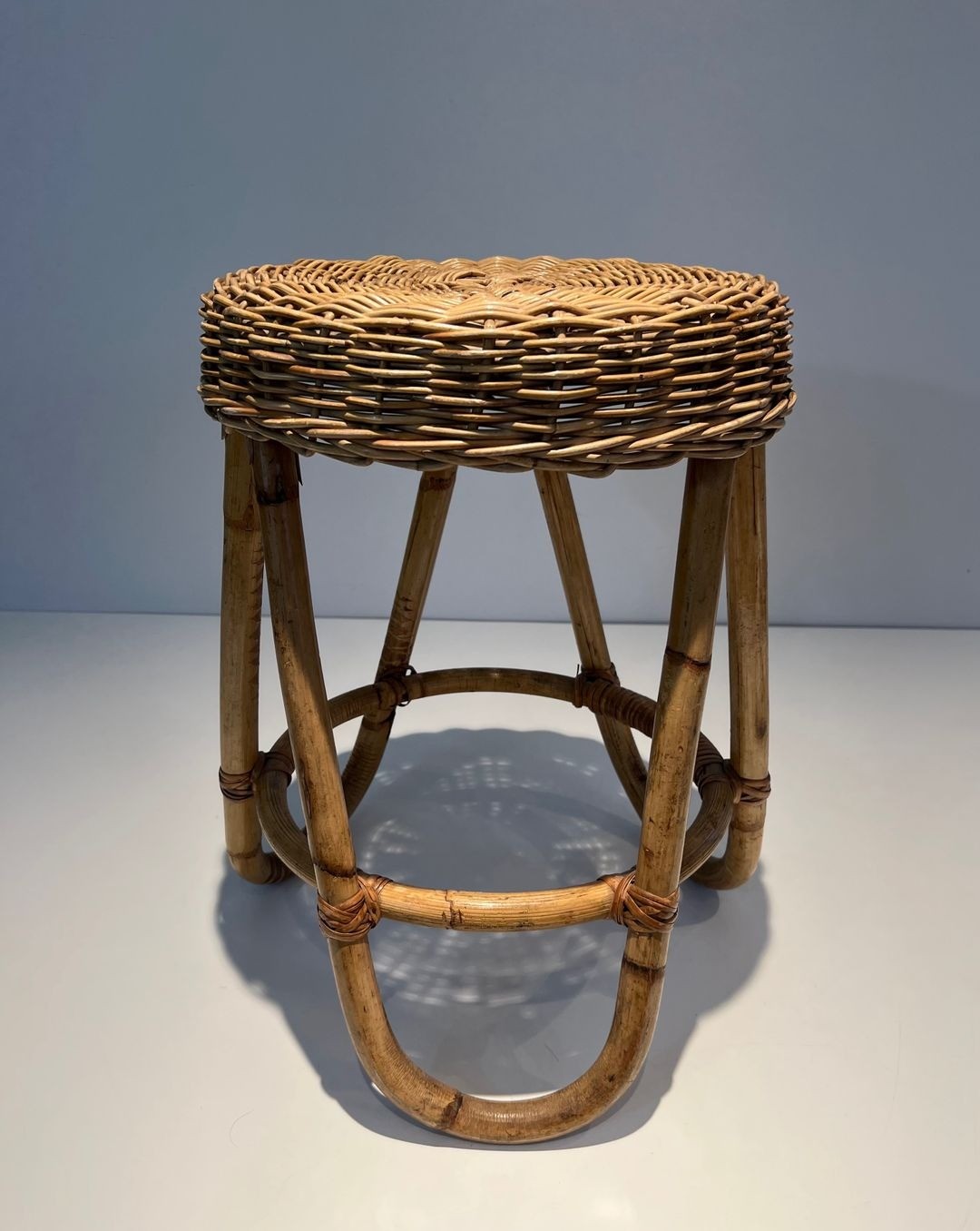
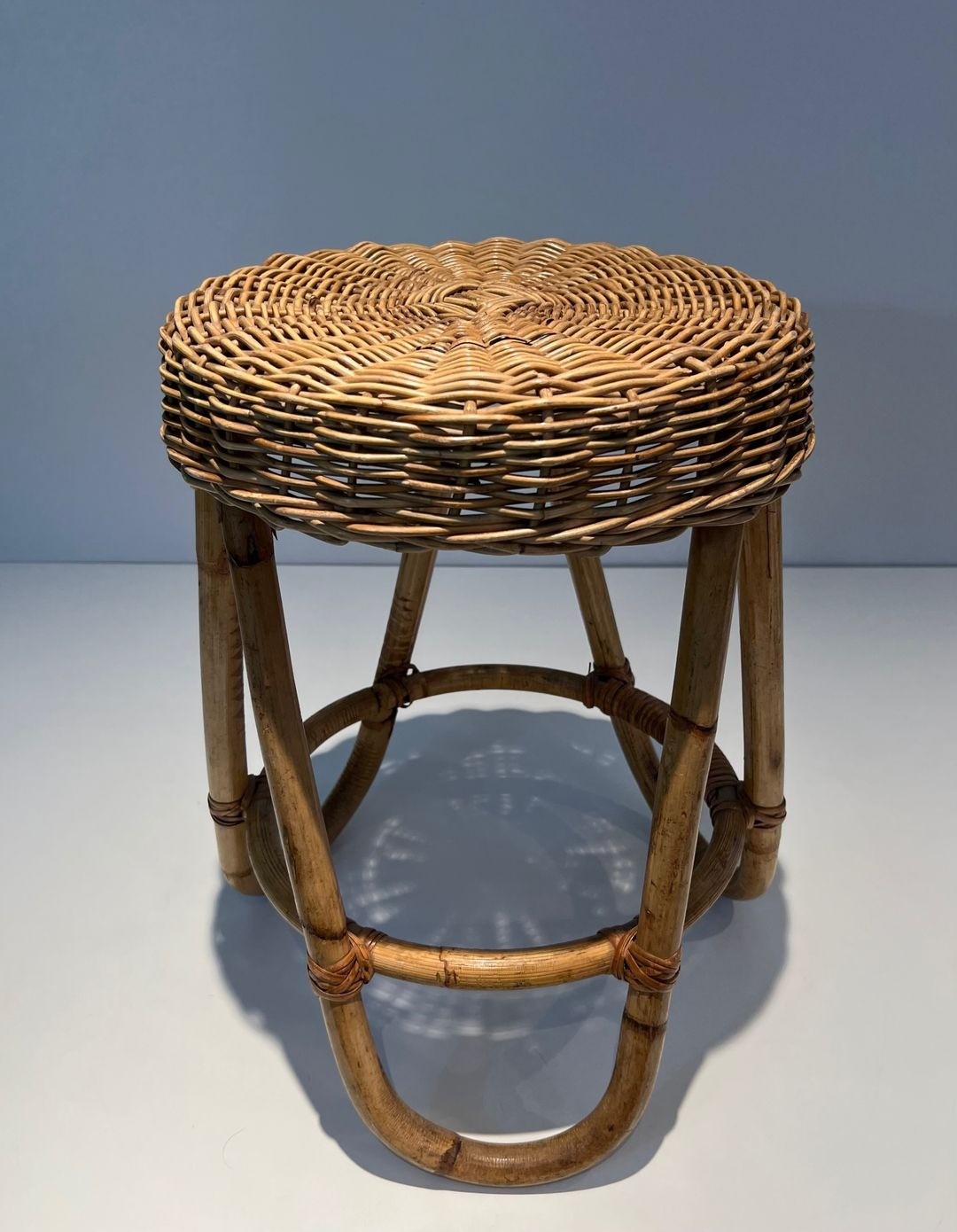
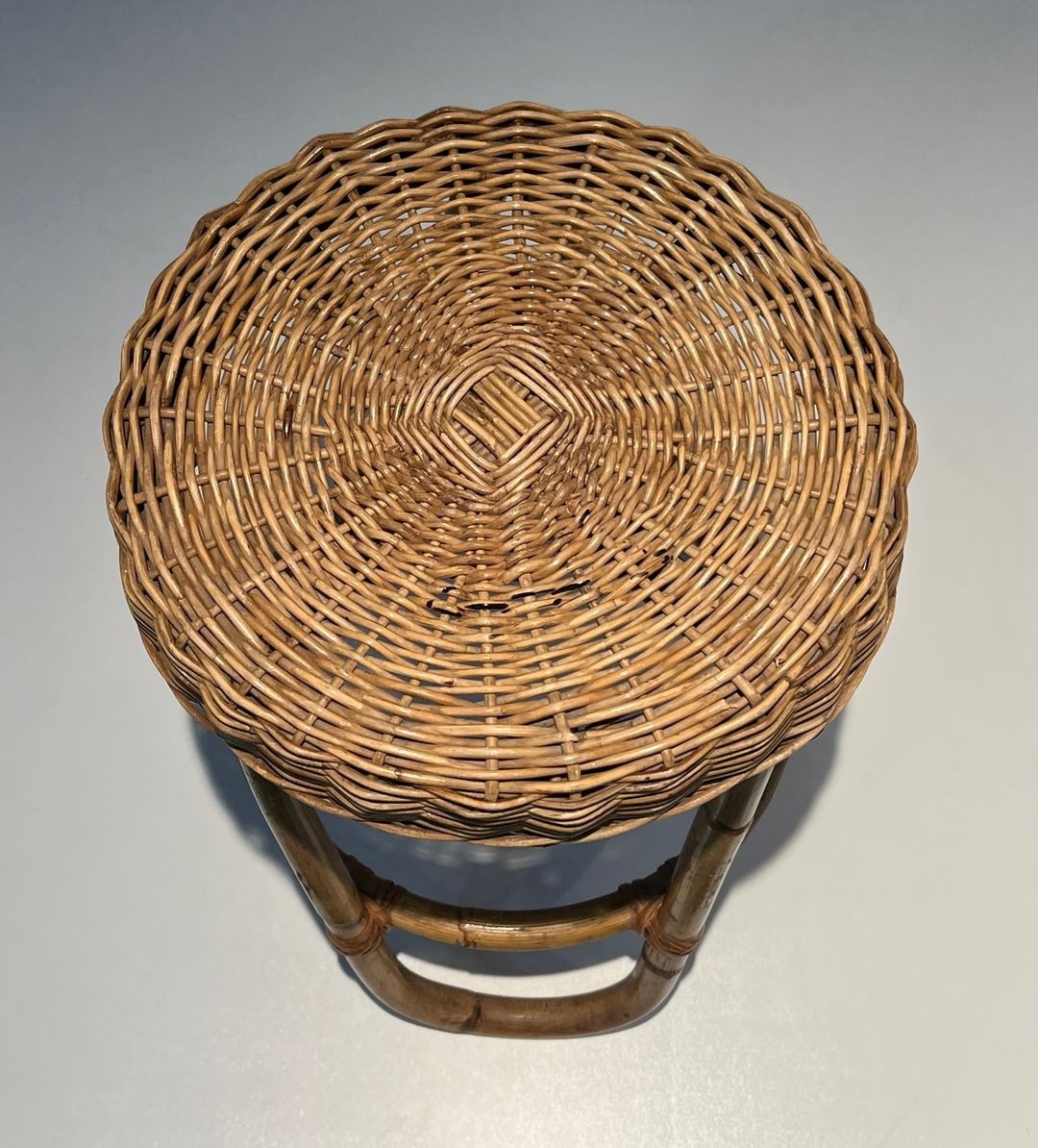
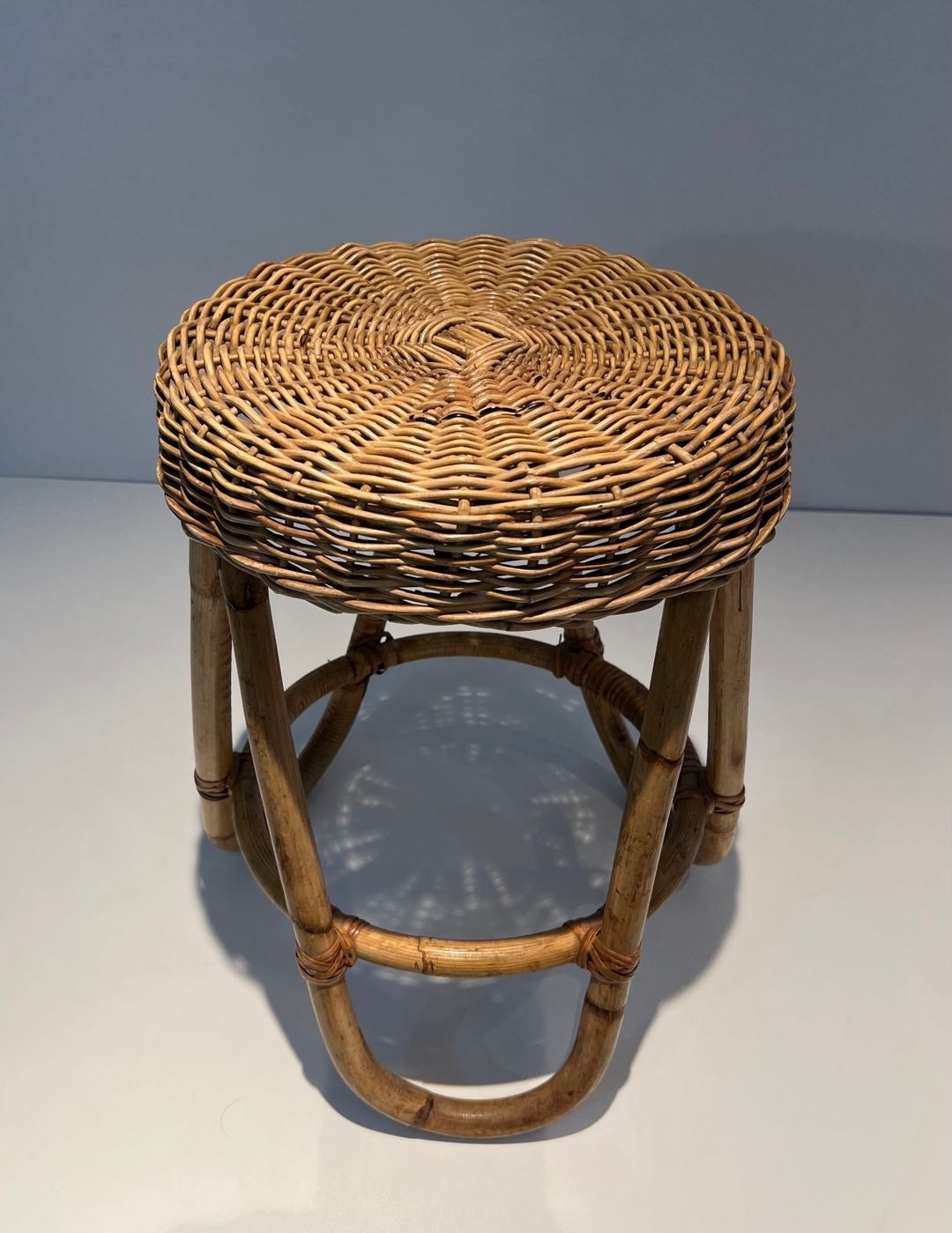
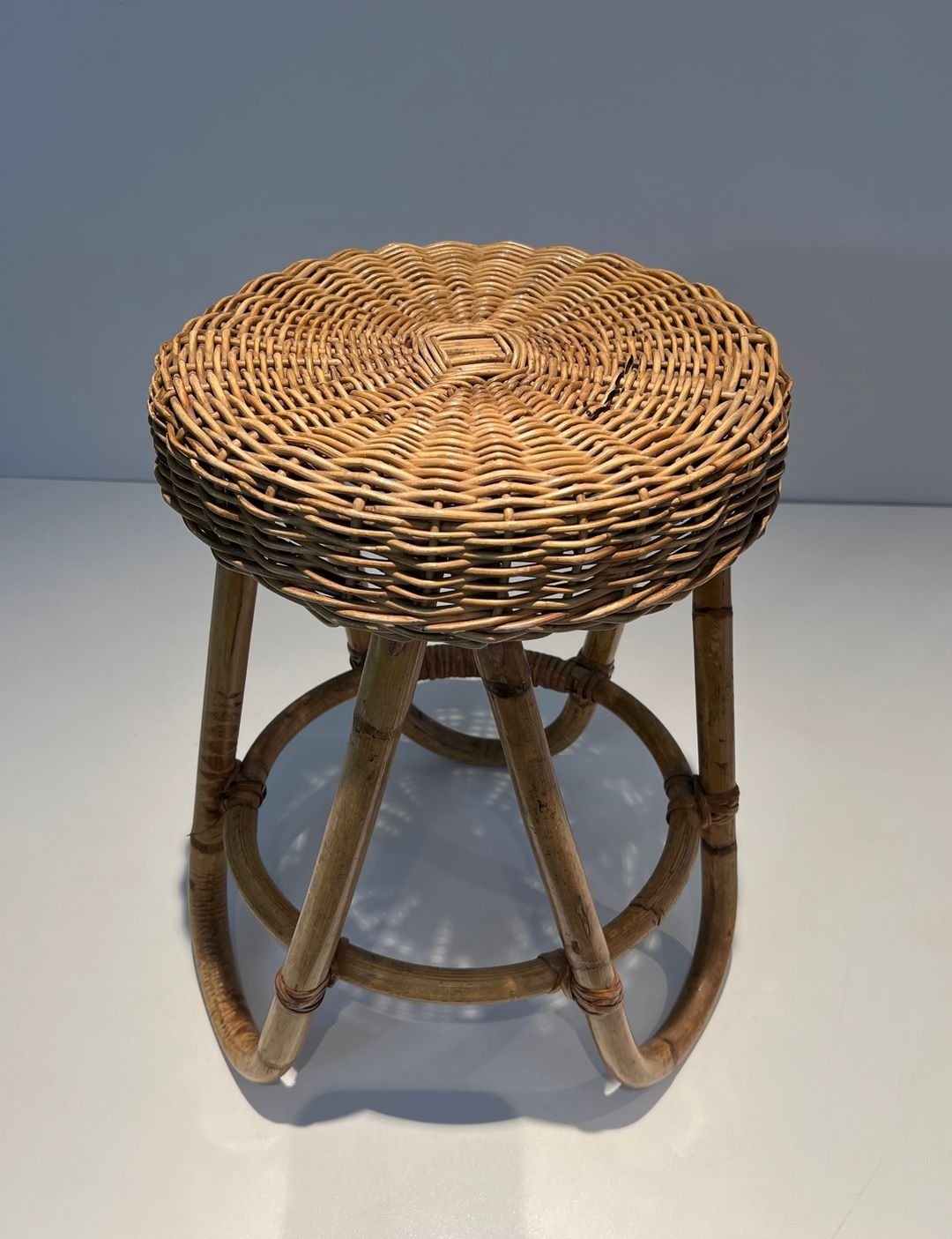
Franco Albini (1905–1977) is among the most rigorous figures in twentieth-century Italian design, and his approach to rattan was nothing less than a structural argument. Where most designers treated wicker as a surface material — woven over a wooden or metal frame as a decorative skin — Albini subjected rattan to the same formal analysis he applied to steel, to glass, to concrete. In his celebrated Margherita and Gala chairs of 1950–51, designed for Bonacina, the wicker weave is both structure and surface simultaneously: it constitutes the frame, the seat, and the visual logic of the piece in a single continuous material gesture. This stool, made in the style of that programme, inherits its central proposition: rattan treated as an engineering material, not a craft one.
The proportions are precise in the manner characteristic of Albini’s rationalism. At 37 cm square and 47 cm high, the stool approaches a cubic volume without quite achieving it — the slight vertical extension preserves the seating function without disrupting the geometric reading. The square footprint, exactly equal in width and depth, is a statement of geometric honesty: nothing is extended beyond what is required, nothing is withheld. This formal discipline distinguishes the Albini vocabulary from the warmer, more organically inflected rattan traditions of France or Scandinavia: it belongs to the Italian Rationalist lineage, to the Politecnico di Milano aesthetic, to the conviction that the beauty of an object resides in the clarity of its structure.
Albini received the Compasso d’Oro in 1955 for his Luisa chair and went on to design some of the most celebrated interiors in postwar Italy, including the Palazzo Bianco and Palazzo Rosso museums in Genoa. His rattan work for Bonacina remained among his most beloved contributions — objects that demonstrated, against the prevailing prejudice, that natural materials could be as formally rigorous as industrial ones. A stool in his manner carries that argument in the smallest and most direct possible form: no back, no arms, no auxiliary elements. Only the structural weave, the square geometry, and the material’s quiet insistence on its own logic.